You’ve heard that yoga is for everyone, but when your joints ache or stress keeps you wired, a vinyasa flow feels less like relaxation and more like a workout you didn’t sign up for. If you are looking for movement that soothes rather than strains, you aren’t alone. Many people assume "gentle" means boring or ineffective, but the truth is quite different. The gentlest forms of yoga are powerful tools for nervous system regulation, flexibility, and deep recovery.
So, what actually holds the title for the gentlest form of yoga? It’s not a single style, but a spectrum. At the very top sits Restorative Yoga, which uses props to support your body completely so you can let go of all muscular effort. Close behind is Yin Yoga, which targets connective tissues through long, passive holds. Then there is Hatha Yoga, often taught as a slow-paced introduction to basic postures. Understanding the difference between these styles helps you choose the right tool for your body’s current needs.
We live in a culture that glorifies sweat equity. We wear our exhaustion like a badge of honor. But for many, especially those dealing with chronic pain, high blood pressure, or severe anxiety, intense physical exertion triggers a stress response rather than relieving it. Gentle yoga flips this script. It activates the parasympathetic nervous system-the "rest and digest" mode-allowing your heart rate to drop and your muscles to truly release tension.
When we talk about the gentlest forms of yoga, we are talking about practices where the intensity comes from stillness, not motion. Instead of moving quickly to generate heat, you move slowly to find space. This approach is crucial for longevity in fitness. You cannot build strength if you are constantly injured, and you cannot maintain mental clarity if you are perpetually stressed. Gentle yoga provides the foundation for both.
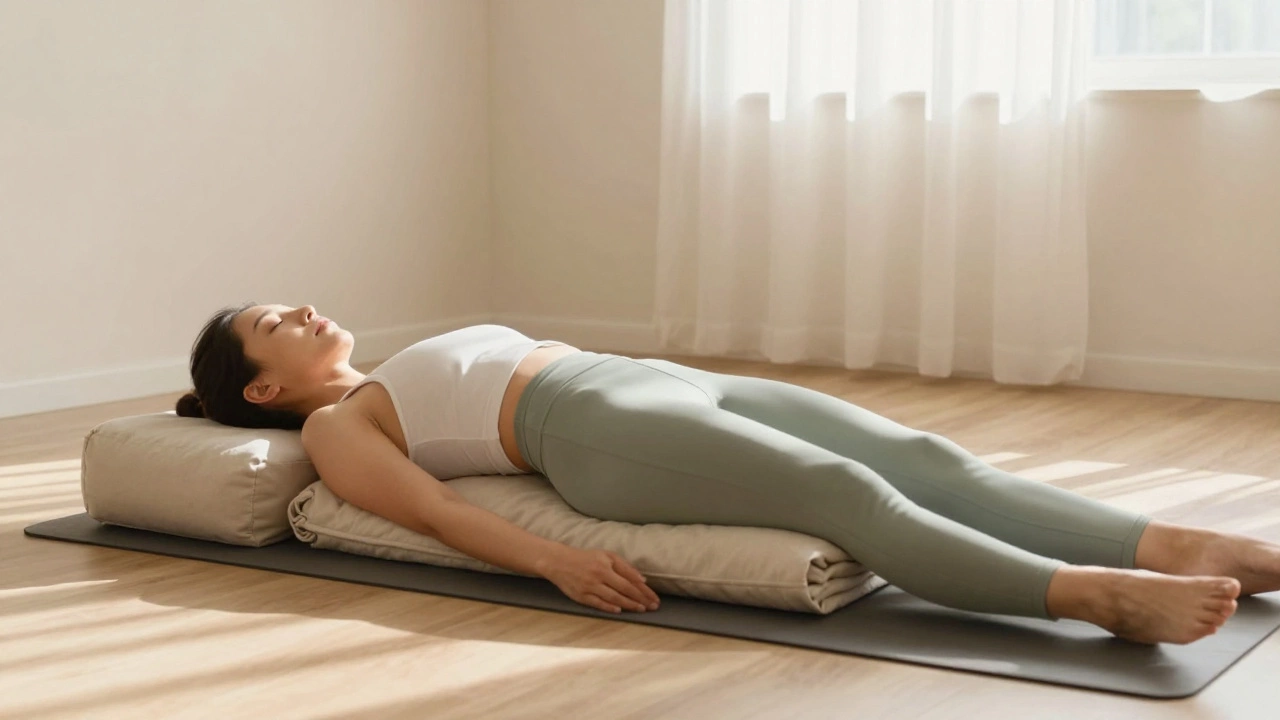
If you had to pick just one style as the absolute gentlest, it would be Restorative Yoga. In a typical restorative class, you might only do three or four poses in an entire hour. That sounds easy, but it requires a different kind of discipline. The goal here is total support. You use blankets, bolsters, blocks, and straps to prop your body up so that you don’t have to engage any muscles to hold the position.
Imagine lying on your back with your legs resting on a chair or a stack of cushions. Your spine is neutral, your shoulders are supported by folded blankets, and your eyes are closed. Because your body is fully supported, your brain receives a signal that it is safe to relax deeply. This style is particularly effective for:
Restorative yoga is not about stretching; it is about releasing. It is the closest you can get to meditation while physically moving. If you feel anxious about "doing it wrong," this is the place to start because there is no performance metric. If you are comfortable and breathing, you are doing it right.
While Restorative Yoga focuses on the nervous system, Yin Yoga focuses on the connective tissues-fascia, ligaments, and joints. Developed in the West by Paulie Zink and Sarah Powers, drawing from Taoist principles, Yin Yoga involves holding seated or supine poses for three to ten minutes. This duration is key. Muscles adapt quickly, but connective tissue is dense and avascular, meaning it needs sustained, mild pressure to become pliable.
Is Yin Yoga gentle? Yes, but with a caveat. It is passive, meaning you shouldn't be actively flexing muscles, but it can feel intense. You might sit in Butterfly pose for five minutes and feel a strong stretch in your inner thighs. This sensation is normal. The practice teaches you to observe discomfort without reacting to it. It builds mental resilience alongside physical flexibility.
Yin Yoga is excellent for:
The difference between Restorative and Yin is subtle but important. In Restorative, you are fully supported. In Yin, you are mostly unsupported, relying on your own structure to stay in the pose, albeit passively. For someone with severe knee issues, Restorative is safer. For someone wanting deeper hip flexibility, Yin is the better choice.
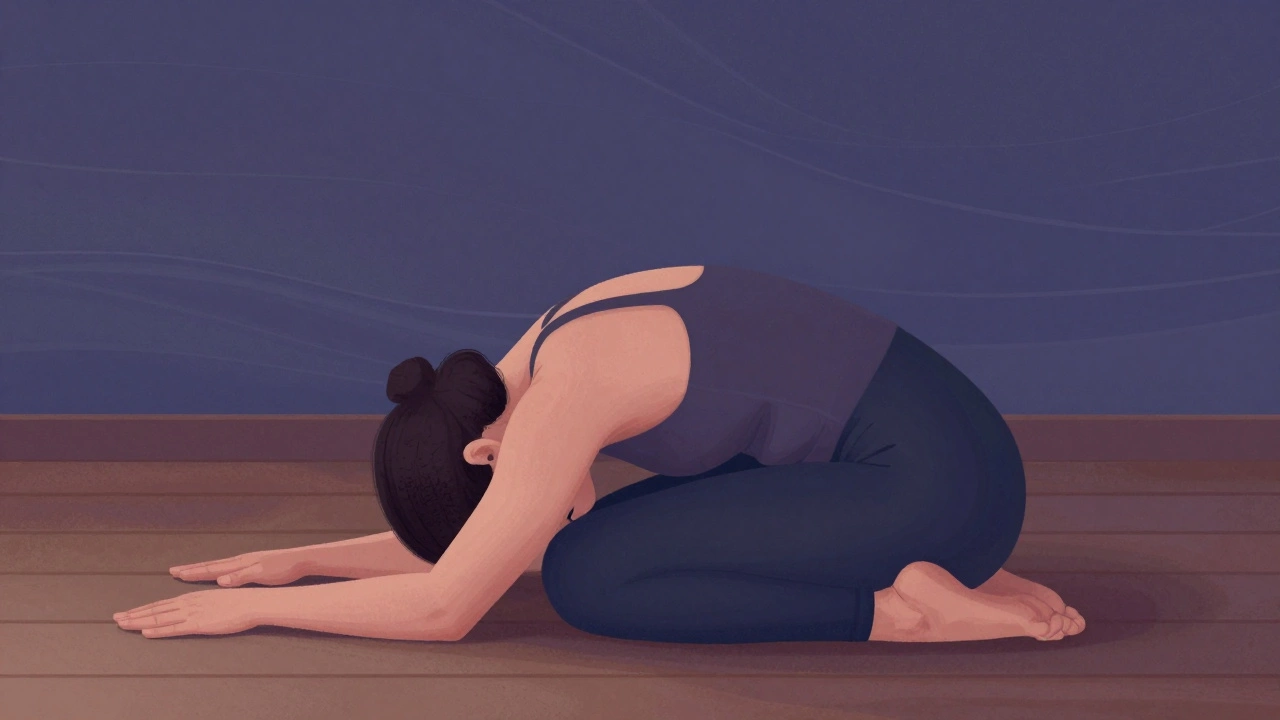
Often used as a catch-all term for non-Vedic yoga, Hatha Yoga in modern studios usually refers to a slower-paced class that holds poses for several breaths. Unlike Vinyasa, where you flow from one pose to another in sync with your breath, Hatha classes often break down individual postures. This makes it easier for beginners to understand alignment and avoid injury.
Hatha is gentler than power yoga but more active than Restorative or Yin. It involves standing poses, balances, and inversions, but at a manageable pace. It is a great middle ground if you want some physical challenge without the cardio spike of a hot yoga class. It helps build foundational strength and stability, which is essential before attempting more advanced practices.
Beyond the big three, there are other styles that prioritize softness and accessibility.
Iyengar Yoga is known for its rigorous attention to detail and extensive use of props. While it can be physically demanding due to the precision required, it is incredibly accessible for people with limitations. Teachers often modify poses extensively, making it possible for almost anyone to participate safely.
Chair Yoga is designed for seniors or those with limited mobility who cannot get down to the floor easily. It adapts traditional poses to be performed sitting or standing with the support of a chair. Don’t underestimate it; Chair Yoga can provide significant benefits for balance, circulation, and upper body strength.
Bedtime Yoga isn’t a formal school but a category of sequences designed specifically to wind down the body before sleep. These often combine elements of Restorative and Yin yoga, focusing on forward folds and twists that calm the mind.
| Style | Primary Focus | Prop Usage | Intensity Level | Best For |
|---|---|---|---|---|
| Restorative | Nervous System | High (Full Support) | Very Low | Stress relief, recovery |
| Yin | Connective Tissue | Moderate (Partial Support) | Low to Moderate | Flexibility, joint health |
| Hatha | Foundation & Strength | Low to Moderate | Moderate | Beginners, alignment |
| Iyengar | Precision & Alignment | High (Technical Support) | Varies | Injury rehab, deep learning |
Selecting the right style depends on your current physical state and goals. Ask yourself these questions:
One of the biggest barriers to trying gentle yoga is the belief that it isn't "real" exercise. People worry they won't burn calories or build muscle. While it's true that Restorative yoga doesn't torch calories like HIIT, it does something equally vital: it repairs the damage caused by high-intensity training. Without adequate rest and recovery, your body accumulates micro-tears and stress hormones that lead to plateauing and injury.
Another myth is that you need to be flexible to do yoga. This is backwards. You do yoga to become flexible. Gentle styles are specifically designed for stiff bodies. If you were already limber, you wouldn't need the deep, slow release that Yin or Restorative provides. Embrace your stiffness; it is simply the starting point.
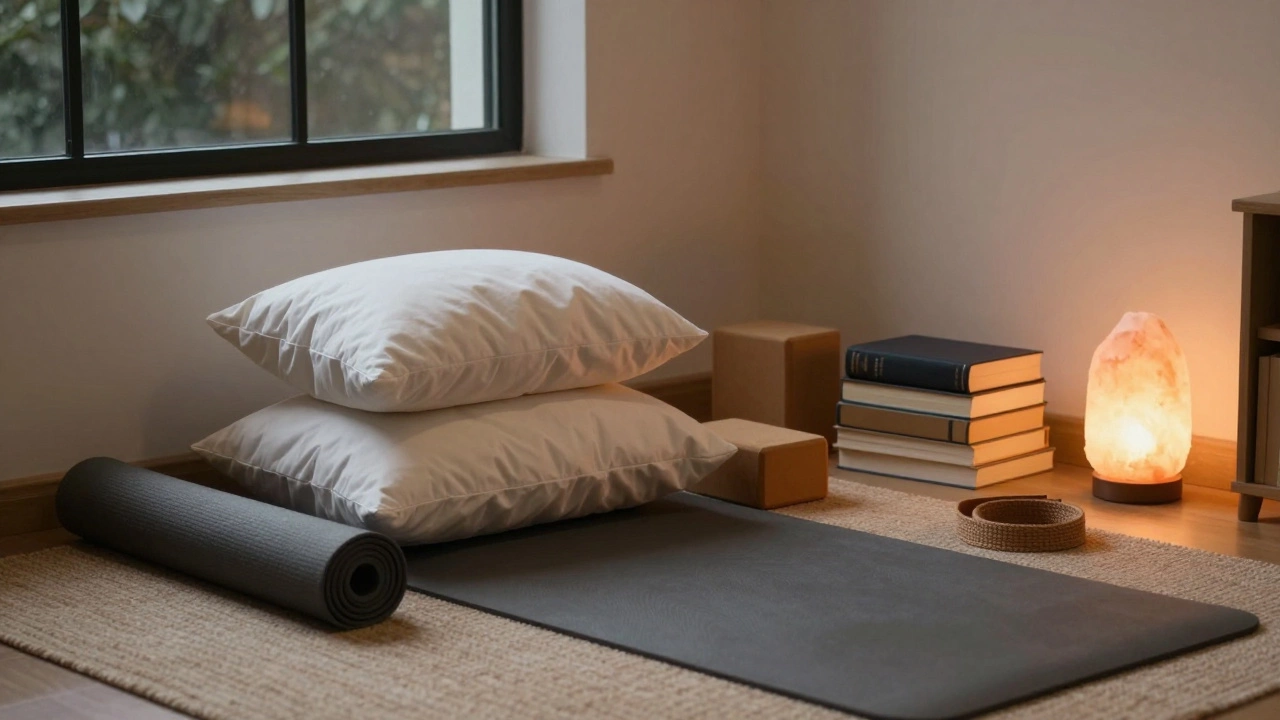
You don't need a studio membership to benefit from these practices. Here is how to set up a safe environment at home:
You don't have to choose between gentle and vigorous yoga. In fact, combining them creates a balanced practice. Try pairing a vigorous morning session, like Vinyasa or Power Yoga, with a gentle evening session, like Restorative or Yin. This mimics the natural circadian rhythm of energy and rest. Alternatively, dedicate specific days to gentle practices. For example, do strength training on Monday, Wednesday, and Friday, and Restorative yoga on Tuesday and Thursday to aid recovery.
Remember, consistency beats intensity. Doing ten minutes of gentle yoga every day is far more beneficial than doing an hour once a month. Over time, you will notice improvements in your posture, sleep quality, and emotional resilience. The gentlest form of yoga is the one you can sustain without burning out.
Yes, Restorative Yoga is ideal for beginners because it requires no prior flexibility or strength. Since props support your body completely, you can focus on relaxation and breathing without worrying about perfecting complex poses.
Absolutely. Restorative and Yin yoga can relieve back pain by releasing tension in the muscles and connective tissues surrounding the spine. Poses like Supported Bridge or Legs-Up-The-Wall are particularly effective. However, always consult a healthcare provider for chronic pain conditions.
The main difference lies in the target tissue and level of support. Yin Yoga targets connective tissues (fascia, ligaments) with minimal support, requiring you to hold poses passively for longer periods. Restorative Yoga targets the nervous system, using maximum props to fully support the body, allowing for complete muscular relaxation.
You can practice gentle yoga daily. Because it is low-impact and focuses on recovery, it does not cause the same fatigue as high-intensity workouts. Many practitioners find that daily short sessions (15-30 minutes) yield the best results for stress management and flexibility.
No, you can use household items. Firm pillows can replace bolsters, stacked books can serve as blocks, and a long towel or belt can act as a yoga strap. The goal is to find stable supports that allow your body to relax completely.