
| Timeframe | Total Deficit | Est. Fat Loss |
|---|---|---|
| Week 1 | 0 kcal | 0 lbs |
| Month 1 | 0 kcal | 0 lbs |
| Month 3 | 0 kcal | 0 lbs |
| 6 Months | 0 kcal | 0 lbs |
For the first 2-4 weeks, you may see minimal scale movement due to water retention in muscles. The numbers above represent pure fat loss. If you maintain a deficit of 0 kcal/day, this is considered a healthy, sustainable rate.
Enter your details and click calculate to see your projected results.
You’ve probably seen it everywhere. A treadmill set to a steep angle, someone walking briskly, and a caption promising rapid transformation. The 12-3-30 workout is a viral fitness trend involving walking at a 12% incline, 3 mph speed, for 30 minutes. It’s simple, it requires no equipment other than a treadmill, and it looks easy enough for anyone to do. But here is the question that actually matters: how much weight can you realistically lose doing this?
If you are looking for a magic number, I have bad news. There isn’t one. Your body isn’t a calculator where you input calories burned and get a precise output of pounds lost. However, we can make some very educated guesses based on physiology, energy expenditure, and real-world data. Let’s break down what this routine actually does to your body, how many calories it burns, and why the scale might not move as fast as TikTok suggests.
To understand weight loss, you first need to understand the calorie deficit. The old rule of thumb says that losing one pound of body fat requires a deficit of roughly 3,500 calories. This isn’t perfect science-metabolism is more complex-but it gives us a solid baseline for estimation.
So, how many calories does the 12-3-30 method burn? This depends heavily on your current body weight. Heavier individuals burn more energy moving their mass up an incline. Here is a rough estimate for a 30-minute session:
If you do this every single day, seven days a week, you are looking at a weekly deficit of about 2,100 to 2,700 calories just from the exercise itself. That translates to roughly 0.6 to 0.8 pounds of fat loss per week from the workout alone.
Now, if you combine this with a moderate dietary adjustment-say, cutting out 300 calories a day from snacks or portion sizes-you could push that total weekly loss to around 1.5 to 2 pounds. This is considered a healthy, sustainable rate. Anything faster usually means you are losing water weight or muscle, which is counterproductive in the long run.
Here is where most people get frustrated. They start the 12-3-30 routine, commit to it for two weeks, and step on the scale only to see the number hasn’t budged. Does that mean it doesn’t work? Not necessarily.
Walking at a high incline engages your glutes, hamstrings, and calves significantly. When you start a new resistance-based activity-even if it’s just gravity acting against you-your muscles undergo micro-tears. As they repair, they retain water to manage inflammation. This is called glycogen supercompensation and inflammatory fluid retention.
For the first 2 to 4 weeks, you might actually gain a pound or two on the scale. This is temporary. It’s water, not fat. If you stop because the scale didn’t drop, you miss out on the metabolic benefits kicking in later. Trust the process, not just the daily number. Measure your waistline instead; inches often disappear before pounds do.
The 12-3-30 workout is essentially low-intensity steady-state (LISS) cardio with a strength component. Unlike high-intensity interval training (HIIT), which spikes your heart rate dramatically, this keeps you in Zone 2 or low Zone 3. This has specific advantages for fat loss.
When you stay in this moderate heart rate zone, your body relies more heavily on fat stores for fuel rather than glycogen (stored carbohydrates). While HIIT burns more calories in a shorter time, LISS is often more sustainable for beginners and causes less cortisol spike. High cortisol levels can lead to belly fat storage and increased appetite. By keeping the stress on your body manageable, you create a hormonal environment that supports fat loss without triggering hunger cravings that sabotage your diet.
Additionally, consistent cardiovascular activity improves insulin sensitivity. When your cells respond better to insulin, your body is less likely to store incoming food as fat and more likely to use it for energy. This is a crucial, invisible benefit that doesn’t show up on the scale but drastically changes your body composition over time.

Let’s put this into a practical timeline. Assume you are a 160-pound person who starts doing 12-3-30 five days a week and maintains their current diet. No extra veggies, no fewer cookies. Just the walk.
| Timeframe | Calories Deficit | Expected Fat Loss |
|---|---|---|
| Week 1 | ~1,500 kcal | 0 - 0.4 lbs (Water fluctuation may mask loss) |
| Month 1 | ~6,000 kcal | 1.5 - 2 lbs |
| Month 3 | ~18,000 kcal | 4.5 - 6 lbs |
| 6 Months | ~36,000 kcal | 9 - 11 lbs |
These numbers seem modest compared to the "lose 20 pounds in a month" headlines, but they are real. They represent pure fat loss that is unlikely to return if you maintain the habit. Crash diets give you quick numbers but leave you with loose skin and a slower metabolism. Slow and steady builds a body that stays lean.
Even if you nail the 12-3-30 routine, you might still fail to lose weight if you fall into these traps:
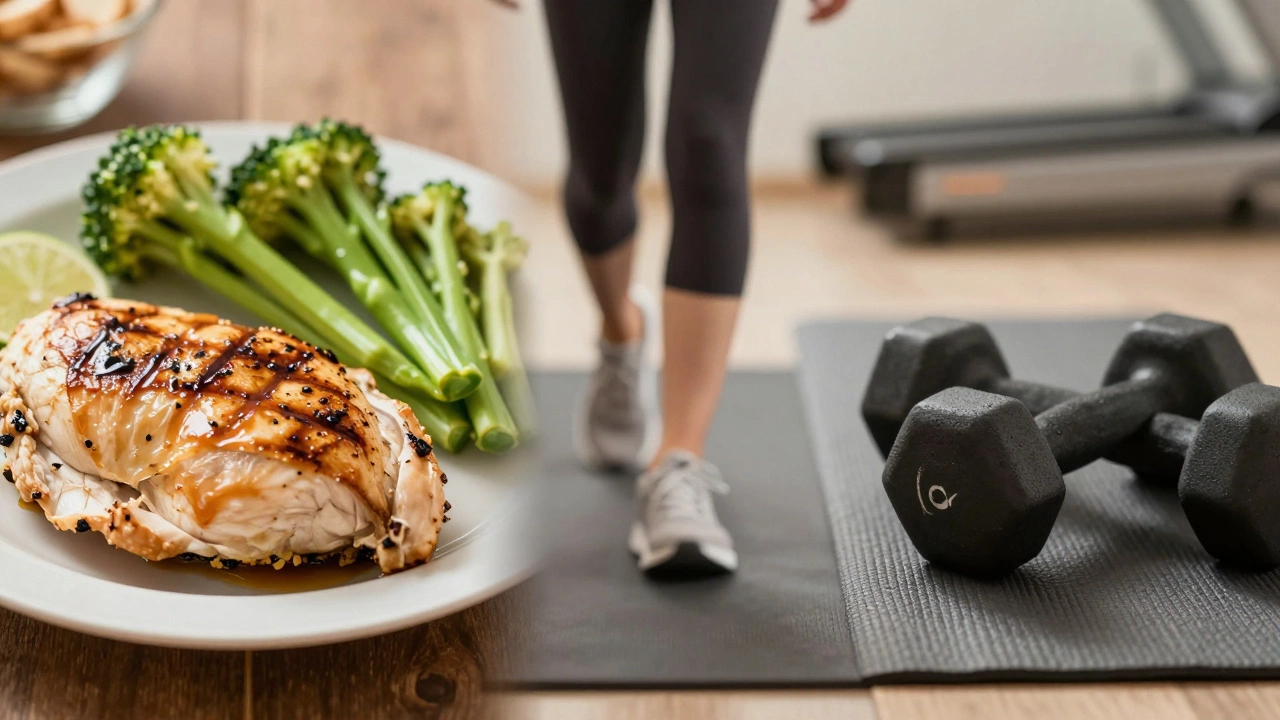
If you want to turn the 12-3-30 from a maintenance tool into a fat-loss engine, you need to stack it with other strategies. Think of the walk as the foundation, not the whole house.
Add Resistance Training: Muscle tissue is metabolically expensive. It burns calories just existing. If you lift weights two or three times a week, you increase your resting metabolic rate. This means you burn more calories while sitting on the couch than you did before you started lifting. Combine this with the daily walk, and you attack fat loss from two angles.
Prioritize Protein: When you are in a calorie deficit, your body might try to break down muscle for energy. Eating adequate protein (aim for 0.7 to 1 gram per pound of body weight) protects your muscle mass. This ensures that the weight you lose comes from fat, not your hard-earned gains. Plus, protein keeps you fuller longer, making it easier to stick to your calorie goals.
Track Non-Scale Victories: Pay attention to how your clothes fit, your energy levels during the day, and your sleep quality. Often, you will feel lighter and stronger before the scale reflects significant change. These are signs that the strategy is working.
The 12-3-30 workout is generally safe, but the 12% incline puts significant stress on your lower back and Achilles tendons. If you have a history of lower back pain, knee issues, or plantar fasciitis, consult a physical therapist before starting. You might need to reduce the incline to 8% or 10% initially and build up gradually. Listen to your body. Sharp pain is a stop signal. Discomfort from effort is normal; joint pain is not.
Yes, many people prefer fasted cardio in the morning. For low-intensity exercises like the 12-3-30, this can help mobilize fat stores. However, if you feel dizzy or weak, eat a small snack like a banana beforehand. Hydration is critical regardless of whether you eat.
You don't have to do it every day. Rest days are important for recovery. Aim for 4-5 days a week. Consistency over months matters more than perfection in a single week. Taking a rest day prevents burnout and injury.
It will strengthen and define your glutes, hamstrings, and calves. Because it is primarily an endurance activity, it won't bulk you up like heavy squats might, but it will create a firmer, more toned appearance as you lose body fat.
Find a hill outdoors. Try to find a slope that feels similar in difficulty to a 12% incline. Walk up it at a brisk pace for 30 minutes. Alternatively, you can do stair climbing machines at the gym, setting the resistance to challenge you similarly.
Most people notice changes in their clothing fit after 3-4 weeks. Visible changes in the mirror typically take 6-8 weeks of consistent effort combined with proper nutrition. Patience is key because spot reduction is a myth; your body loses fat systemically.