
Adjust the sliders and click calculate to see your personalized yoga roadmap.
You’ve probably seen the photos: influencers in tight leggings, standing in a perfect plank or boat pose, with a midsection that looks like it was carved from marble. It’s easy to look at those images and assume that if you just do enough yoga, your stomach will magically flatten out. But here is the hard truth that most wellness blogs won’t tell you: yoga alone rarely flattens your stomach by burning fat.
That doesn’t mean yoga is useless for your abs. It means we need to separate two very different things: losing belly fat and tightening abdominal muscles. If you want a flatter stomach, you need to understand how your body actually works. Let’s break down what yoga can do, what it can’t do, and how to combine it with other habits to get the results you’re looking for.
First, let’s kill a zombie myth: spot reduction. This is the idea that doing exercises for a specific body part-like crunches for abs or yoga for the belly-will burn the fat stored right there. Science has repeatedly shown this isn’t true. When your body burns fat, it pulls from stores all over your system, not just where you’re moving. You might have strong six-pack muscles underneath, but if they’re covered by a layer of subcutaneous fat, they won’t show up.
Spot reduction is a physiological misconception that exercising a specific muscle group reduces fat in that area exclusively. In reality, fat loss is systemic. Genetics largely determine where you lose fat first (often the face or limbs) and last (usually the abdomen and hips). So, if you do an hour of yoga every day but keep eating more calories than you burn, your stomach size likely won’t change much, even if your core gets stronger.
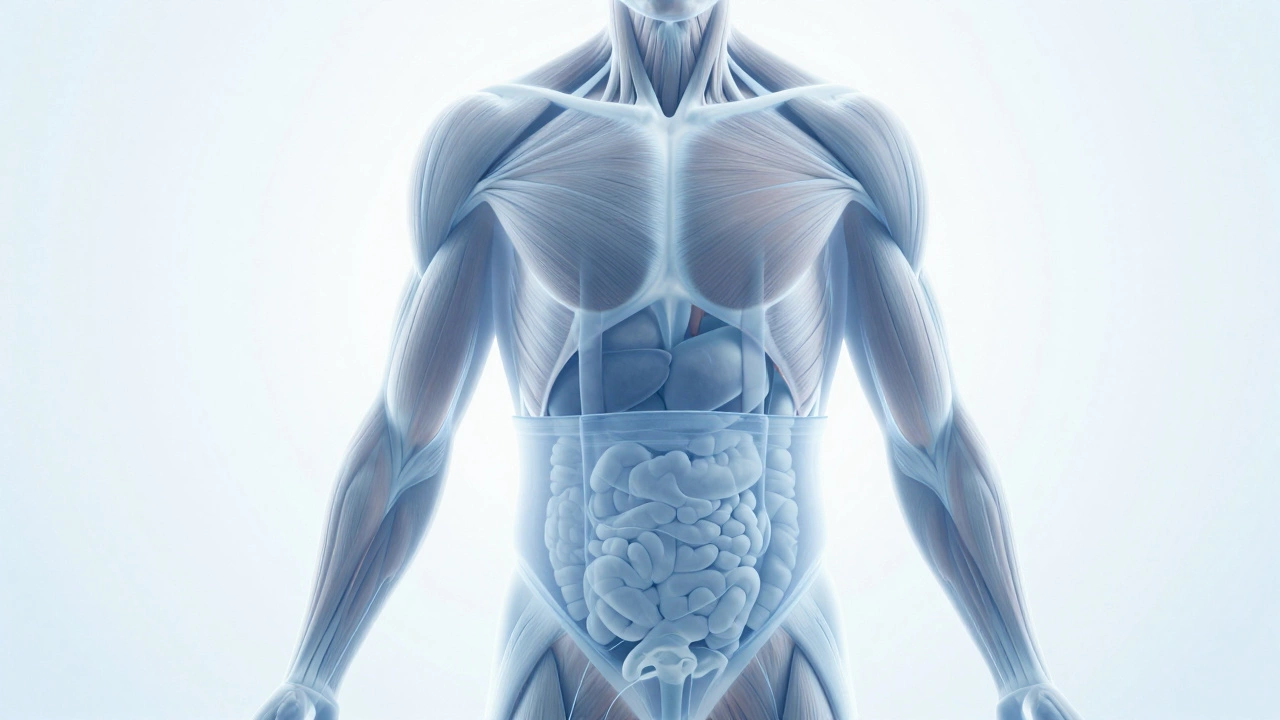
If burning fat isn’t the primary job of yoga, then why does everyone recommend it for a flat tummy? Because yoga builds deep core strength. Most people think of abs as just the "six-pack" rectus abdominis. But your core includes deeper layers like the transverse abdominis. Think of this muscle as a natural corset. It wraps around your organs and spine, providing stability.
When this deep muscle is weak, your belly tends to protrude, even if you aren’t overweight. This is often called "diastasis recti" in postpartum women, but it affects many people who sit at desks all day. Yoga poses engage these stabilizers constantly. Poses like Plank (Phalakasana) and Boat Pose (Navasana) force you to draw your navel toward your spine. Over time, this toning effect can pull your stomach in, making it look flatter and tighter, regardless of whether you’ve lost significant fat.
Not all yoga poses are created equal when it comes to the core. While gentle restorative yoga is great for stress, it won’t challenge your abs. To see changes, you need to incorporate dynamic flows and holding challenging balances. Here are the heavy hitters:
| Pose Name | Primary Muscle Group | Why It Works |
|---|---|---|
| Boat Pose (Navasana) | Rectus Abdominis, Hip Flexors | Requires intense contraction to hold legs up; directly targets the front abs. |
| Side Plank (Vasisthasana) | Obliques, Transverse Abdominis | Targets the sides of the waist, helping to reduce the appearance of love handles. |
| Crow Pose (Bakasana) | Entire Core, Shoulders | An arm balance that requires total core compression to lift feet off the floor. |
| Downward-Facing Dog | Hamstrings, Core Stabilizers | Often underestimated, but maintaining a long spine here engages the lower abs. |
To make these effective, focus on quality over quantity. Instead of wobbling through twenty reps, hold Boat Pose for thirty seconds while breathing deeply. Feel the burn in your belly button area. That sensation is the muscle working. If you don’t feel it, you’re likely using your hip flexors or momentum instead.
Here is where yoga has a secret weapon that weightlifting or running doesn’t always provide: stress management. High levels of cortisol, the body’s primary stress hormone, are linked to increased visceral fat storage. Visceral fat is the dangerous kind that sits around your internal organs, pushing your stomach outward.
Chronic stress keeps cortisol elevated, which signals your body to store energy as fat, particularly in the abdominal region. Yoga activates the parasympathetic nervous system-the "rest and digest" mode. By lowering cortisol levels, regular yoga practice can help create a hormonal environment that is less conducive to belly fat storage. Studies published in journals like *Psychoneuroendocrinology* have shown that mindfulness-based stress reduction techniques, including yoga, can significantly lower cortisol levels compared to control groups.
So, while yoga isn’t a direct fat-burner like high-intensity interval training (HIIT), it removes one of the biological barriers to losing belly fat. It’s a subtle but powerful mechanism. You might not sweat as much, but your body chemistry shifts in a way that supports leanness.
Let’s be real: you cannot out-yoga a bad diet. If you’re consuming excess calories, especially from processed sugars and refined carbs, no amount of Boat Pose will flatten your stomach. Nutrition accounts for roughly 70-80% of body composition changes. To see your abs, you need to be in a slight caloric deficit.
This doesn’t mean starving yourself. It means eating whole foods, prioritizing protein to maintain muscle mass, and reducing inflammation. Interestingly, yoga practitioners often report improved digestion and reduced bloating. Bloating can add inches to your waistline temporarily. Poses like Child’s Pose and supine twists massage the digestive organs, aiding in gas release and waste elimination. If your stomach feels puffy after meals, yoga can help relieve that pressure quickly, giving you a flatter appearance within hours, if not days.

For the fastest results, treat yoga as part of a hybrid approach. Don’t view it as an either/or choice between yoga and cardio. Combine them. Try this weekly structure:
This combination ensures you’re building muscle (which raises your resting metabolic rate), burning calories, and managing stress. Yoga provides the mind-body connection that helps you stick to the routine, while the other elements drive the physical changes.
If you start practicing yoga today, when will you see a flatter stomach? Be patient. Muscle tone changes can happen in 4-6 weeks if you’re consistent. However, visible fat loss takes longer. A safe rate of fat loss is about 0.5 to 1 pound per week. For someone carrying extra belly fat, it might take 3-6 months of combined diet and exercise to see significant definition.
Avoid the trap of comparing yourself to social media influencers. Remember, lighting, angles, and sometimes editing play a huge role in those photos. Focus on how your clothes fit and how strong you feel. If your jeans feel looser around the waist and you can hold a plank longer than before, you’re winning. The visual flattening will follow the functional improvements.
It is unlikely to lose significant belly fat solely through yoga unless your current activity level is zero. Yoga burns fewer calories per minute than running or HIIT. However, gentle yoga combined with a strict caloric deficit can lead to fat loss. For best results, pair yoga with cardiovascular exercise and proper nutrition.
Aim for 3 to 4 sessions per week focusing on power yoga, vinyasa, or specific core-strengthening routines. Consistency is key. Doing 20 minutes of focused core work daily is more effective than one hour once a week. Allow muscles time to recover between intense sessions.
Yes, yoga can significantly reduce bloating. Twisting poses like Seated Spinal Twist and resting poses like Child’s Pose compress and massage the digestive tract, helping to move gas and stool through the system. This can result in a visibly flatter stomach within hours of practice.
Pilates is highly targeted for core strength and may produce faster visible toning because it focuses intensely on the abdominal muscles. Yoga offers broader benefits including flexibility, stress reduction, and balance. Both are effective; Pilates might edge out slightly for pure core aesthetics, but yoga provides superior mental health benefits that support long-term adherence.
This is often due to weak deep core muscles (transverse abdominis) or poor posture (anterior pelvic tilt). Even thin individuals can have a protruding belly if their core isn't engaging properly to hold their organs in place. Strengthening these deep muscles through yoga planks and breathwork can pull the stomach in.