How many days a week do you really need to roll out your mat to feel the difference? If you’re juggling work, family, and life’s endless to-do lists, squeezing in yoga three times a week might feel like a win. But is it enough? Let’s cut through the noise and look at what science, experienced teachers, and real people are saying.
Three days a week isn’t just a compromise-it’s a solid foundation. Studies from the Journal of Alternative and Complementary Medicine show that practicing yoga just 3 times weekly for 8 weeks leads to measurable drops in cortisol, the stress hormone. That means less anxiety, better sleep, and even improved digestion. You’re not just stretching-you’re resetting your nervous system.
Physically, you’ll start noticing changes. Your hamstrings loosen. Your shoulders stop hunching. Your balance improves. One 2024 study tracking 300 adults who did yoga 3 days a week found that 78% reported better posture and reduced lower back pain within 6 weeks. That’s not magic. That’s consistency.
But here’s the thing: yoga isn’t just about flexibility. It’s about body awareness. On your non-yoga days, you’ll catch yourself standing taller. You’ll pause before reacting to stress. You’ll breathe deeper without thinking. That’s the quiet power of 3 days a week.
Let’s be honest-3 days won’t turn you into a human pretzel overnight. If your goal is to master advanced poses like handstands or scorpion, you’ll need more frequent practice. Muscle memory builds with repetition, and complex poses require daily neural reinforcement.
Also, if you’re using yoga as your main form of cardiovascular exercise, 3 days might not be enough. A typical vinyasa class burns about 180-300 calories. That’s fine for maintenance, but if you’re trying to lose weight or build endurance, you’ll likely need to mix in brisk walks, cycling, or light strength work on your off days.
And then there’s the mental habit. Doing yoga 3 days a week is great-but doing it 5 or 7 days makes it part of your identity. It becomes your reset button, not just another item on the checklist. People who practice daily report deeper emotional resilience. They’re less reactive. More present. That’s the next level.
Three days a week is perfect for:
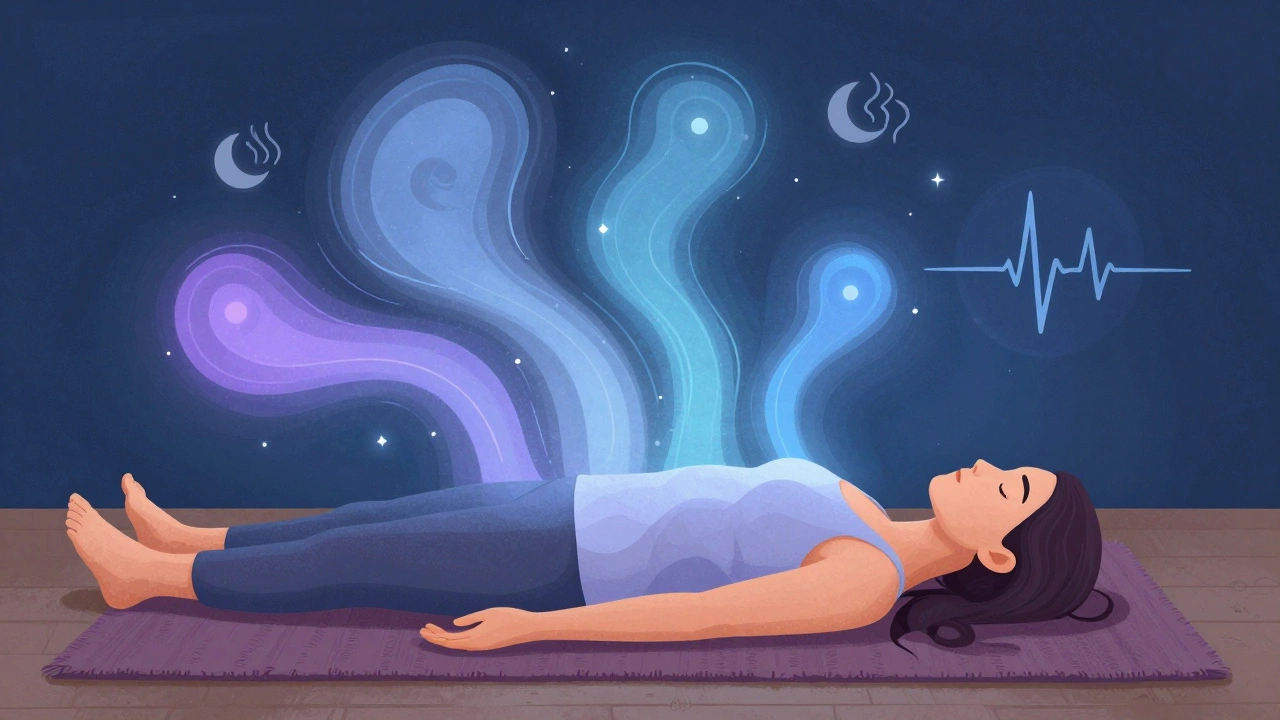
Not all yoga is created equal. If you’re only doing 3 sessions, make them count.
You don’t need to do yoga every day-but you do need to move. On your non-yoga days, try this:
This isn’t about adding more to your plate. It’s about weaving small habits into your existing routine. Movement doesn’t have to look like a workout to be effective.
Sarah, 42, from Perth, started yoga 3 days a week after chronic neck pain from desk work. After 8 weeks, her pain dropped by 60%. She didn’t become a yogi. She just became less stiff, less anxious, and more patient with her kids.
Marcus, 58, began yoga after a minor heart scare. His doctor told him to move more. He picked 3 gentle yoga sessions a week. Within 3 months, his blood pressure dropped from 142/88 to 124/76. He now walks every morning and says yoga gave him the mental space to stick with it.
These aren’t outliers. They’re everyday people who found that consistency beats intensity.
There are times when you’ll need more:
There’s no shame in adjusting. Yoga is a tool, not a test. If 3 days feels too light, add one more. If it feels overwhelming, cut back to 2. The goal isn’t perfection-it’s sustainability.
Is 3 days of yoga enough? Yes-for most people, it’s more than enough. It’s enough to reduce stress, improve mobility, and create lasting change. You don’t need to be perfect. You don’t need to do it every day. You just need to show up, consistently, on the days you can.
Yoga isn’t about how often you roll out your mat. It’s about how often you choose to breathe, to pause, to listen to your body. Three days a week gives you that space. And sometimes, that’s all you need to start feeling like yourself again.
Yes, but yoga alone won’t create a calorie deficit. To lose weight, pair your 3 yoga sessions with daily movement like walking, cycling, or light strength training. Yoga helps reduce stress-related eating and improves body awareness, which supports healthier choices. One 2023 study found that people who did yoga 3x/week and walked 10,000 steps daily lost 2-3% body fat in 12 weeks without changing their diet.
For most people, 3 longer sessions are better. A 60-minute session allows deeper stretching, better breathwork, and more time to reset your nervous system. Daily 15-minute sessions are great for consistency, but they often lack the depth needed to release tension or build strength. If you’re pressed for time, aim for 3 longer sessions and add 5-minute stretches on off days.
Mix it up. Do a Vinyasa or Power Yoga session to build strength and sweat, a Hatha or Yin session to stretch deeply, and a Restorative or Yoga Nidra session to relax. This balance prevents plateaus and keeps your body and mind engaged. Avoid doing the same style every time-it limits your progress.
Absolutely. A 2025 meta-analysis of 12 studies found that participants who practiced yoga 3 times per week reported falling asleep 20% faster and waking up less often during the night. The key is doing calming poses like Legs-Up-the-Wall, Child’s Pose, and seated forward folds in the evening. Avoid intense flows close to bedtime.
Yes, and it’s especially beneficial. Yoga improves balance, reduces joint stiffness, and helps maintain bone density. Many seniors in Perth have joined gentle yoga classes 3 times a week and report fewer falls and less reliance on pain medication. Look for classes labeled "senior-friendly" or "chair yoga" if mobility is a concern.
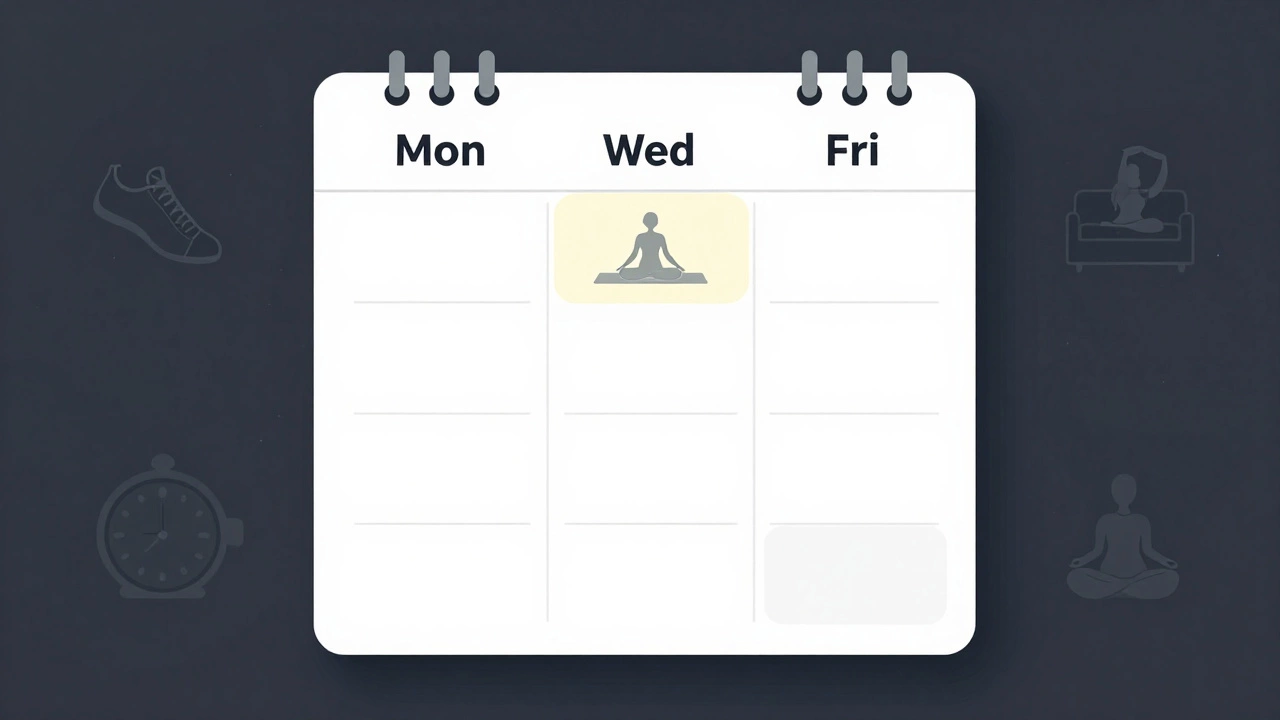
Start simple. Pick three days that work-maybe Monday, Wednesday, and Friday. Block them in your calendar like appointments. Prepare your space the night before: lay out your mat, a blanket, and a water bottle. No excuses. Just show up.
After 4 weeks, check in. Are you sleeping better? Moving easier? Feeling calmer? If yes-you’ve already done enough.