Walking into a yoga studio for the first time can feel overwhelming. You’re not sure where to put your mat, what to wear, or if it’s okay to bring your water bottle. Maybe you’ve seen someone whispering to their neighbor during savasana or heard loud footsteps on the mat next to you. These aren’t just minor annoyances-they break the quiet focus that makes yoga powerful. Yoga etiquette isn’t about rules for the sake of rules. It’s about creating space-for your practice, for others, and for stillness.
Showing up five minutes before class starts is ideal. Most studios open the doors 10 to 15 minutes early, and that’s when you should arrive. It gives you time to settle in, take off your shoes, and find your spot without rushing. Arriving late disrupts the flow of the class. The teacher is guiding people into breath and alignment, and walking in mid-sequence pulls attention away from everyone. If you’re running late, wait outside until the instructor signals it’s okay to enter-usually after a few rounds of breathwork or a seated centering.
Yoga studios are sacred spaces. In many traditions, removing shoes is a sign of respect. Even if your studio doesn’t have a strict rule, it’s common courtesy. Your shoes carry dirt, germs, and outside energy. Leave them neatly by the door, or in the cubby provided. Some studios even have a designated area for bags and belongings. Don’t pile yours on top of someone else’s. Keep your space tidy so others can move freely.
Where you place your mat matters. If you’re new, avoid the front row unless you’re confident in your alignment. The front row is usually for experienced students or those who help demonstrate poses. The middle or back rows are better for beginners. If the class is crowded, don’t spread your mat too wide. A standard mat is about 24 inches wide-keep it within that space. If someone sets up next to you, don’t shift your mat to crowd them. Yoga is personal, but it’s also shared space.
Turn your phone off or put it on silent before you walk in. Even a quiet vibration can break someone’s focus. Don’t check your messages during class. Don’t take photos or videos unless the studio explicitly allows it-and even then, never film others without permission. Your phone doesn’t belong in yoga. If you’re expecting an emergency call, leave it on silent and place it face down, far from your mat. No one needs to see your notifications light up during downward dog.
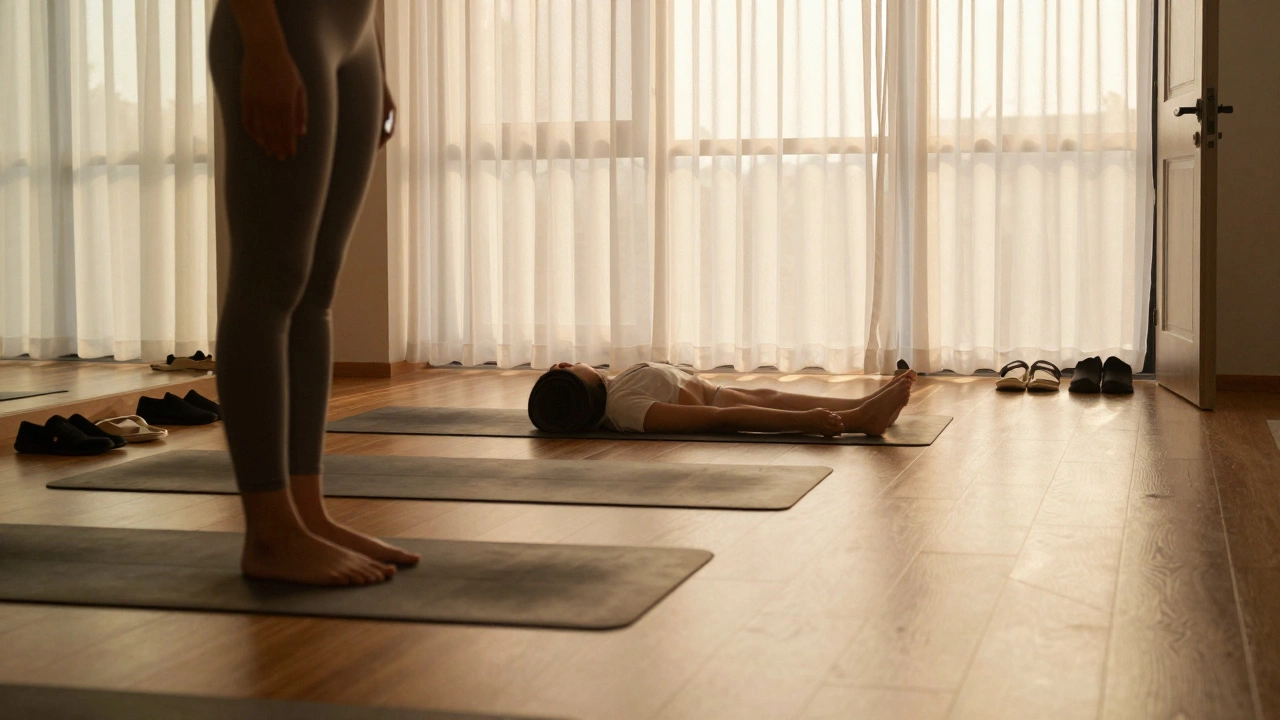
Savasana, or corpse pose, is the most important part of class. It’s when your body integrates the work you’ve done. Talking, fidgeting, or adjusting your mat during this time is deeply disruptive. If you need to leave early, do it before savasana begins. If you’re feeling restless, stay still. Breathe. Let your body rest. Even if you don’t feel like you’re "getting" anything from it, you are. And so is everyone around you.
Wear clothing that lets you move without distraction. Avoid overly baggy clothes-they can slip or fall during poses like forward folds or inversions. Tight-fitting, breathable fabrics are best. Avoid strong perfumes, colognes, or scented lotions. Yoga is about internal awareness, not external fragrance. Someone with allergies or sensitivities might be right next to you. A light deodorant is fine. Anything stronger isn’t.
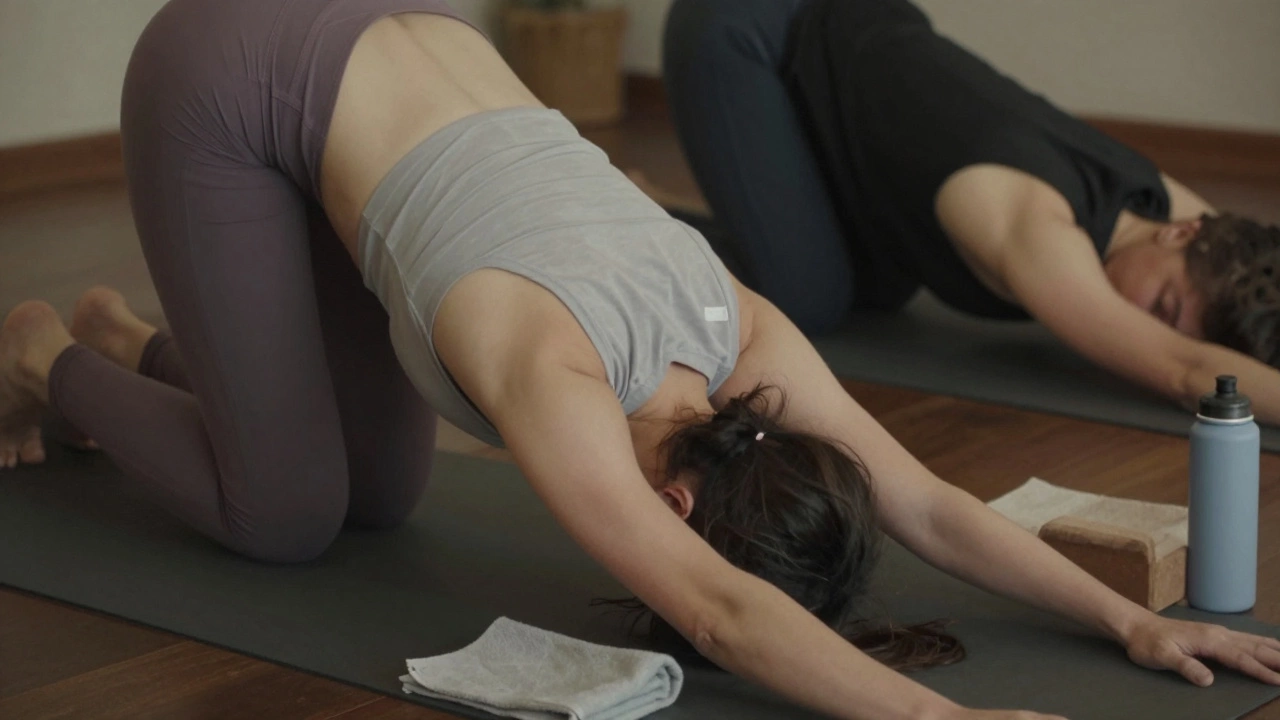
Yoga isn’t a competition. You’re not there to do the same pose as the person next to you. Someone might be flexible, strong, or have years of practice. That doesn’t make your practice less valid. Your body is your own. Use props-blocks, straps, blankets-if you need them. There’s no shame in modifying. In fact, using props shows awareness, not weakness. The teacher is there to help you find what works for your body, not to push you into a pose you’re not ready for.
Teachers don’t give cues just to hear themselves talk. Every instruction has a purpose-to protect your joints, deepen your breath, or align your spine. If you’re unsure about a pose, ask during class. But don’t interrupt. Wait for a natural pause, or ask after class. If you’re confused, try the modification. You don’t need to be perfect. You just need to be present.
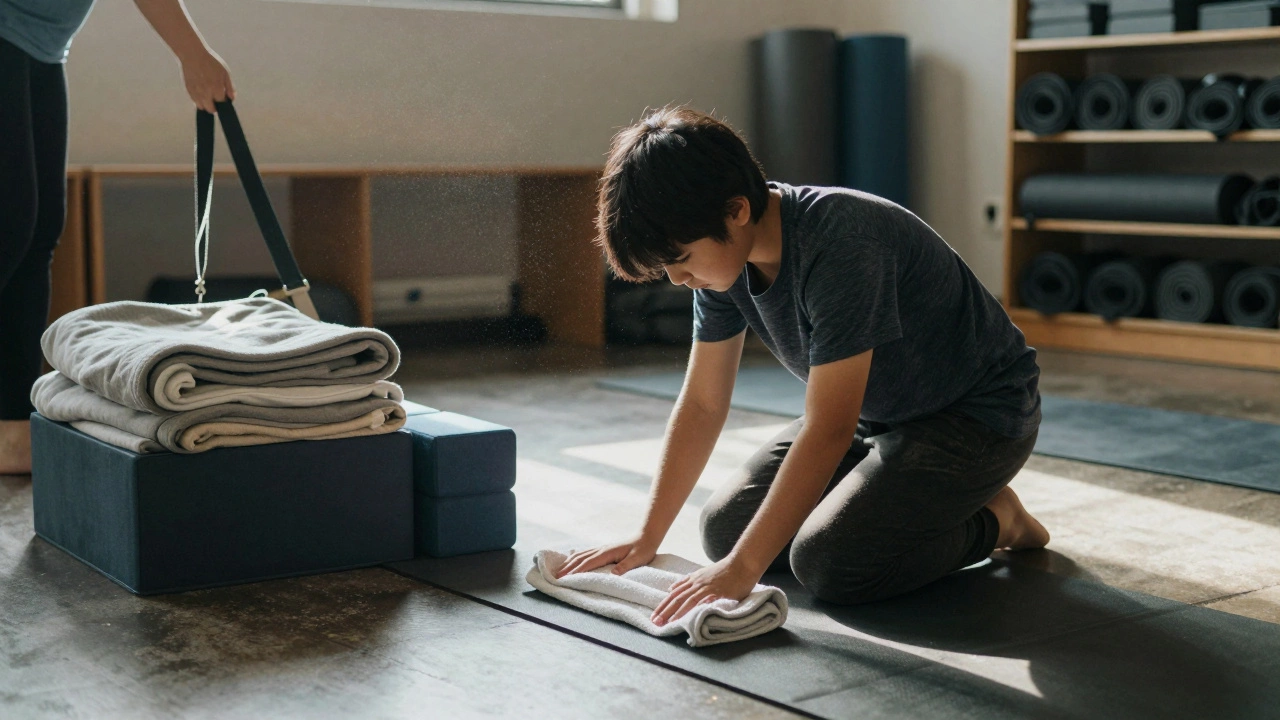
Wipe down your mat with the provided spray and towel after class. Even if you didn’t sweat much, your body leaves oils and skin cells. Most studios provide cleaning supplies for a reason. Don’t leave your towel, water bottle, or shoes on the floor. Put them back where you found them. If you borrowed a blanket or block, return it. Small actions build a culture of respect.
Yoga isn’t always easy. Sometimes you’re tired. Sometimes you’re frustrated. Sometimes the person next to you is snoring during savasana. Don’t roll your eyes. Don’t sigh loudly. Don’t make a scene. If something bothers you, take a breath. Move your mat slightly. Or talk to the studio manager afterward. Most people aren’t trying to be rude-they just don’t know better. Your calm response can set a better example than any rulebook.
Yoga is one of the few spaces left where silence is honored. Where people come to breathe, not to perform. When you follow etiquette, you’re not just being polite-you’re protecting the energy of the room. A quiet, clean, respectful studio helps people go deeper. It lets someone who’s grieving, anxious, or healing find a moment of peace. That’s the real gift of yoga. And it’s one you help create every time you walk in.
You’re not the yoga police. But you can gently help. If someone is loudly talking, you can turn your head slightly away. If someone’s mat is too big, you can shift yours to make space. If you’re comfortable, you can say something quietly after class: "Hey, I noticed the music was pretty loud during savasana-do you think the studio could turn it down?" Most people want to do the right thing. They just need a nudge.
You won’t get it right every time. Maybe you forgot to wipe your mat. Maybe you walked in late. Maybe you brought your phone in by accident. That’s okay. Yoga isn’t about perfection. It’s about showing up, noticing, and trying again. Each time you choose kindness over convenience, you’re not just following a rule-you’re deepening your practice.
No, talking during class breaks the focus of everyone around you. Quiet conversation before or after class is fine, but once the session begins, silence is part of the practice. Even whispering can distract others who are working on their breath or alignment.
Most studios discourage socks because they make it hard to grip the mat, increasing the risk of slipping. Bare feet provide better balance and connection to the floor. If you have cold feet, wear toeless yoga socks with grips on the bottom-they’re designed for this.
Many studios provide mats, but bringing your own is cleaner and more personal. Shared mats can harbor bacteria and odors. If you’re new, borrowing one is fine-but consider buying your own after a few visits. It’s an investment in your health and comfort.
It’s not rude if you do it before savasana. Leaving during the final relaxation is disruptive. If you know you need to leave early, tell the teacher before class starts. They’ll appreciate the heads-up and can help you exit quietly.
It happens. Cover your mouth with your elbow or a tissue, and keep going. Don’t pause or apologize loudly. Everyone gets sick sometimes. The best thing you can do is keep breathing and stay present. Most people won’t even notice.