Enter your current routine details to estimate how quickly you might see visible changes in muscle tone and definition.
Tone Score:
Calculating...
Based on typical biological adaptation rates.Analyzing inputs...
You look in the mirror, pinch your arm or thigh, and feel that soft, jiggly resistance. It’s frustrating, isn’t it? You’ve probably heard the promise of "toning" sold everywhere from Instagram ads to cheap gym memberships. But here is the uncomfortable truth: muscle tone is not something you can simply "add" to your body like sprinkling sugar on a cake. You cannot turn fat into muscle, and you cannot make muscle hard without actually building it.
So, can a flabby body be toned? Yes, absolutely. But it requires understanding what "flabby" actually means biologically. That softness is usually a combination of low muscle mass and a layer of subcutaneous fat covering it. To fix it, you don’t need magic pills or endless hours on a treadmill. You need a specific strategy that combines resistance training with proper nutrition. Let’s break down exactly how this works, why most people fail, and what you can do at home starting today.
To fix the problem, you have to understand the mechanism. When we talk about a "flabby" area, we are usually referring to adipose tissue (fat) sitting on top of skeletal muscle that has become deconditioned. If you have never lifted weights or done bodyweight exercises, your muscle fibers shrink-a process called atrophy. Meanwhile, if your calorie intake exceeds your expenditure, fat cells expand.
Subcutaneous fat is the layer directly under your skin. This is the fat you can pinch. It protects you from cold and cushions organs, but too much of it hides the shape of the muscles underneath. On the other hand, visceral fat surrounds your internal organs and pushes your belly out, but it doesn't necessarily cause the same surface-level jiggle in your arms or legs.
Toning, therefore, is really two things happening at once:
If you only diet, you lose weight, but you might end up looking "skinny-fat"-smaller, but still soft. If you only lift weights without managing food, you build muscle under the fat, which might make you look bulkier rather than toned. The sweet spot is doing both.
Many people start by running for an hour every day. They sweat, they burn calories, and they lose weight. But when they look in the mirror, the jiggle remains. Why?
Cardiovascular exercise is excellent for heart health and burning calories, but it does little to stimulate muscle growth. In fact, excessive steady-state cardio without adequate protein can sometimes lead to muscle loss along with fat loss. Your body adapts to being efficient. It doesn’t see a reason to keep large, energy-expensive muscles if you’re just jogging. Consequently, you lose volume overall, but the ratio of fat to muscle stays roughly the same. The result? A smaller version of the same soft silhouette.
To change the texture of your body, you need mechanical tension. You need to challenge your muscles enough that they adapt by becoming denser and firmer. This happens through resistance, whether that’s dumbbells, resistance bands, or your own body weight.
You don’t need a fancy gym to build firm muscle. Bodyweight training is highly effective for toning because it uses gravity as resistance. Exercises like push-ups, squats, lunges, and planks force your muscles to stabilize and contract against load.
Here is the key principle: progressive overload. If you do ten squats today, and ten squats next month, your muscles won’t change. You must make it harder over time. This could mean adding reps, slowing down the movement to increase time under tension, or adding external weight like a backpack filled with books.
Consider this simple home workout structure designed to target major muscle groups responsible for common areas of flabbiness (arms, thighs, glutes, and core):
Do this routine three times a week. Rest days are crucial because muscle repair-and thus firming-happens during rest, not during the workout.
| Exercise Type | Primary Benefit | Effect on Muscle Firmness | Calorie Burn |
|---|---|---|---|
| Steady-State Cardio (Running) | Heart Health & Calorie Deficit | Low (Risk of muscle loss) | Moderate |
| HIIT (High-Intensity Interval Training) | Efficient Fat Burning | Moderate (Some muscle retention) | High |
| Resistance Training (Weights/Bands) | Muscle Hypertrophy & Shape | High (Directly increases firmness) | Low-Moderate (But boosts metabolism) |
| Yoga/Pilates | Flexibility & Core Stability | Moderate (Improves posture/tightness) | Low |

You can train hard, but if your kitchen habits aren’t aligned, you won’t see results. Nutrition dictates whether you lose fat or muscle. To tone up, you generally want to maintain muscle while losing fat. This requires a slight caloric deficit-not a starvation diet.
Protein is the most critical macronutrient here. Every cell in your body needs protein, but muscle tissue is particularly hungry for it. When you eat protein, your body breaks it down into amino acids, which are the building blocks for repairing and growing muscle fibers. Without enough protein, your body may break down muscle tissue for energy, making you softer, not firmer.
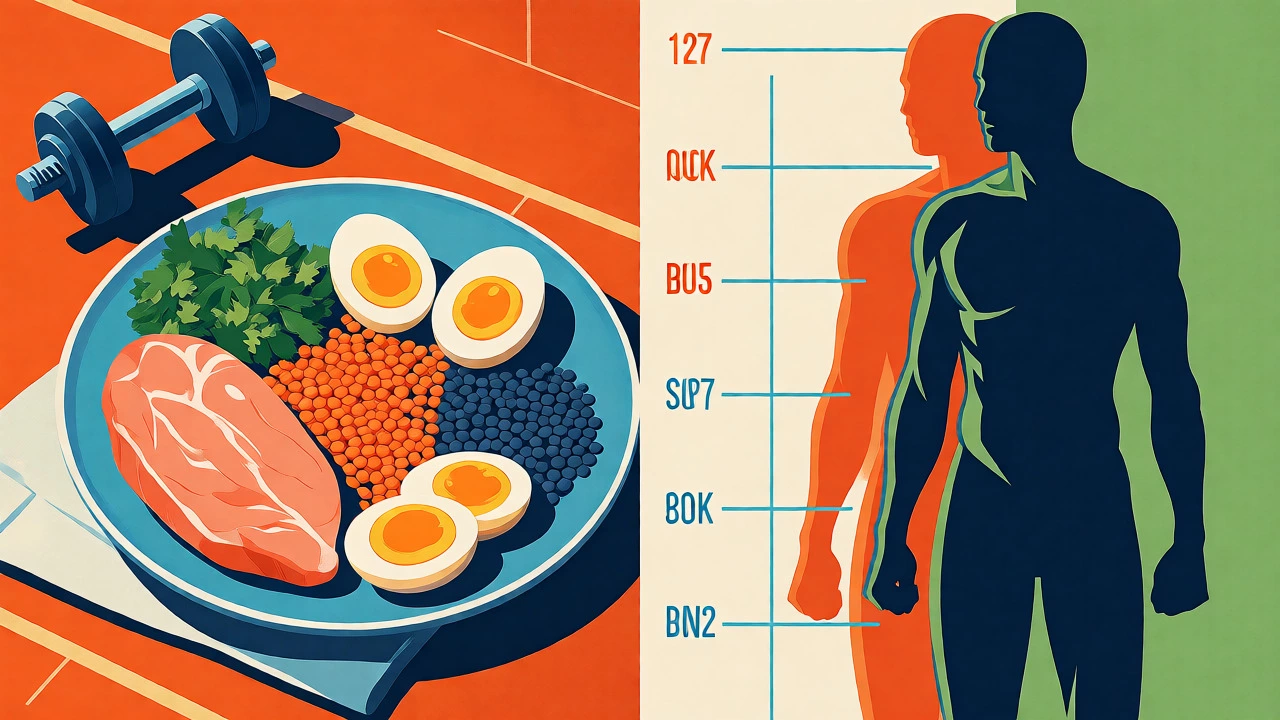
Aim for roughly 1.6 to 2.2 grams of protein per kilogram of your goal body weight. For a 70kg person, that’s around 112-154 grams daily. Good sources include chicken breast, fish, eggs, Greek yogurt, lentils, and tofu. Spreading this intake across meals helps maximize muscle protein synthesis throughout the day.
Also, don’t fear carbohydrates. They fuel your workouts. If you cut carbs too drastically, your performance drops, and you can’t lift heavy enough to stimulate change. Just choose complex carbs like oats, brown rice, and vegetables over sugary snacks.
The fitness industry loves selling easy fixes. Here are three myths that might be holding you back:
Myth 1: High reps with light weights tone; low reps with heavy weights bulk. This is false. Both high-rep/light-weight and low-rep/heavy-weight training can build muscle and burn fat. The difference is mostly in endurance vs. strength adaptation. However, very light weights often fail to provide enough stimulus for significant change unless taken to absolute failure. You need to challenge the muscle.
Myth 2: Spot reduction works. You cannot crunch away belly fat or run away thigh fat. Your body decides where to pull fat from based on genetics and hormones. Doing 100 sit-ups strengthens your abs, but it won’t specifically melt the fat covering them. Full-body fat loss reveals the muscle everywhere.
Myth 3: Women will get bulky from lifting. Unless you are genetically predisposed to massive muscle growth and eating in a surplus, lifting weights will not make women look like bodybuilders. It will make them look tighter, more athletic, and defined. Men have significantly higher testosterone levels, which drives rapid muscle hypertrophy. Women typically experience subtle changes in shape and firmness.
Patience is non-negotiable. Biological changes take time. You might feel stronger within two weeks due to neural adaptations-your brain learns to recruit muscle fibers more efficiently. But visible changes in body composition usually take longer.
Expect noticeable differences in 8 to 12 weeks of consistent effort. This assumes you are training 3-4 times a week and adhering to your nutrition plan. Rapid weight loss (more than 1kg per week) often sacrifices muscle, leading to less tone. Slow, steady progress preserves lean mass.
Track progress beyond the scale. Use photos, how clothes fit, and strength metrics (e.g., "I can now do 10 full push-ups") as better indicators of toning than weight alone. Sometimes the scale stays static while your body recomposes-you lose fat and gain muscle simultaneously, keeping weight constant but changing shape dramatically.
Yes, absolutely. Home workouts using bodyweight exercises, resistance bands, or household items can provide sufficient resistance to build muscle and improve tone. The key is progressive overload-making exercises harder over time by increasing reps, slowing tempo, or adding weight.
Most people notice improved strength and posture within 4-6 weeks. Visible changes in muscle definition and reduced flabbiness typically require 8-12 weeks of consistent training and proper nutrition. Individual results vary based on starting point, genetics, and adherence.
Walking is great for general health and calorie burning, but it is unlikely to significantly tone leg muscles on its own. It lacks the resistance needed for muscle hypertrophy. Adding hills, intervals, or combining walking with strength exercises like lunges and squats will yield better toning results.
Limit highly processed foods, added sugars, and excessive alcohol. These contribute empty calories that promote fat storage without providing nutrients for muscle repair. Focus on whole foods rich in protein, fiber, and healthy fats to support satiety and metabolic health.
No, soreness is not a reliable indicator of effective training. You can build muscle and improve tone without being severely sore. Consistent, challenging workouts that progressively overload the muscles are more important than chasing pain. Mild discomfort is normal, but extreme soreness can hinder recovery.