Discover which running discipline aligns best with your natural physique and goals. This tool uses principles from exercise science to match your traits to specific event demands.
Enter your details and click "Analyze" to see your recommended running discipline.
You’ve probably seen the photos. The Olympic marathoners look like they’re made of wire and wind, while the 100-meter sprinters look like they could bench press a small car. If you’re lacing up your shoes to hit the pavement or the trail, you might be wondering: what is the best body shape for running? Is there a specific frame that guarantees speed? Or does it depend entirely on what kind of runner you want to be?
Here’s the short answer: There is no single "best" body shape for all running. Instead, different distances demand different physical adaptations. A body built for explosive power will struggle with endurance efficiency, and vice versa. But knowing which traits help at which distance can help you train smarter, not just harder. It’s less about changing your genetics overnight and more about understanding how your current structure interacts with the physics of moving forward.
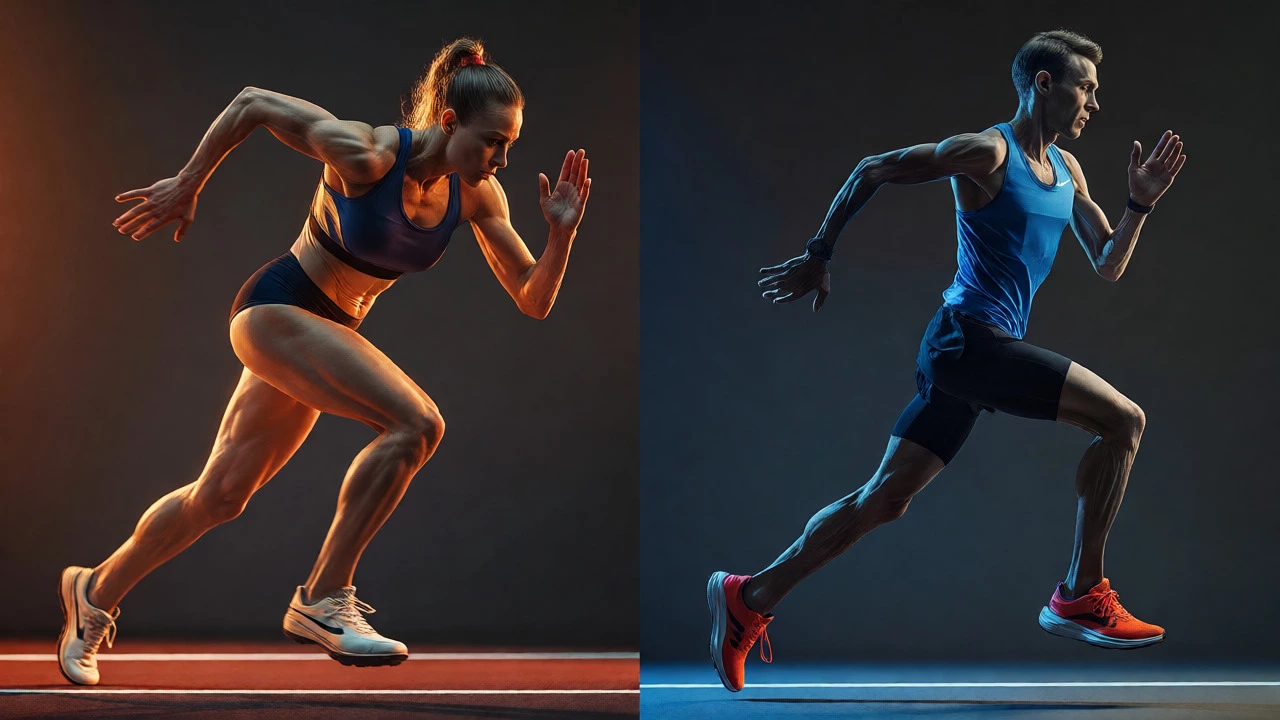
We often think of runners as having one universal look. But if you look closely at elite athletes, you’ll see massive variation. Take Eliud Kipchoge, the man who broke the two-hour marathon barrier. He stands around 5’9” (175 cm) and weighs roughly 132 lbs (60 kg). His legs are incredibly lean, his torso is long, and his calves are thin. Now compare him to Shelly-Ann Fraser-Pryce, a multiple-time world champion in the 100m. She’s shorter, significantly more muscular, and carries much more upper-body strength. Both are elite runners. Both have perfect bodies for their specific event. Neither would dominate in the other’s discipline.
This distinction matters because chasing a body type that doesn’t match your goals leads to frustration. If you’re training for a half-marathon but trying to bulk up like a sprinter, you’re adding weight that fights gravity on every uphill climb. Conversely, if you’re trying to win a local 400m race but you’re extremely lightweight with little muscle mass, you lack the power generation needed for those final straightaways.
Sprinters rely on anaerobic power. Their races last seconds, not hours. Because of this, their ideal body shape prioritizes force production over energy conservation. You’ll typically see sprinters with higher percentages of fast-twitch muscle fibers. These fibers contract quickly and generate immense power but fatigue rapidly.
Physically, this translates to a more robust frame. Sprinters often have wider hips, larger glutes, and thicker thighs. Why? Because hip extension-the action of driving your leg back-is the primary engine of running speed. Bigger muscles mean more potential horsepower. They also tend to have a lower center of gravity relative to their height, which helps with stability during explosive starts. Don’t let anyone tell you bulky legs slow you down; for a 100m dash, they’re an asset.
Distance runners, particularly marathoners, operate under completely different constraints. Here, the enemy isn’t lack of power; it’s oxygen debt and weight. Every extra pound requires more oxygen to move. Therefore, the ideal distance runner body is optimized for economy.
Look for these traits in elite long-distance athletes:
If you have a naturally slender frame, you might find endurance running comes more easily. But don’t mistake thinness for fitness. Many skinny people run poorly because they lack core stability. Strength still matters, even for the thinnest marathoner.

While body composition gets a lot of attention, biomechanics actually dictate performance more than raw size. Two people can have identical weights and heights, yet one runs effortlessly while the other struggles. Why? Leverage and alignment.
Consider leg length. Longer legs generally allow for a longer stride length. However, stride length isn’t everything-cadence (steps per minute) is equally important. Some shorter runners compensate with a higher cadence, taking quick, light steps. This can be highly efficient. Similarly, foot strike patterns vary. Heel strikers absorb more impact, which can be tough on joints over long distances, while mid-foot strikers utilize the Achilles tendon like a spring, returning energy with each step.
Your bone structure also plays a hidden role. The angle of your femur (thigh bone) affects how your knee tracks. If you have knock-knees or bow-legs, your muscles work harder to stabilize your joints. This doesn’t mean you can’t run fast-it just means you need to address those imbalances through targeted strength training to prevent injury and improve efficiency.
This is a common question. Does being tall give you an advantage? In sprinting, yes, up to a point. Taller athletes often have longer levers, allowing them to cover more ground per stride. Usain Bolt, at 6’5”, was an outlier who used his height to create a unique, powerful stride that confused opponents. However, in distance running, extreme height can become a liability due to increased surface area and heat dissipation challenges, plus the sheer weight of carrying a taller frame over 26.2 miles.
For most recreational runners, height is irrelevant. Your ability to maintain form when tired, your pacing strategy, and your consistency matter far more than whether you’re 5’4” or 6’0”. Focus on building a strong core and stable hips. That’s where true running efficiency lives, regardless of your vertical stature.
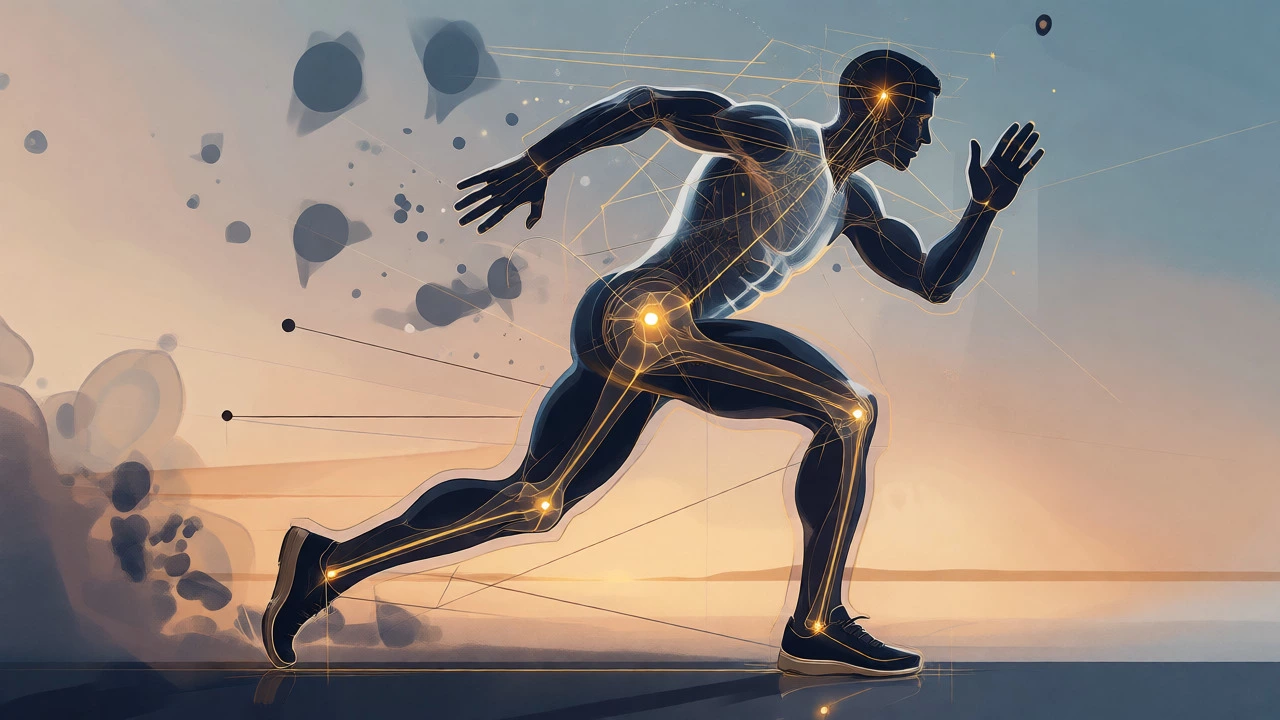
Once you understand your natural inclinations, tailor your training. If you’re naturally muscular and heavy-boned, you might excel at middle distances (800m-5k) or hilly terrain where power helps. Embrace strength training. Squats, deadlifts, and plyometrics will make you faster without turning you into a bodybuilder.
If you’re naturally lean and light, focus on aerobic base building. Long, slow runs teach your body to burn fat efficiently and improve capillary density. Add some tempo runs to boost your lactate threshold. Avoid excessive bulking exercises that add unnecessary mass unless you’re specifically targeting power events.
Remember, body shape changes slowly. Muscle gain takes months; fat loss takes weeks. Don’t try to morph into a different species in one season. Work with your physiology, not against it.
| Feature | Sprinters (100m-400m) | Middle Distance (800m-1500m) | Long Distance (Marathon+) |
|---|---|---|---|
| Primary Energy System | Anaerobic | Mixed Aerobic/Anaerobic | Aerobic |
| Muscle Fiber Type | Fast-Twitch Dominant | Balanced Mix | Slow-Twitch Dominant |
| Body Composition | Higher Muscle Mass | Lean but Muscular | Very Lean/Low Mass |
| Key Advantage | Power Generation | Speed Endurance | Oxygen Efficiency |
Certain body shapes come with specific injury risks. Runners with high arches (pes cavus) often experience stress fractures because their feet don’t absorb shock well. Those with flat feet (pes planus) may suffer from shin splints or plantar fasciitis due to overpronation. Recognizing these structural quirks early allows you to choose the right shoes or orthotics before pain becomes chronic.
Also, consider your hip width. Women, on average, have wider pelvises than men, which creates a greater Q-angle (the angle between the thigh bone and the knee). This can increase stress on the knees and lead to issues like patellofemoral pain syndrome. Strengthening the glute medius-a muscle on the side of your hip-helps counteract this mechanical disadvantage, keeping your knees aligned during long runs.
Yes, to an extent. While you can't change your bone structure or limb length, you can significantly alter your muscle distribution and body fat percentage. Losing excess fat improves running economy for distance runners. Building functional strength in the core, glutes, and legs improves power and stability for all runners. Consistent training reshapes your physique to suit your goals.
Not necessarily. For short sprints, extra muscle mass can provide more power. For long distances, extra weight is usually a disadvantage because it increases oxygen consumption. However, a heavier runner with excellent cardiovascular fitness and good mechanics can outperform a lighter runner who lacks conditioning. Fitness level often trumps weight alone.
Large, muscular calves can slightly increase the energy cost of lifting the leg during each stride, especially over very long distances. This is why elite marathoners often have thin calves. However, strong calves are crucial for propulsion and injury prevention. Don't sacrifice strength for aesthetics. Functional calf strength is more important than size for most recreational runners.
There is no single ideal BMI. Elite male marathoners often range from 18-20, while female counterparts might be 17-19. Sprinters often have BMIs above 20 due to muscle mass. For general health and performance, aim for a BMI within the healthy range (18.5-24.9) but prioritize body composition (muscle-to-fat ratio) over the number on the scale.
Leg length influences stride length, which is one component of speed. Longer legs can produce longer strides, potentially covering more ground. However, speed is a product of stride length multiplied by cadence. Shorter-legged runners often achieve higher cadences, compensating for shorter strides. Overall, biomechanical efficiency matters more than absolute leg length.