
Fill in your profile details on the left and click "Generate My Session Plan" to see a personalized timeline of what to expect during your first personal training session.
Walking into a gym for your first personal training session can feel like walking into an exam you didn’t study for. You might worry about being judged on your current fitness level, not knowing the right moves, or wasting money if the trainer isn’t a good fit. But here is the truth: that first hour is rarely about heavy lifting or sweating through a brutal circuit. It is primarily a conversation and an assessment designed to build a roadmap specifically for you.
Whether you are recovering from an injury, trying to lose weight, or simply want to feel stronger in daily life, understanding what happens during this initial meeting removes the anxiety. It shifts the focus from performance to partnership. Here is exactly what to expect, step by step, so you can walk in with confidence.
Before you even meet your trainer face-to-face, there is usually some administrative groundwork. Most reputable gyms and independent trainers require you to fill out a PAR-Q+ (Physical Activity Readiness Questionnaire) or a similar health screening form. This isn’t just red tape; it’s a safety protocol.
This document asks about your medical history, past injuries, surgeries, and any medications you take. If you have high blood pressure, asthma, or a previous knee replacement, this is where you disclose it. The goal is to identify contraindications-exercises that might be risky for your specific body. For example, if you have lower back pain, your trainer needs to know before prescribing heavy squats. Be honest here. There is no shame in listing limitations; it helps your trainer design a program that keeps you safe and progressing steadily.
Usually, no. However, if you have been sedentary for a long time or have known cardiovascular issues, some trainers may ask for clearance. The PAR-Q+ questionnaire often flags when medical advice is necessary.
Once the paperwork is done, the real work begins with a detailed interview. Your trainer will ask questions that go beyond "I want to lose weight." They will dig into your lifestyle, your schedule, your stress levels, and your sleep habits. Why? Because fitness does not happen in a vacuum. If you work night shifts, train at 6 AM, and eat irregularly, your program must adapt to that reality.
Expect questions like:
This phase establishes trust. Your trainer is looking for barriers to success. Maybe you hate running but love dancing. Maybe you only have 30 minutes a day. These details shape the entire direction of your coaching relationship. Don't hold back; the more context they have, the better tailored the results will be.
Next, your trainer will likely take some baseline measurements. This is data collection, not judgment. Common metrics include:
Some trainers also take progress photos or measure waist, hip, and limb circumferences. These provide objective data points to track changes over weeks and months. Remember, these numbers are just a snapshot. They help set realistic expectations and celebrate non-scale victories later on.
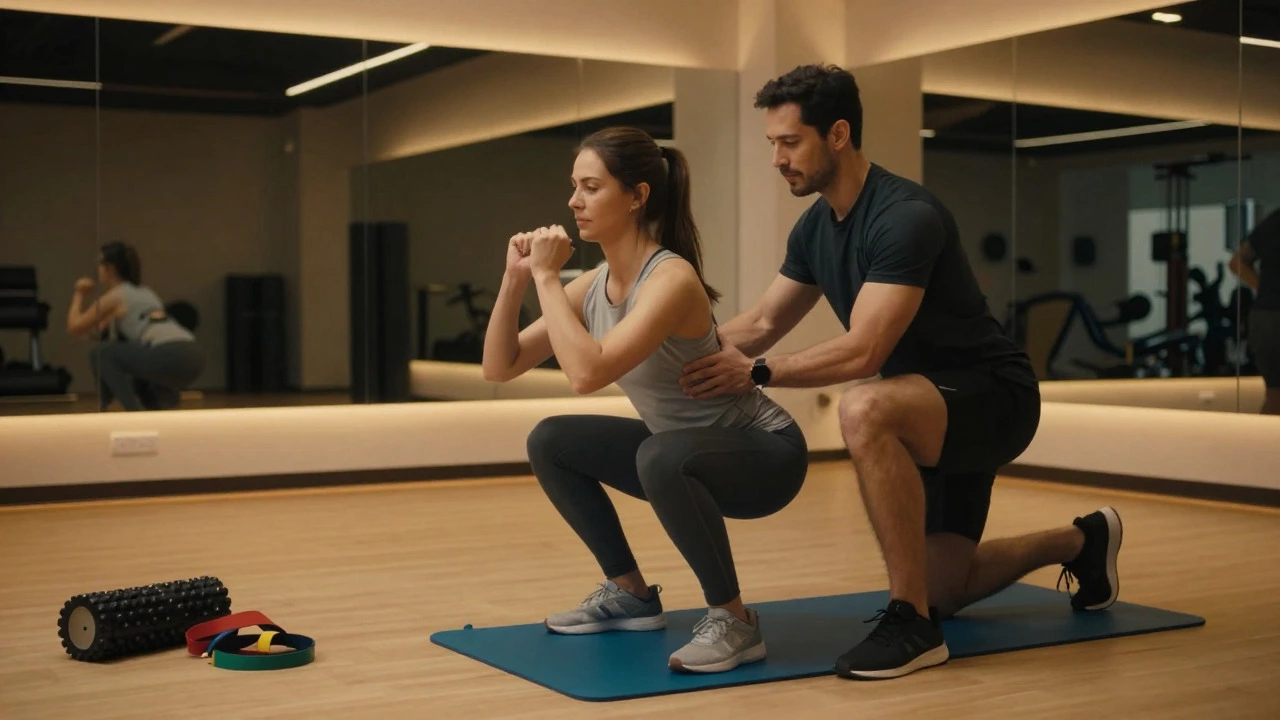
This is often the most misunderstood part of the first session. You might expect to lift weights immediately, but instead, you’ll likely perform a movement screen. Tools like the FMS (Functional Movement Screen) or simple assessments of squatting, lunging, and overhead reaching are common.
Your trainer watches how you move, not how much weight you can move. They are looking for asymmetries, limited range of motion, or compensation patterns. For instance, if your knees cave inward when you squat, it might indicate weak glutes or tight ankles. Identifying these issues early prevents injury and guides corrective exercises.
You might also perform basic strength tests, such as a push-up test, plank hold, or grip strength measurement. Again, the goal is not to fail you but to establish a baseline. If you can only hold a plank for 15 seconds, that’s fine. That’s your starting point. Three months from now, holding it for 60 seconds will be a measurable win.
Based on everything gathered-the health screen, goals, lifestyle, biometrics, and movement assessment-your trainer will outline a preliminary plan. This isn’t always a rigid 12-week program handed to you on paper. Often, it’s a flexible framework that evolves as you progress.
The plan typically includes:
Ask questions here. Does the plan align with your preferences? Are there exercises you dislike? Good trainers adjust based on feedback. If you dread burpees, tell them. They can substitute them with jump rope or cycling without sacrificing calorie burn.

Towards the end of the session, your trainer will discuss logistics and accountability. How will you communicate between sessions? Will you use an app to log workouts? What happens if you miss a session? Clear boundaries and communication channels prevent misunderstandings later.
They should also explain their coaching philosophy. Do they believe in high-intensity interval training (HIIT)? Do they prioritize progressive overload in strength training? Understanding their style helps you determine if you’re compatible. Fitness is a marathon, not a sprint, and you need a coach whose methods resonate with you.
To make the most of your first visit, come prepared. Wear comfortable, breathable clothing that allows full range of motion-leggings and a t-shirt are ideal. Avoid jeans or restrictive dresses. Bring water, a towel, and any relevant medical documents if you have chronic conditions.
If you have old workout logs or photos, bring those too. They provide valuable historical context. And perhaps most importantly, bring an open mind. You don’t need to know every exercise name or rep scheme. Your job is to show up, be honest, and listen. The rest is their expertise.
| Phase | Primary Goal | Duration |
|---|---|---|
| Health Screening | Identify risks and contraindications | 10-15 mins |
| Goal Setting | Align expectations and lifestyle | 15-20 mins |
| Assessment | Establish physical baselines | 20-30 mins |
| Plan Design | Create initial roadmap | 10-15 mins |
Not necessarily. Many trainers dedicate the first hour entirely to assessment and planning. If you do exercise, it will likely be low-intensity movements to gauge your form and comfort level rather than a high-effort workout.
Yes, completely. Trainers see all fitness levels daily. Their job is to support you, not judge you. Remember, they are assessing movement quality, not comparing you to others.
Initial improvements in energy and mood can happen within days. Visible physical changes typically take 4-8 weeks of consistent effort. Patience and consistency are key.
Communication is vital. Share your concerns openly. If compatibility remains poor, most gyms allow you to switch trainers without penalty. A good fit is essential for long-term success.
Yes, have a light snack 1-2 hours beforehand. You need energy for the assessment, but avoid heavy meals that might cause discomfort during movement screens.