
Answer these quick questions to find the workout style that fits your life best.
You’re staring at your living room floor. It’s 6:30 AM in Perth, the sun is just hitting the windows, and you have exactly thirty minutes before work starts. You’ve got a pile of unopened equipment boxes, three different apps on your phone, and zero motivation to drive to a gym. The question isn’t if you should work out; it’s which home workout actually fits your life, your body, and your goals without turning into another chore you hate.
Here’s the truth: there is no single "best" workout for everyone. If someone tells you that, they’re selling something. The best home workout is the one you’ll actually do consistently. But that doesn’t mean you should guess. By understanding what each style does to your body and how it fits into a busy schedule, you can pick the right tool for the job. Let’s break down the top contenders so you can stop scrolling YouTube tutorials and start sweating.
Before you download an app or buy a kettlebell, ask yourself: what am I trying to fix? Are you chasing weight loss? Do you want to look better in a t-shirt? Or are you just trying to stop feeling stiff after sitting at a desk all day?
If your goal is fat loss, you need intensity. If your goal is muscle tone, you need resistance. If your goal is mental clarity, you need mindfulness. Mixing these up leads to frustration. For instance, doing hour-long yoga sessions won’t give you the same metabolic spike as a ten-minute sprint session, but sprinting every day might wreck your joints if you’re overweight. Matching the method to the mission is step one.
High-Intensity Interval Training (HIIT) alternates short bursts of intense activity with brief recovery periods. It’s popular for a reason. Studies from the American Council on Exercise suggest HIIT can burn more calories in less time than steady-state cardio. Plus, it triggers EPOC (Excess Post-exercise Oxygen Consumption), meaning you keep burning calories hours after the workout ends.
This is great for people who hate long workouts. You can get a solid session done in 15-20 minutes. However, it’s not magic. Because it’s high impact, it requires good form. If you’re new to fitness, jumping straight into burpees and box jumps can lead to injury. Start with low-impact intervals-like fast marching in place or step-ups-and build up.
| Feature | HIIT | Steady-State Cardio |
|---|---|---|
| Duration | 10-20 mins | 30-60 mins |
| Equipment Needed | None or minimal | Shoes, optional treadmill/bike |
| Skill Level | Moderate to Advanced | Beginner Friendly |
| Best For | Time-strapped individuals | Endurance building |
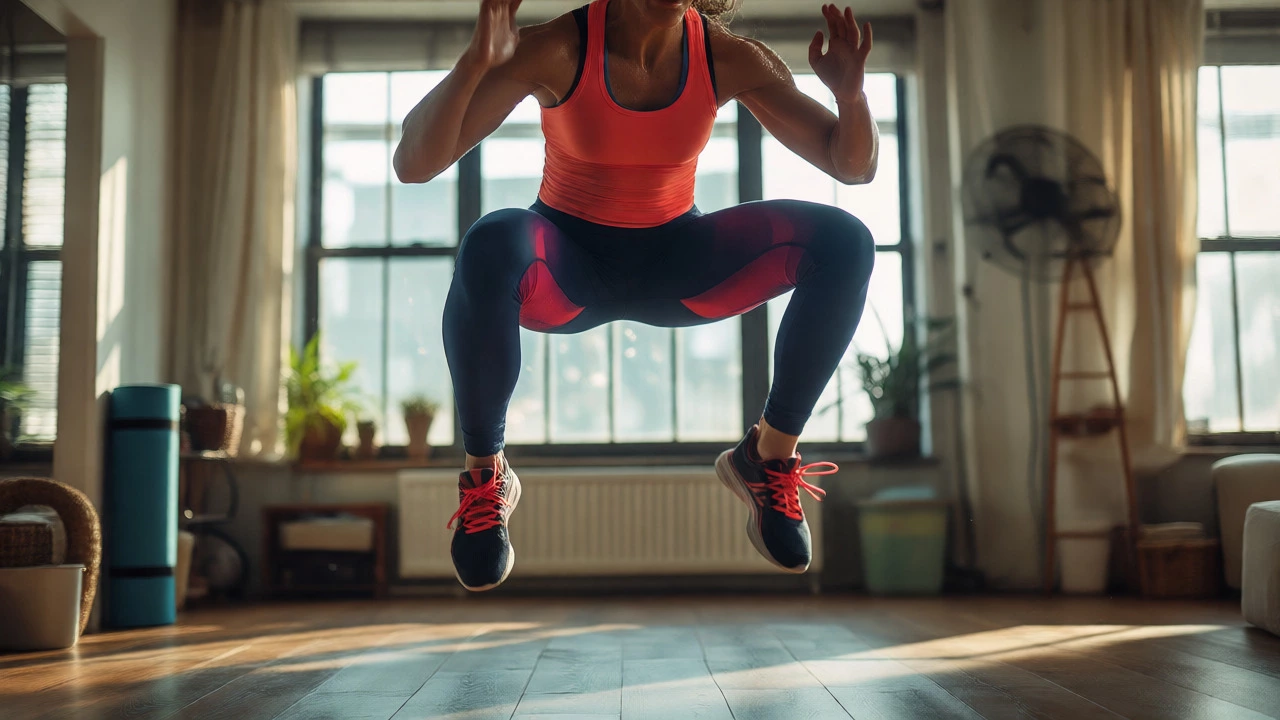
Many people think you need a gym full of machines to build muscle. Wrong. Bodyweight Strength Training uses your own mass as resistance through movements like push-ups, squats, lunges, and planks. This is arguably the most sustainable home workout because it costs nothing and scales infinitely.
The key here is progressive overload. In a gym, you add weight. At home, you make the movement harder. Can’t do a push-up? Do it against the wall. Too easy? Elevate your feet on a chair. Want more challenge? Slow down the tempo. This constant adaptation keeps your muscles guessing and growing. It’s also fantastic for bone density, which becomes crucial as we age.
Don’t ignore the power of simple tools. A set of resistance bands costs about $30 and offers hundreds of variations. Kettlebells are compact and efficient for full-body conditioning. But remember: technique matters more than speed. Poor form during a squat can hurt your knees; good form builds strong glutes and legs.
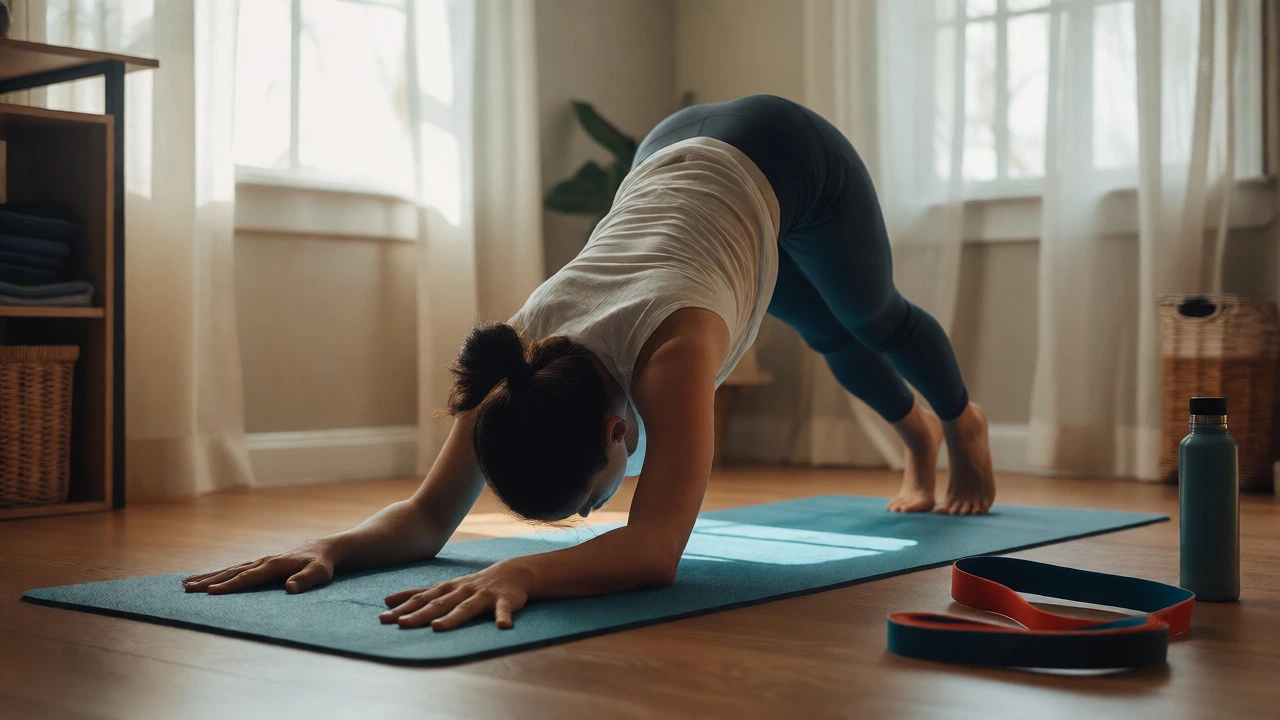
If you feel wired but tired, or if your back hurts from sitting, Yoga or Pilates might be your best bet. These aren’t just "stretchy" exercises. They build core stability, improve posture, and regulate breathing. In our high-stress world, the mental benefits are just as important as the physical ones.
Pilates focuses heavily on the core-the abs, lower back, hips, and glutes. It’s excellent for rehabilitating injuries and improving athletic performance. Yoga varies widely. Vinyasa flows connect breath with movement, raising your heart rate slightly. Hatha or Yin styles focus on holding poses, promoting deep relaxation and flexibility.
One common mistake? Thinking these are "easy." Try holding a plank pose for two minutes or doing a proper downward dog for five breaths. You’ll feel the burn. These practices complement strength and cardio perfectly. Many athletes use them on rest days to aid recovery.
Not everyone wants to count reps or hold poses. Some people need music and movement. Dance workouts, Zumba-style routines, or even following along with aerobics videos offer a joyful way to raise your heart rate. Low-Impact Cardio reduces stress on joints while keeping your heart healthy.
This category is huge for beginners or those recovering from injury. Walking lunges, step-touches, and gentle jogging in place get your blood flowing without pounding your ankles. Apps now offer guided dance classes that feel more like a party than a workout. Consistency beats intensity when you’re starting out. If you enjoy moving to music, you’re far more likely to stick with it than if you dread every minute of a grueling HIIT session.
Still stuck? Run through this quick check:
Notice how many options exist? You don’t have to pick one forever. Rotate them. Monday could be strength, Wednesday HIIT, Friday Yoga. This variety prevents boredom and works different energy systems.
First, don’t neglect warm-ups. Jumping into intense exercise cold increases injury risk. Spend five minutes mobilizing your joints. Second, ignore the hype around expensive gadgets. A $5 jump rope is as effective as a $2,000 Peloton for cardiovascular health. Third, track progress. Write down your reps or how you felt. Seeing improvement motivates you to continue.
Finally, listen to your body. Pain is not gain. Sharp pain means stop. Discomfort or fatigue means push through carefully. Rest days are part of the program, not a failure.
Yes, absolutely. Weight loss primarily depends on a calorie deficit, which is driven by diet. Home workouts increase your daily energy expenditure, making it easier to maintain that deficit. Combining strength training to preserve muscle with cardio for calorie burning is highly effective.
No. Your body weight provides sufficient resistance for most fitness goals. Push-ups, squats, lunges, and planks are powerful. However, inexpensive tools like resistance bands or a jump rope can add variety and progression options later on.
Aim for 3-5 times per week depending on intensity. High-intensity workouts require more recovery time, so 2-3 times a week may suffice. Lower-intensity activities like yoga or walking can be done daily. Consistency over weeks matters more than frequency in a single week.
It can be, if modified properly. Beginners should start with low-impact versions of HIIT, such as marching quickly instead of running, or step-ups instead of jump squats. Focus on form first, then gradually increase speed and intensity as your fitness improves.
You only need enough room to lie down flat and stand up with arms extended overhead. Most bodyweight exercises, yoga, and pilates require minimal space. Avoid workouts that involve large lateral movements or jumping if ceiling height or floor space is very restricted.