Select your profile options and click "Analyze My Profile" to get a personalized recommendation based on the article's science.
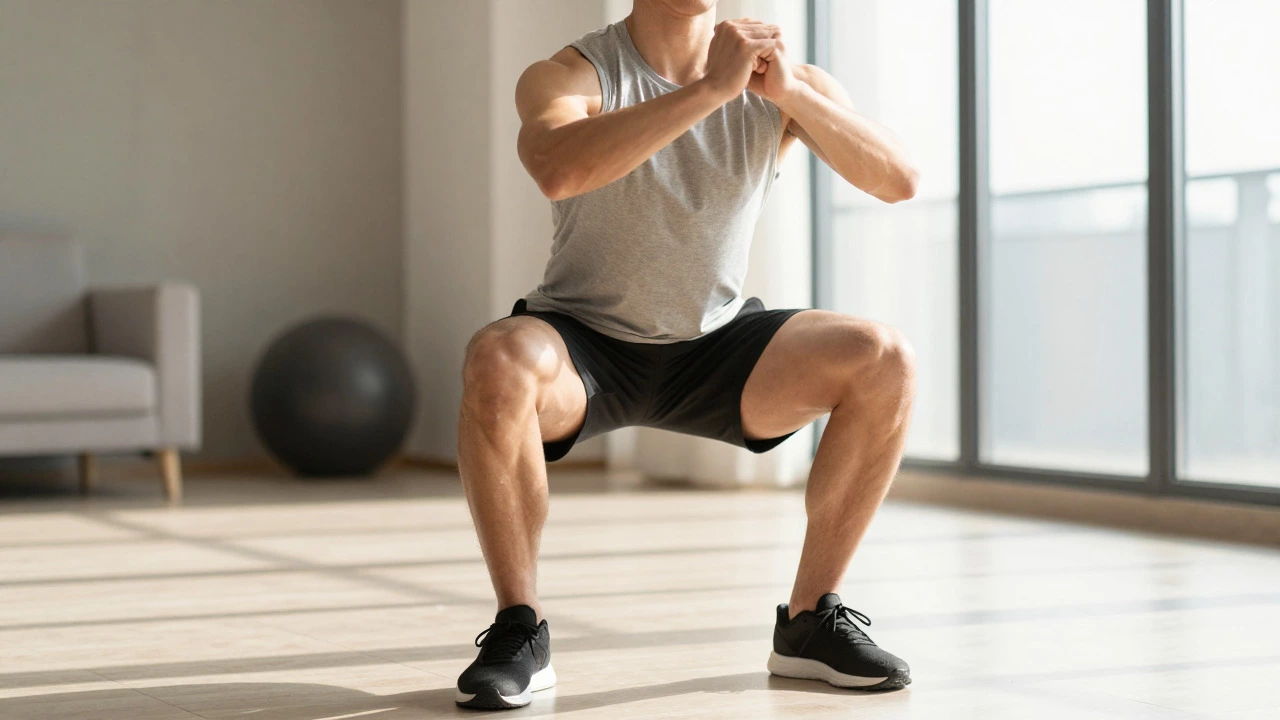
You’ve probably heard the phrase thrown around in gyms, fitness magazines, and even by your favorite influencer on social media. There is one movement that stands above the rest, hailed as the ultimate builder of strength, power, and functional ability. It’s not a complex machine routine or a trendy HIIT circuit. It’s the squat, widely recognized as the queen of all exercises. But why does this single movement hold such a prestigious title? Is it just hype, or is there real physiological science backing up the crown?
The answer lies in efficiency. When you perform a squat, you aren’t just working one muscle. You are engaging nearly every major muscle group in your lower body and core simultaneously. This makes it a powerhouse for building overall athleticism, burning calories, and improving daily mobility. Whether you are an elite athlete looking to jump higher or someone who simply wants to get out of a chair without pain later in life, understanding the squat is essential.
To understand why the squat is considered the king (or queen) of exercises, we need to look at what defines a "good" exercise in the eyes of strength coaches and physiologists. Generally, the best exercises are those that offer the highest return on investment for the time spent. The squat checks almost every box.
First, it is a compound movement. Unlike a bicep curl, which isolates a single joint and muscle, a squat involves multiple joints-your hips, knees, and ankles-and multiple muscle groups. This complexity forces your body to coordinate different systems, leading to better neuromuscular adaptation. In simple terms, your brain learns to recruit more muscle fibers faster.
Second, it builds functional strength. Life happens on your feet. Picking up groceries, playing with kids, gardening, or even just standing up from a sofa requires the same hip-hinge and knee-bend mechanics found in a squat. By strengthening these patterns, you are directly translating gym work into real-world capability.
Finally, the hormonal response cannot be ignored. Heavy compound lifts like squats trigger a significant release of growth hormone and testosterone, hormones that aid in muscle repair and growth throughout the entire body, not just the legs. This systemic effect is why many people find their upper body strength improves when they prioritize heavy leg days.
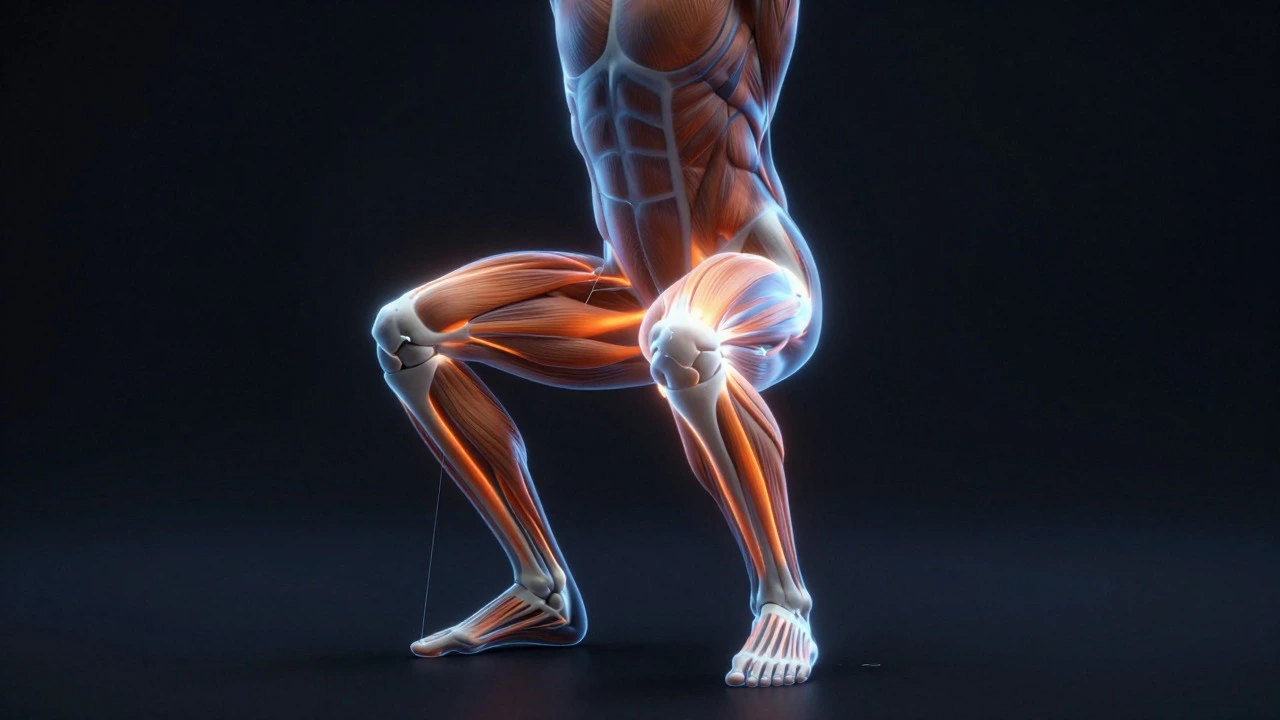
When you drop into a squat, your body becomes a kinetic chain. Here is a breakdown of the primary movers and stabilizers involved:
This widespread engagement means that a single set of squats can provide a metabolic stimulus similar to doing three or four isolation exercises separately. For anyone short on time, this efficiency is invaluable.
One of the biggest misconceptions about squats is that there is only one way to do them. In reality, the "squat" is a category of movements. Depending on your goals, equipment access, and mobility limitations, different variations may serve you better.
| Exercise Variation | Primary Focus | Equipment Needed | Best For |
|---|---|---|---|
| Bodyweight Squat | General conditioning, mobility | None | Beginners, warm-ups, home workouts |
| Goblet Squat | Form correction, core stability | Dumbbell or Kettlebell | Learning depth, fixing posture |
| Barbell Back Squat | Maximal strength, mass gain | Barbell, rack, plates | Advanced lifters, athletes |
| Front Squat | Quadriceps dominance, upper back strength | Barbell | Athletes needing upright torso position |
| Box Squat | Power development, depth consistency | Box/Bench, weight | Powerlifters, rehabilitating depth |
If you are new to lifting, start with the Goblet Squat. Holding a weight close to your chest forces you to keep your torso upright, which naturally encourages proper depth and knee alignment. It is arguably the safest and most effective entry point into the world of weighted squats.
Squats have a reputation for being hard on the knees and back, but this is usually due to poor technique, not the exercise itself. When performed correctly, squats strengthen the connective tissues around the joints, making them more resilient. Here are the non-negotiable pillars of safe squatting:
If you find your heels lifting off the ground, you likely lack ankle dorsiflexion. Try placing small weight plates under your heels or working on ankle mobility drills before squatting. If your back rounds, reduce the weight or focus on bracing harder. Form always trumps load.
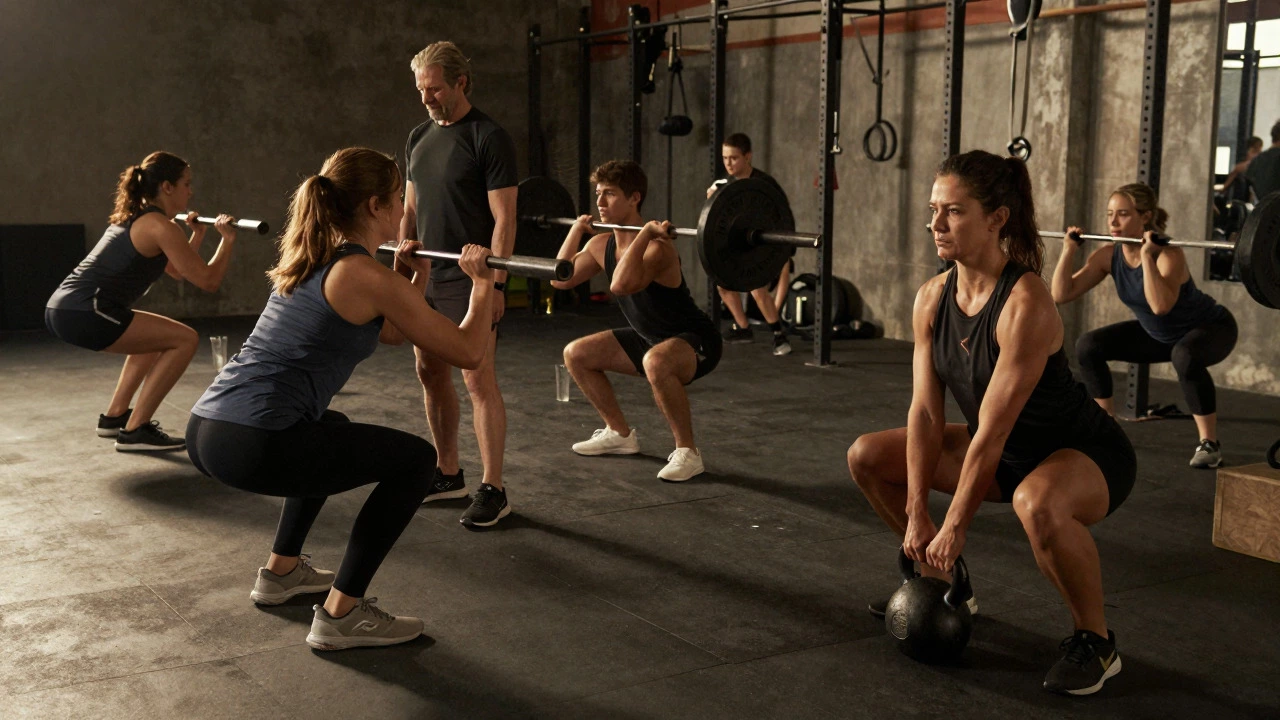
Despite its status as the queen of exercises, the squat is surrounded by persistent myths that scare people away from it. Let’s clear the air.
Myth: Squats ruin your knees.
Reality: Research consistently shows that controlled squatting strengthens the quadriceps and patellar tendon, which actually protects the knee joint. Knee pain usually arises from excessive loading before the tendons have adapted, or from poor form (like knee valgus), not the act of squatting itself.
Myth: Squats will make you bulky.
Reality: Muscle growth requires a caloric surplus and specific progressive overload strategies. For most people, especially women, squats lead to a toned, lifted appearance rather than massive size. Strength gains often precede visible size changes by months.
Myth: You must go "ass to grass" (touching the floor) to get benefits.
Reality: While full depth offers the greatest range of motion and strength gains, partial squats still provide significant benefit. The key is to go as deep as you can maintain good form. Quality of movement matters more than arbitrary depth markers.
How often should you squat? For beginners, two to three times per week is ideal to allow for skill acquisition and recovery. Advanced lifters might squat once or twice a week with heavy loads, supplemented by accessory work.
Place your squats at the beginning of your workout when you are fresh. Fatigue compromises form, and compromised form leads to injury. Follow your squats with lighter, isolation movements like lunges, leg presses, or hamstring curls to finish off the lower body.
Remember, consistency beats intensity. It is better to do five perfect bodyweight squats every day than one terrible heavy squat once a month. Build the habit, master the pattern, and then add weight gradually. The squat is a lifelong skill, and the dividends it pays in health, strength, and longevity are unmatched.
Both are excellent compound movements, but they target different areas. Squats emphasize the quadriceps and anterior chain, while deadlifts focus more on the posterior chain (hamstrings, glutes, lower back). Many consider the squat the "queen" because it is more technically demanding and requires greater mobility, but both should be part of a balanced strength program.
In many cases, yes. Controlled squats can strengthen the muscles supporting the knee, reducing pain. However, if you experience sharp pain, consult a physical therapist. Start with bodyweight or goblet squats and focus on perfect form. Avoid going too deep if it causes discomfort initially.
Start with just your body weight. Once you can perform 3 sets of 15 reps with perfect form, progress to a light dumbbell or kettlebell for a Goblet Squat. Add weight only when the current load feels easy and your form remains flawless.
Heel lift is usually caused by limited ankle mobility (dorsiflexion). To fix this, stretch your calves and ankles regularly. During the squat, you can temporarily place small plates under your heels to compensate until your mobility improves.
Yes, indirectly. Because squats engage large muscle groups, they burn more calories during the exercise and increase your resting metabolic rate as you build muscle. Combined with a calorie-controlled diet, squats are a powerful tool for fat loss.