Answer these quick questions to find out which brand aligns best with your daily habits and fitness goals.
| Feature | Garmin Strength | Fitbit Strength |
|---|---|---|
| Battery Life | Excellent | Good |
| Data Depth | Professional/Athlete | Lifestyle/Wellness |
| Comfort | Bulky/Rugged | Slim/Discreet |
| App Ease of Use | Complex/Powerful | Simple/Friendly |
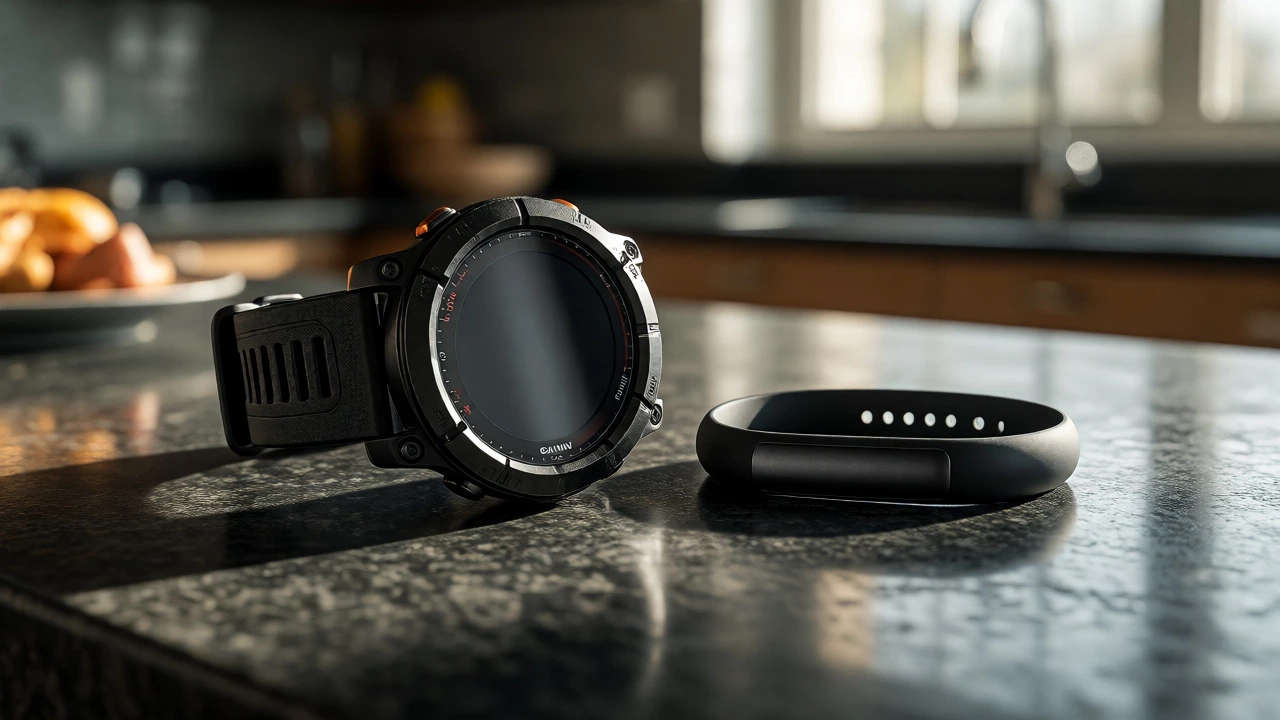
You’re standing in the electronics aisle, staring at two sleek bands that promise to change how you understand your body. One screams "performance athlete," the other whispers "wellness companion." It’s the classic dilemma: Garmin or Fitbit? Both are giants in the wearable tech space, but they speak entirely different languages. Choosing the wrong one isn’t just a waste of money; it’s months of data that doesn’t actually help you move better.
Here is the blunt truth: there is no single "better" brand. There is only a better tool for your specific habits. If you run marathons and obsess over VO2 max, Garmin will feel like a co-pilot. If you want gentle nudges to stand up, sleep tracking that actually helps you rest, and a clean interface that doesn’t require a manual, Fitbit wins. Let’s break down why these differences matter before you swipe your credit card.
Garmin is an aviation company that stumbled into fitness. This heritage shows. Their devices are built for precision, navigation, and deep physiological metrics. They assume you want to analyze your training load, recovery time, and heart rate variability with scientific rigor. The user interface can be dense, often requiring a subscription (Garmin Connect+) to unlock advanced insights like Body Battery and detailed sleep coaching.
Fitbit, now owned by Google, takes a different approach. It’s designed for the general population who wants to improve their health without becoming a data scientist. The app is friendly, visual, and gamified. You get clear goals, social challenges, and simple explanations of what your heart rate means. While they have added more advanced features recently, their core strength remains accessibility. You don’t need a PhD to use a Fitbit; you just need to care about moving a bit more each day.
| Feature | Garmin (e.g., Forerunner/Venu) | Fitbit (e.g., Charge/Sense) |
|---|---|---|
| Battery Life | Excellent (7-14+ days typical) | Good (5-7 days typical) |
| GPS Accuracy | Superior (Multi-band GNSS on newer models) | Adequate (Standard GPS, good for city runs) |
| Smart Features | Limited (Notifications, music, basic apps) | Strong (Google integration, payments, replies) |
| Sleep Tracking | Detailed stages, but complex UI | Highly accurate, easy-to-read scores |
| Cost Model | Higher upfront cost + Optional Subscription | Lower upfront cost + Premium Subscription for full data |
Nothing kills motivation faster than charging your watch every night. If you forget, you lose data. This is where Garmin consistently dominates. Even their mid-range watches, like the Forerunner 265, offer upwards of 13 days of battery life in smartwatch mode. High-end models like the Fenix 8 can last weeks. This longevity matters if you wear your device 24/7 for sleep tracking. You aren’t tethered to a wall outlet.
Fitbit has improved significantly here, but physics still applies. The slim profile of the Charge 6 limits battery capacity. Expect around 5 to 7 days under normal use. If you use continuous GPS tracking during workouts, that number drops drastically. For most users, this is manageable-just charge it while you shower in the morning. But if you go camping or travel frequently without power access, Garmin’s endurance is a genuine safety and convenience feature.

Both brands track steps, calories, and heart rate. The divergence happens when you dig deeper. Garmin provides metrics like Training Readiness, which combines sleep, HRV, and recent activity to tell you if you should push hard or take a rest day. It’s invaluable for runners and cyclists trying to avoid injury. Their Pulse Ox sensor is also generally regarded as more accurate for altitude acclimatization, a niche but critical feature for hikers and mountaineers.
Fitbit focuses on holistic wellness indicators. Their stress management score uses heart rate variability to suggest breathing exercises when you’re tense. The EDA Scan on higher-end models detects skin conductance changes related to stress. While Garmin tells you *how* your body reacted to stress physiologically, Fitbit gives you actionable tools to manage it psychologically. If your goal is mental well-being alongside physical activity, Fitbit’s ecosystem feels more supportive.
Your watch is only as good as its app. Garmin Connect is powerful but utilitarian. It looks like a spreadsheet came to life. You can customize dashboards, export raw data to platforms like Strava or TrainingPeaks, and dive into minute-by-minute graphs. It rewards those who love tinkering. However, many key features are locked behind the Connect+ subscription ($4.99/month), which includes daily suggested workouts and advanced sleep analysis.
Fitbit App is polished, colorful, and intuitive. It integrates seamlessly with Google services, meaning calendar syncs and notifications work flawlessly on Android. On iOS, it’s solid too. The downside? To see detailed sleep breakdowns or long-term trends, you need Fitbit Premium ($9.99/month). Without it, you get the basics. Many users find the paywall frustrating, but the free tier is sufficient for casual fitness enthusiasts who just want step counts and basic heart rate zones.

Comfort is subjective, but design dictates it. Garmin devices tend to be bulkier. The Fenix series is rugged and heavy, perfect for outdoor adventures but potentially awkward under a dress shirt or during yoga. The Venu line is slimmer, bridging the gap between sporty and stylish, but still thicker than most competitors.
Fitbit excels at discreet design. The Charge band is barely noticeable. You can wear it to bed without feeling like you have a brick on your wrist. For people who prioritize comfort over screen real estate, Fitbit is the obvious choice. However, if you need a large touchscreen map for trail running, Garmin’s larger displays are superior. Fitbit screens are smaller, making map navigation less practical for serious off-road exploration.
Choose Garmin if:
Choose Fitbit if:
Ultimately, neither brand is objectively "better." Garmin is a performance tool; Fitbit is a lifestyle assistant. Be honest about what you’ll actually use. Buying a Garmin because it looks cool, but never checking your HRV, is a waste. Buying a Fitbit for marathon training might leave you frustrated by limited map capabilities. Match the tool to the task, and you’ll stick with it.
Not strictly, but it enhances the experience. Garmin offers basic tracking for free, but advanced metrics like Body Battery and sleep coaching require Garmin Connect+. Fitbit provides core stats for free, but detailed sleep analysis, long-term trends, and guided programs require Fitbit Premium. If you are a casual user, the free tiers on both are usually sufficient.
In recent years, the gap has closed significantly. For steady-state activities like jogging or cycling, both are highly accurate. During high-intensity interval training (HIIT) or weightlifting, optical sensors struggle regardless of brand. Some studies suggest Garmin’s newer Elevate sensors are slightly more consistent in erratic movement scenarios, but for general wellness, the difference is negligible for most users.
Yes, both devices store data locally. You can go for a run or sleep without your phone, and the data will sync once you reconnect later. However, some smart features like call notifications and texts require a Bluetooth connection to a phone. LTE-enabled models from both brands allow standalone connectivity, but they drain battery much faster.
Most modern Garmin watches are rated 5ATM water resistance, meaning they are suitable for swimming, snorkeling, and shallow diving. Fitbit devices are also typically 5ATM or 10ATM rated. Both track swim strokes and laps effectively, though Garmin’s pool and open-water swim metrics are generally more detailed and customizable.
Garmin devices tend to hold their resale value longer due to their durability and appeal to enthusiast athletes who keep gear for years. Fitbits are often viewed as disposable tech upgrades, similar to smartphones, so they depreciate faster. If you plan to resell after a year, a high-end Garmin model is likely a safer financial bet.