Not sure which app to start with? Select your primary goal to find your perfect match.
Description goes here.
Don't rely on just one app. For a high-performance setup, combine your choice with:
To determine which app takes the crown, we have to look at what they actually do. Most of the top contenders fall into three categories: aggregators, specialized trackers, and guided coaching platforms. An aggregator like Apple Health is a health data hub that collects information from various sources like wearables and other apps. It doesn't tell you how to work out; it tells you what happened during your workout. This is the "brain" of your fitness ecosystem.
Then you have the specialists. If you're a runner, you likely use Strava. It's not just a tracker; it's a social network for athletes. It uses GPS tracking and heatmaps to analyze performance and compete with others. For someone focused on a 5K or a triathlon, Strava is the #1 app because it provides the specific metrics-like split times and elevation gain-that a general health app ignores.
But what if your goal is weight management? That's where MyFitnessPal dominates. It focuses on the 80% of health that happens in the kitchen. By utilizing a massive database of millions of foods, it allows users to log macros and calories with minimal effort. For a person fighting obesity or trying to lean out, the ability to scan a barcode and see the nutritional value is more valuable than a heart rate graph.
When you're choosing between these, you're really choosing which "job" the app needs to do. Do you need to be told what to do, or do you just need to see the results of what you've already done? Let's look at how they stack up in a head-to-head comparison.
| App | Primary Focus | Key Strength | Best For |
|---|---|---|---|
| Apple Health | Data Aggregation | Centralized Hub | General Wellness |
| MyFitnessPal | Nutrition | Food Database | Weight Loss |
| Strava | Performance | Community/GPS | Endurance Sports |
| Nike Training Club | Guidance | Professional Coaches | Strength/Home Gym |
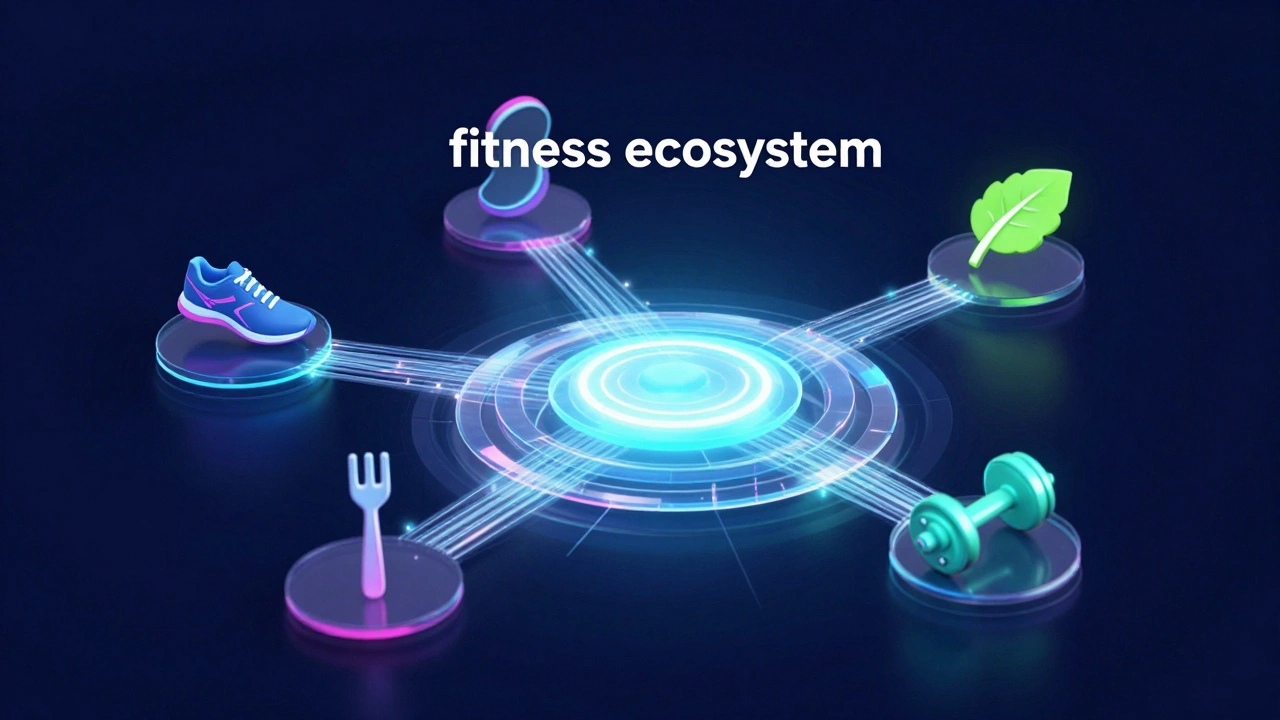
The secret to a successful fitness journey in 2026 isn't using one app, but building a "stack." For example, a typical high-performance setup might involve a Garmin watch for raw biometric data, which syncs to Strava for social competition, and then feeds into Apple Health for a long-term medical record. If you try to find one app that does all of this perfectly, you'll end up with a tool that is mediocre at everything.
Consider the role of Google Fit. Much like its Apple counterpart, it acts as the glue between different devices. If you use an Android phone and a Fitbit, Google Fit ensures that your steps from your wrist and your sleep data from your ring are all in one place. The "#1 app" in this scenario is actually the one that manages the others.
One major pitfall people hit is "data overload." You don't need to track every single micro-nutrient or every single heartbeat. If you spend two hours a day logging data into five different apps, you're spending more time on the phone than in the gym. The goal is to automate as much as possible. Look for apps that offer seamless integration via APIs so you can log a workout in one place and have it appear everywhere.
If you're still unsure which one to download first, let's break it down by your current struggle. Are you starting from zero? Or are you an athlete hitting a plateau?
The Beginner: You need structure. An app like Nike Training Club is a lifesaver here. It provides video-led workouts that remove the guesswork. You don't have to wonder "Am I doing this squat right?" because you have a professional trainer on your screen. For a beginner, the best app is the one that reduces friction and anxiety.
The Weight Watcher: Your battle is with the fork, not the treadmill. Focus on MyFitnessPal or similar caloric trackers. The magic here is the psychological effect of tracking. When you see that a "healthy" granola bar actually has 300 calories and 15g of sugar, your behavior changes. That's the real value of a nutrition app-awareness.
The Performance Junkie: You care about VO2 max, power zones, and cadence. You need the precision of Strava or TrainingPeaks. These apps don't just track distance; they analyze your workload. They help you avoid overtraining by telling you when your recovery is too low to hit a peak effort. For this group, the #1 app is the one that prevents injury while maximizing gains.
Many people fall into the trap of trusting the app more than their own body. I've seen runners push through a shin splint because their app told them they were in a "prime aerobic zone." Remember, these apps use algorithms based on averages. Your heart rate might be higher than the app expects because you didn't sleep well or you're fighting a cold. Use the data as a guide, not a law.
Another mistake is the "subscription creep." You sign up for a free trial of a premium workout plan, forget to cancel, and suddenly you're paying $15 a month for a program you used once. Before you commit to a paid tier, ask yourself: "Is this feature actually changing my behavior, or is it just a pretty graph?" Most of the time, the free versions of these apps are more than enough for 90% of users.
Finally, avoid the obsession with "closing rings" or hitting streaks. While gamification is great for motivation, it can lead to burnout. If you're exhausted but force yourself to take a walk just to keep a 100-day streak alive in your health app, you're ignoring the most important health metric of all: listen to your body.
Rarely. Apps that try to do everything often do nothing well. Nutrition requires a massive, updated food database, while fitness requires precise GPS or video streaming. It's usually better to use a dedicated nutrition app (like MyFitnessPal) and a dedicated workout app, then sync both to a hub like Apple Health or Google Fit.
Yes. Many of the best tools, like Nike Training Club or the basic versions of Strava, provide everything a casual user needs. Paid versions usually just offer more detailed analytics or personalized coaching plans, which are great for pros but unnecessary for beginners.
They are estimates. Calorie counting apps rely on user-submitted data and general nutritional labels, which can vary. Treat the numbers as a general guide for proportions and trends rather than absolute scientific fact.
No, but it helps. Your smartphone can track steps and GPS distance, but a watch provides crucial data like heart rate and sleep quality that a phone simply cannot capture. If you're serious about health tracking, a wearable is a huge advantage.
Look for apps that integrate mindfulness and movement, such as those that offer yoga or guided stretching. While not a "fitness tracker" in the traditional sense, adding a habit tracker or a meditation app to your stack creates a more balanced approach to wellness.
If you're overwhelmed, start with a simple two-app strategy. Pick one for the gym (like Nike Training Club) and one for the kitchen (like MyFitnessPal). Spend a month using them consistently before adding a third tool. If you find yourself spending more time managing the apps than actually exercising, it's time to prune your list. The best fitness app is the one that actually gets you off the couch and moving.