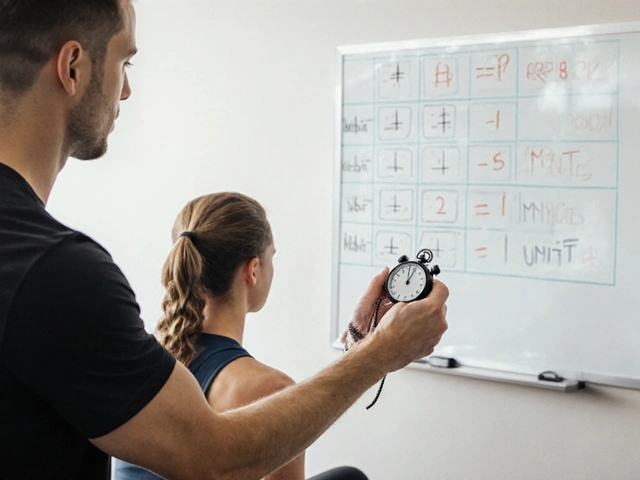
Use the timer to manage your rest periods between sets.
Have you seen those four numbers popping up everywhere lately? The 5 5 5 30 Workout is the latest buzz phrase in the fitness community, promising a quick, effective way to build muscle and burn fat without needing a gym membership. While the specific breakdown varies slightly between different trainers, the core concept remains consistent: a streamlined, number-driven approach to your training that eliminates decision fatigue.
To understand how to perform this routine, you first need to crack the code on what each digit represents. Unlike the famous "12-3-30" treadmill walk, this protocol is designed for floor-based circuits. Here is the standard structure we will cover:
This combination creates a session that typically lasts around thirty minutes, fitting perfectly into a busy schedule. It relies on the principle of metabolic conditioning, where keeping the rep count low (five) forces you to maintain high tension or speed, preventing the workout from becoming too easy even though the numbers seem small.
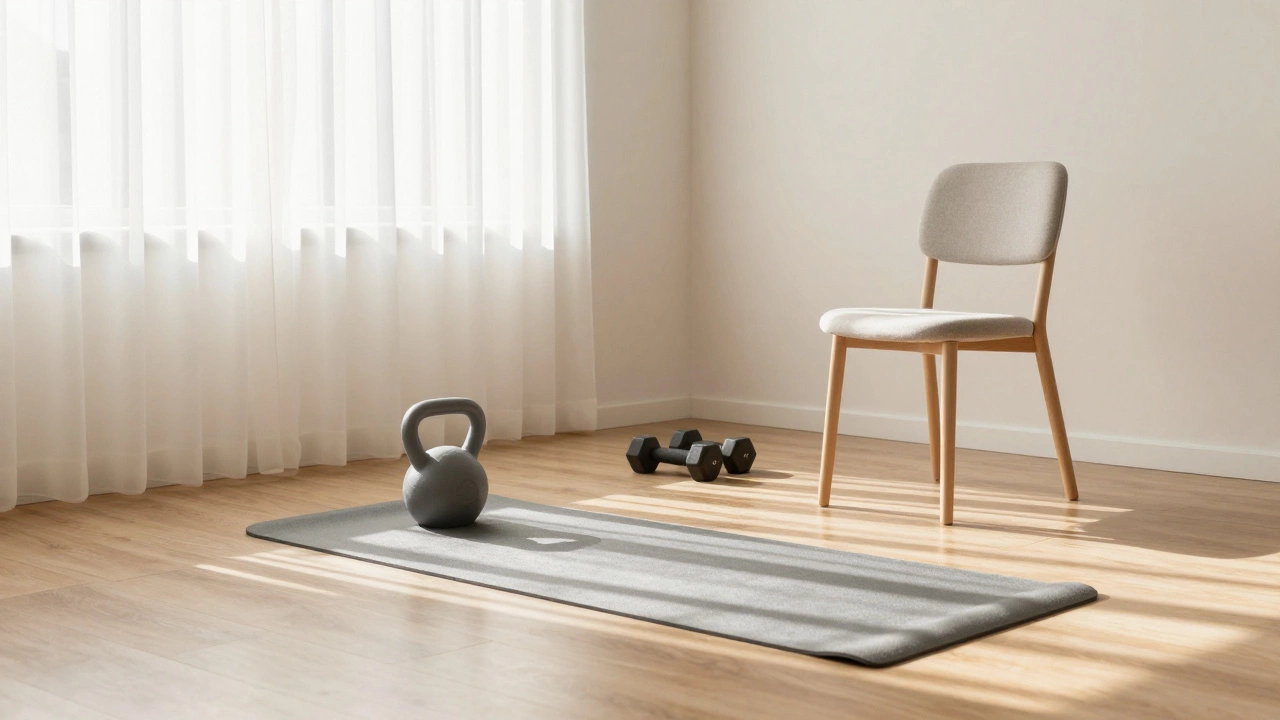
You might expect that five reps requires heavy lifting. However, this routine shines when you use tools you already own or nothing at all. The beauty of a structured bodyweight circuit is scalability. You do not need a dumbbell rack or a resistance band set, although having them improves efficiency.
| Equipment Level | Suggested Gear | Difficulty |
|---|---|---|
| Minimalist | Chair, Wall, Floor | Easy |
| Standard | Kettlebell or Dumbbell (10-20 lbs) | Medium |
| Advanced | Battle Rope or Sandbag | Hard |
If you are starting out, use your own body weight for squats and lunges. Add a backpack filled with books for upper body rows if you do not have dumbbells. The key is to pick a weight or resistance level where the fifth rep feels challenging but not impossible. You want your muscles to be on the verge of failure without sacrificing form.

A major part of the frustration with generic routines is figuring out what to do. To keep it simple and effective, you should select five compound movements that hit every major muscle group. Compound movements are exercises that use multiple joints and muscle groups at once, providing maximum benefit in minimal time.
Here is a balanced list that ensures you cover the push, pull, squat, hinge, and carry motions:
Perform these exercises back-to-back with zero rest. Once you complete the five reps of the final movement, take your allotted 30-second rest. Then, begin round two. After five total rounds, your workout is complete.
It looks counterintuitive to only do five reps. Why not twenty? The answer lies in the recovery window. By limiting the reps, you prevent significant local muscle failure during the set, but by chaining five different exercises together, you exhaust your cardiovascular system. This mimics the effects of high-intensity interval training (HIIT) without requiring you to sprint endlessly.
The thirty-second rest period is critical. Many people make the mistake of taking too much time out between rounds. Because the workload is relatively low per set, you recover quickly. If you feel fresh after 30 seconds, your resistance level is too light. Increase the weight or speed of execution to close that gap. If you cannot finish all five rounds, reduce the load and focus on perfect technique instead.
This format aligns with principles of metabolic stress. Even though the duration of effort is short, the density of work-how much is accomplished in the given timeframe-is high. This triggers hormonal responses related to growth and fat loss more effectively than steady-state cardio.

No matter what your fitness background, you can adapt this framework. Are you an absolute beginner worried about joint impact? Swap the jump lunge for a step-through lunge. Are you an intermediate lifter wanting to build pure size? Switch the rest period from 30 seconds to 45 seconds and increase the rep range to eight or ten.
The goal is always to stay within the "sweet spot." You should be breathing hard, sweating moderately, and feeling your target muscles burn by the third round. Keep a logbook; track which weights you used. Aim to increase the weight by 2.5 lbs every week while keeping the 5-5-5 structure intact. This progressive overload is what keeps your body adapting.
Even simple routines fail when execution gets sloppy. One frequent error is treating the rest period as "me-time." Stand still. Shake out your arms. Do not sit down and check your phone. Use that time to prepare mentally for the next assault. Another issue is rushing the five reps. Perform them under control. A slow concentric and explosive eccentric movement yields better results than throwing the weight for five chaotic repetitions.
Lastly, do not ignore the setup time. Have your equipment laid out in a circle before you start. There is no point stopping the timer to hunt for dumbbells. Efficiency maintains the intensity necessary to trigger results.
You can perform this routine daily, provided you manage the intensity. If you are using heavy weights, limit it to 3-4 days a week to allow muscle recovery. If you are using bodyweight, 5-6 days a week is generally sustainable. Listen to your joints-if you feel nagging pain, take an extra rest day.
With five exercises, five reps, and 30 seconds rest, one round takes approximately 2-3 minutes. Five rounds plus setup and warm-up equals roughly 25 to 30 minutes total session time.
Modify the push-up to an incline push-up against a wall or kitchen counter. Alternatively, kneel on the floor to reduce the leverage. The movement pattern matters more than the strict form at this stage.
It contributes significantly to calorie expenditure. While spot reduction isn't scientifically possible, this high-density circuit elevates your metabolism for hours after finishing, aiding overall fat loss including abdominal area.
You do not strictly need sneakers, but wearing supportive cross-training shoes helps stabilize your ankles during lunges and jumps. Barefoot training is risky unless your flooring is soft and your mechanics are perfect.