Enter your HIIT schedule to see personalized recommendations.
Doing HIIT every day sounds like a fast track to results. Burn more calories. Get fitter. Lose weight faster. But here’s the truth most people don’t tell you: HIIT every day isn’t just ineffective-it can actually hurt your progress and your body.
HIIT-High-Intensity Interval Training-isn’t just another workout. It’s a full-system stressor. Your heart rate spikes to 80-95% of your max. Your muscles fire at near-maximum capacity. Your nervous system gets overloaded. Your cortisol levels jump. And then, when you stop, your body tries to rebuild itself stronger.
That rebuilding? That’s where results happen. Not during the workout. Not while you’re gasping for air. But in the quiet hours after-when you’re sleeping, eating, or just sitting on the couch.
Do HIIT every day, and you skip the rebuilding phase. You’re just adding more stress without giving your body time to recover. Think of it like hammering a nail. One good hit, and it goes in. Keep hammering nonstop? The nail bends. The wood cracks. Your body isn’t any different.
A 2023 study from the University of Western Australia tracked 120 people doing HIIT three times a week versus five times a week. After eight weeks, the group doing it three times a week improved VO2 max by 14%, lost 3.2% body fat, and reported better sleep. The five-times-a-week group? They improved VO2 max by only 5%, lost 0.8% body fat, and 68% reported constant fatigue and muscle soreness.
Why? Because HIIT relies heavily on the anaerobic system. That system needs 48 to 72 hours to fully replenish glycogen stores and repair muscle fibers. Jumping into another session too soon means you’re training on empty tanks. Your performance drops. Your form suffers. And you increase your risk of injury-especially in the knees, lower back, and shoulders.
People think they’re being disciplined. They’re not. They’re burning out.
Signs you’re doing too much HIIT:
If you’re checking off two or more of these, you’re not training hard-you’re training blind.
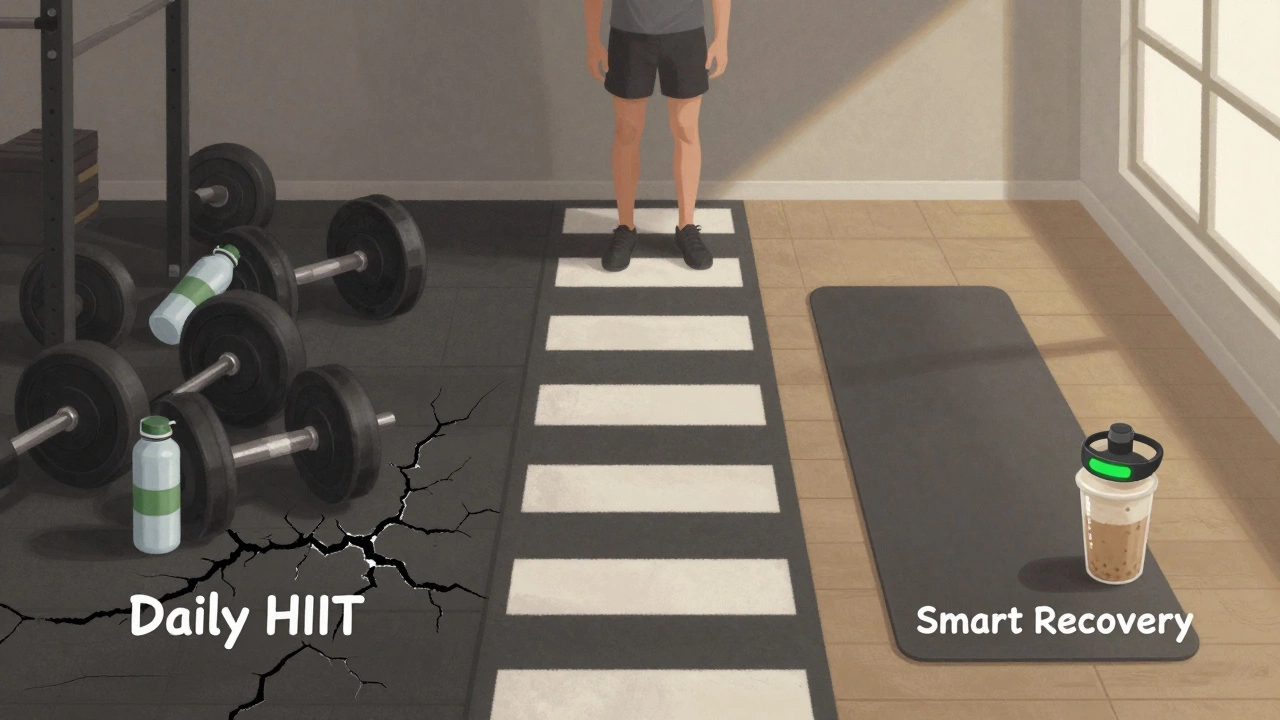
You don’t need to quit HIIT. You just need to be smarter about it.
Here’s what works:
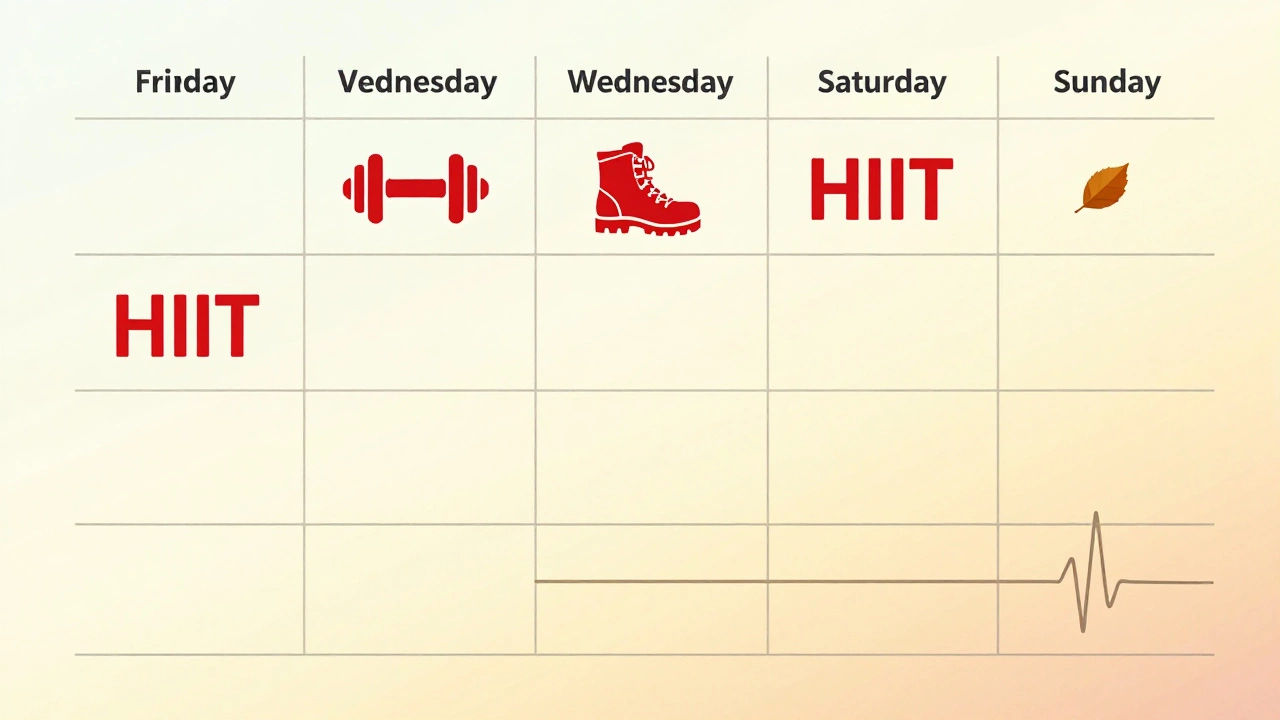
For example: Monday-HIIT. Wednesday-strength training. Friday-HIIT. Saturday-hike or swim. Sunday-rest. That’s a sustainable, effective plan. It’s not glamorous. But it works.
Some people should never do HIIT daily-even if they’re fit.
It’s not about being weak. It’s about being smart.
Rest isn’t lazy. It’s strategic.
When you give your body time to recover, you don’t just heal-you adapt. Your mitochondria (the energy factories in your cells) multiply. Your heart gets more efficient. Your muscles become more responsive to insulin. That’s how you actually get leaner, stronger, and more energetic over time.
Think of it like this: You wouldn’t run a marathon every day. You wouldn’t bench press max weight daily. Why treat HIIT any differently?
Just because you skip HIIT doesn’t mean you skip cardio.
Steady-state cardio-like brisk walking, cycling, or swimming-isn’t just fine on your off days. It’s essential. It improves blood flow, helps clear metabolic waste, and keeps your heart healthy without overloading your system.
Try this: 30-45 minutes of moderate cardio on your HIIT rest days. You’ll recover faster and show up stronger for your next high-intensity session.
Is it OK to do HIIT every day? No.
Not for beginners. Not for intermediates. Not even for elite athletes.
HIIT is powerful-but it’s not meant to be daily. It’s meant to be intense, strategic, and followed by recovery. Do it right, and you’ll see results faster than someone doing it every day. Do it wrong, and you’ll end up sidelined, frustrated, or injured.
Two or three times a week. Enough sleep. Enough food. Enough rest. That’s the real formula.
Yes, but don’t do both at max intensity. If you lift heavy in the morning, keep your HIIT session light and short-think 10-15 minutes of low-impact intervals. Or, do HIIT in the morning and strength training in the evening. Either way, make sure you’re eating enough protein and hydrating well. Don’t combine two brutal sessions back-to-back.
Feeling fine doesn’t mean you’re making progress. Many people confuse short-term energy with long-term adaptation. Your performance might seem stable now, but over time, your recovery systems will break down. You’ll hit a wall-often suddenly. Track your resting heart rate, sleep quality, and strength levels over 4-6 weeks. If they’re declining, you’re overtrained-even if you feel okay.
Not really. But you can do modified versions. Try “HIIT Lite”: 3-4 rounds of 30 seconds of work (like bodyweight squats or mountain climbers) followed by 60 seconds of rest. Keep the intensity at 60-70% effort. Do this 3-4 times a week max. It’s still effective, but far less taxing on your body.
At least 48 hours before doing another HIIT session. That means if you do HIIT on Monday, wait until Wednesday for your next one. Use the days in between for mobility work, walking, or strength training. If you’re feeling unusually sore or tired, take 72 hours. Listen to your body more than your calendar.
Yes-but only if you’re not overdoing it. HIIT helps burn fat, but too much increases cortisol, which can make your body hold onto belly fat. Pair 2-3 HIIT sessions with good sleep, enough protein, and a slight calorie deficit. Don’t try to burn your way to weight loss. Build a system that lets your body burn fat naturally.