Muscles grow on rest days when they're repaired and rebuilt. Training creates micro-tears that need time to heal. This calculator helps you determine the optimal rest period based on your workout intensity and experience level.
Ever wonder why you feel stronger after skipping the gym for a day? You’re not imagining it. Muscles grow on rest days-not during the workout. That’s right. The heavy lifting? That’s just the trigger. The real magic happens when you’re sleeping, eating, or scrolling on the couch. If you’re pushing yourself hard in the gym but not seeing progress, you might be skipping the most important part: recovery.
Your body doesn’t start repairing those tears until you stop lifting. That’s when hormones like growth hormone and IGF-1 kick in. Your cells send in satellite cells-special repair workers-to patch up the damage. They fuse with existing muscle fibers and add new protein strands. That’s hypertrophy. That’s growth. And it only happens when you’re not training.
Studies show muscle protein synthesis peaks 24 to 48 hours after a workout. It stays elevated for up to 72 hours in beginners, and even 48 hours in experienced lifters. If you train the same muscle group every day, you’re interrupting this process. You’re tearing down before the repair is done. That’s why overtraining leads to stagnation-or worse, injury.
Here’s what’s happening inside your muscles on a rest day:
That last point is critical. Strength isn’t just about muscle size. It’s also about how well your brain can recruit those muscles. Rest gives your nervous system time to recover. That’s why you might feel weaker after three straight days of lifting-even if your muscles aren’t sore. You’re mentally fatigued.
That doesn’t mean you sit still for three days. You can train other muscle groups. A push-pull-legs split, for example, lets you train three days a week with full rest for each muscle group. Upper body Monday, lower body Wednesday, upper body Friday-your legs get four full days of rest between sessions.
Some people swear by training each muscle group twice a week. That’s fine-if you lower the volume per session. For example, instead of 10 sets of squats on Monday, you do 5 sets on Monday and 5 sets on Thursday. That gives you 48 hours between sessions. The total volume stays the same, but recovery is built in.
Signs you’re not resting enough:
If you’re seeing two or more of these, you’re overdoing it. Rest isn’t laziness. It’s part of the program.
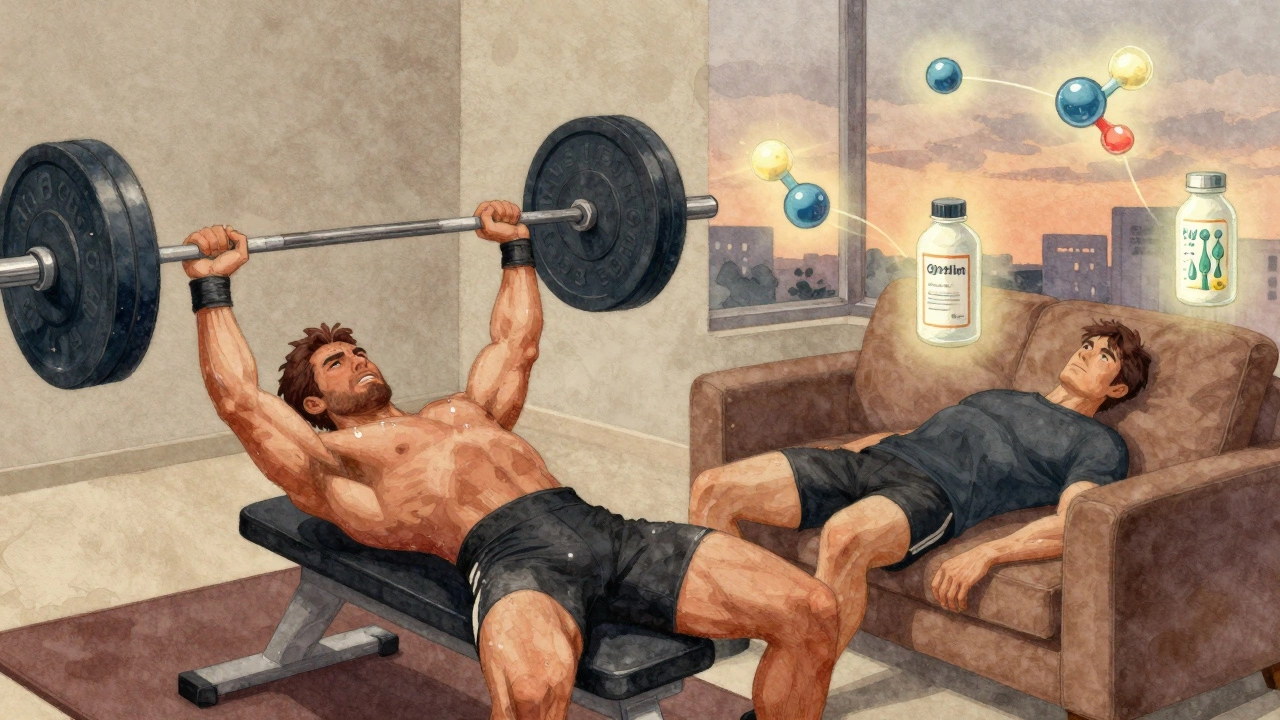
Active recovery helps flush out metabolic waste, reduces stiffness, and keeps you mentally engaged without taxing your muscles. It’s especially helpful after heavy leg days. A 30-minute walk on a rest day won’t hurt your gains-it might even help them.
But don’t confuse active recovery with another workout. If you’re out of breath, sweating hard, or feeling burn in your muscles, you’re not recovering. You’re adding stress. Rest days should feel easy. If they don’t, you’re not resting.
For a 75kg person, that’s 120 to 165 grams of protein daily. Spread it across meals. Don’t save it all for dinner. Your body can only use about 30-40 grams of protein at once for muscle repair. Eat it in chunks: breakfast, lunch, snack, dinner.
Carbs matter too. They refill glycogen. Without enough carbs, your body might start breaking down muscle for energy. That’s the opposite of what you want. Fats support hormone production-especially testosterone, which helps with recovery.
Hydration is often ignored. Muscles are 75% water. Dehydration slows protein synthesis and increases muscle breakdown. Drink water consistently. Don’t wait until you’re thirsty.
One study from the University of Chicago found that men who slept only 5.5 hours a night lost 60% more muscle mass during a calorie deficit than those who slept 8.5 hours-even when diet and training were identical.
Deep sleep also lowers cortisol, the stress hormone that breaks down muscle. Poor sleep = high cortisol = muscle loss. That’s why two nights of bad sleep can undo a week of good training.
Try this: Go to bed at the same time every night. No screens an hour before bed. Keep your room cool (around 18-19°C). If you’re not sleeping 7-9 hours, you’re not giving your muscles a fair shot.
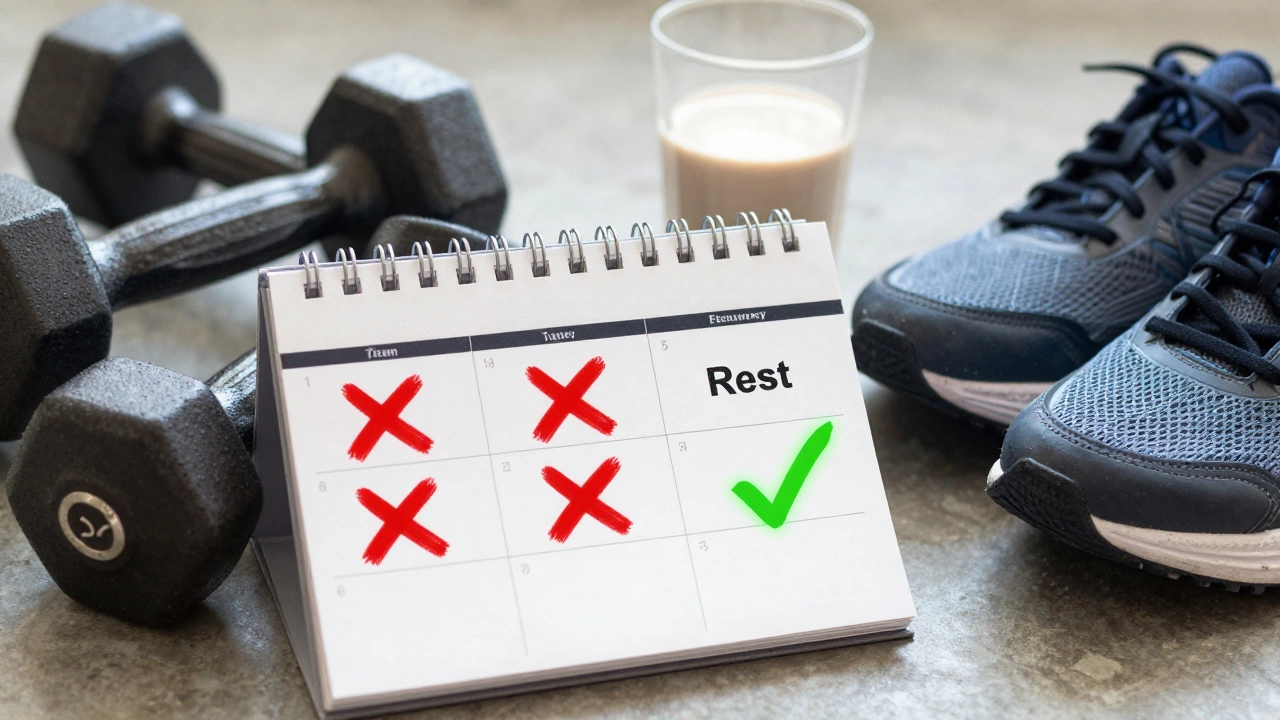
One lifter I know trained six days a week for eight months. He was lifting heavier every session-until suddenly, he couldn’t press 50kg anymore. He thought he was overtraining. He wasn’t. He was under-recovering. He started taking two full rest days a week. Within three weeks, he broke his old PR.
Rest isn’t the opposite of training. It’s the partner.
Example week:
This gives every muscle group 72 hours of recovery between sessions. It’s simple. It’s effective. And it works whether you’re a beginner or have been lifting for years.
If you’re serious about building muscle, treat rest days like scheduled workouts. Block them in your calendar. Protect them. Don’t feel guilty for skipping a session. You’re not falling behind. You’re catching up.
Progress isn’t linear. Sometimes, the biggest leap happens the day after you do nothing at all.
Yes, muscles grow on rest days. During workouts, you create tiny tears in muscle fibers. The actual repair and growth-called hypertrophy-happen during rest, when your body releases growth hormones, repairs tissue, and builds stronger muscle fibers. Training too often without rest prevents this process.
Most people benefit from 1-2 full rest days per week. If you’re training each muscle group twice a week, aim for at least 48 hours between sessions. Beginners often need more rest than advanced lifters. Listen to your body-if you’re constantly sore, fatigued, or losing strength, you need more rest.
Yes, but keep it light. Walking, cycling at a slow pace, or swimming for 20-30 minutes can help with blood flow and recovery without interfering with muscle growth. Avoid high-intensity cardio like sprints or HIIT on rest days unless you’re specifically training for endurance-those can hinder recovery.
Not always. Soreness (DOMS) comes from muscle damage, which can happen without growth. You can be sore and not gaining muscle, or you can be gaining muscle without being sore. Progress is better measured by strength gains, muscle size, and recovery-not soreness.
Eat the same amount of protein as on training days-1.6 to 2.2 grams per kilogram of body weight. Carbs help refill glycogen stores, and healthy fats support hormone production. Stay hydrated. Your muscles need water to repair. Don’t cut calories or protein on rest days thinking you’re "saving"-you’re sabotaging recovery.
It’s not recommended for most people. Training the same muscle group two days in a row doesn’t give enough time for repair. If you do it, keep the volume very low on the second day. Advanced lifters sometimes do this with very low intensity for technique work, but it’s risky and not ideal for muscle growth.
Beginners can see noticeable changes in 4-8 weeks with consistent training, proper rest, and nutrition. More experienced lifters may take 8-12 weeks. Muscle growth is slow. It’s not about quick fixes-it’s about consistent recovery over months and years.