
Most people walk into a gym, look at the machines, and just start lifting whatever feels right. They might do three sets of bicep curls and then spend twenty minutes on the treadmill. A month later, they stop going because they aren't seeing changes in the mirror. The problem isn't their effort; it's the lack of a map. Without a structured approach, you're just exercising, not training.
Creating a gym plan isn't about finding a magical template online. It's about matching your current physical state with a specific goal and tracking the progress over time. Whether you want to build muscle, lose fat, or just stop feeling winded when you walk up stairs, the logic remains the same: you need a system that forces your body to adapt.
Before you touch a dumbbell, you need to be honest about where you are and where you want to go. If you tell a trainer you want to "get fit," they can't help you because "fit" means different things to different people. A marathon runner is fit, but they can't bench press 200 pounds. A powerlifter is fit, but they might struggle to run a 5k.
Hypertrophy is the process of increasing the size of muscle cells through targeted resistance training. If your goal is purely aesthetic-looking "buff" or "toned"-this is what you're aiming for. On the other hand, if you want raw strength, you're looking at Neuromuscular Adaptation, which teaches your brain to recruit more muscle fibers at once.
Consider your "recovery budget." If you have a high-stress job and only six hours of sleep, you cannot train like a professional athlete. Trying to hit the gym six days a week when your life only allows for three is a recipe for quitting by week three. Start with a frequency that feels almost too easy; it's better to over-deliver on a simple plan than to fail a complex one.
A "split" is simply how you divide your workouts across the week. The best split is the one that allows you to hit each muscle group with enough intensity while giving it enough time to repair. Muscle doesn't grow while you're lifting; it grows while you're sleeping and eating.
For beginners, a Full Body Split is usually the gold standard. You hit every major muscle group in one session, three times a week. This allows for high frequency and plenty of rest days in between. As you advance, you might move toward a Push/Pull/Legs (PPL) routine, which separates movements by function: pushing (chest, shoulders, triceps), pulling (back, biceps), and legs.
| Split Type | Frequency | Best For | Recovery Time |
|---|---|---|---|
| Full Body | 3 days/week | Beginners & General Health | 48 hours between sessions |
| Upper/Lower | 4 days/week | Intermediate Strength | 2-3 days per muscle group |
| Push/Pull/Legs | 6 days/week | Advanced Hypertrophy | Varies by muscle group |
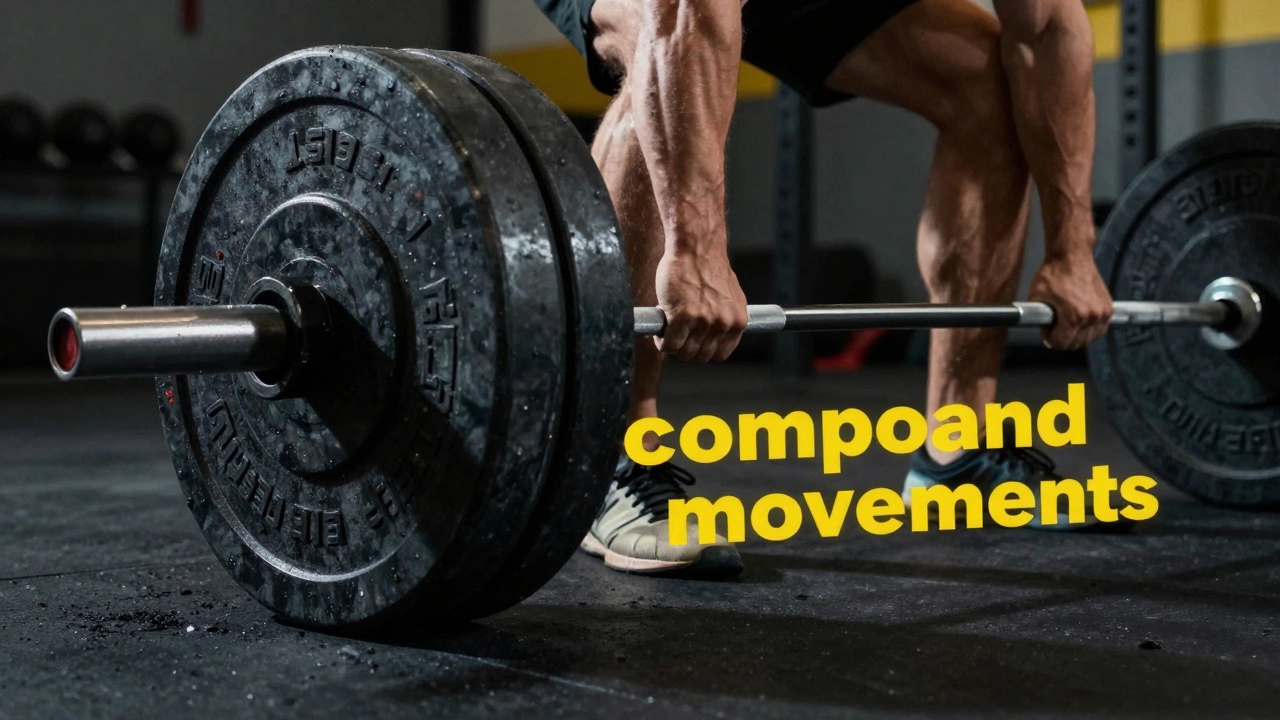
Not all exercises are created equal. If you only have 45 minutes in the gym, you shouldn't spend 30 of them on cable flyes and calf raises. You need to prioritize Compound Exercises, which are movements that use multiple joints and muscle groups at once. Think of these as the "main courses" of your workout.
A classic compound movement is the Squat. It targets the quadriceps, glutes, and core. Similarly, the Deadlift works your entire posterior chain. When you build your plan, pick one movement from each of these categories:
Once your compound lifts are done, you can add "accessories." These are Isolation Exercises like bicep curls or lateral raises. These are the "dessert"-they add detail and specific volume but shouldn't be the focus of your energy.
This is where most people get confused. Volume is the total amount of work you do (Sets x Reps x Weight). Intensity is how heavy that weight is relative to your maximum effort. If you want to grow, you have to manage both.
For general muscle growth, aim for 3 to 5 sets of 8 to 12 repetitions. This is the traditional "hypertrophy range." If you are training for pure strength, you'll drop the reps to 1 to 5 and increase the weight. The key is the Repetitions in Reserve (RIR). You shouldn't go to total failure on every set, but you should finish a set feeling like you could have only done 1 or 2 more reps with good form. If you finish a set of 10 and feel like you could have done 20, the weight is too light to trigger growth.
Your body is lazy. It wants to maintain the status quo. If you lift 50 pounds for 10 reps every week for a year, your body has no reason to build new muscle because it can already handle that load. To force change, you must implement Progressive Overload, which is the gradual increase of stress placed upon the body during exercise.
You don't always have to add more weight to the bar. There are several ways to progress:
Keep a log. Whether it's a notes app or a physical notebook, tracking your numbers is the only way to ensure you're actually improving. If you're guessing what you lifted last Tuesday, you're leaving gains on the table.

More is not always better. If you train a muscle group every single day, you're actually breaking it down faster than it can rebuild. This leads to Overtraining Syndrome, characterized by persistent fatigue, insomnia, and a plateau in strength.
Include a Deload Week every 4 to 8 weeks. During a deload, you keep the same exercises and frequency but drop the weights by 30-50% or halve the number of sets. This allows your joints, ligaments, and central nervous system to recover while keeping the habit of going to the gym alive. It feels like a vacation, but it's actually a strategic investment in your long-term growth.
For most people, 45 to 90 minutes is the sweet spot. After 90 minutes of intense lifting, cortisol levels typically rise and glycogen stores drop, which can lead to a decrease in workout quality. If you're spending three hours in the gym, you're likely resting too long or doing too many low-impact isolation exercises.
If your primary goal is strength or muscle growth, do weights first. Lifting requires the most explosive energy (ATP) and mental focus. If you run 5km first, you'll be fatigued when you hit the squat rack, increasing the risk of injury and decreasing the weight you can lift. Use 5-10 minutes of light cardio as a warmup, then lift, then finish with your main cardio session.
Don't panic and try to "make it up" by doing two workouts in one day. Simply pick up where you left off. If you missed "Leg Day," make your next session Leg Day. Consistency is measured in months and years, not days. One missed session is a ripple; missing a whole week is a wave. Just get back to the schedule.
Supplements are the top 5% of your results. The other 95% comes from the plan, sleep, and whole foods. Creatine Monohydrate is one of the most researched supplements for strength, and whey protein helps hit daily targets, but neither will fix a bad workout plan or a lack of sleep. Focus on the foundation before buying powders.
Change your plan when you hit a plateau that lasts more than 3-4 weeks despite adjusting your food and sleep. You don't need to change your exercises every week-that's a myth called "muscle confusion." Muscles don't get confused; they get stronger. Only swap exercises if they cause pain or if you've completely maxed out the potential of that specific movement.
Depending on your specific aim, your final tweaks will differ. If you're focused on weight loss, keep the strength training but add a 20-minute incline walk at the end of each session and maintain a slight caloric deficit. If you're focusing on muscle gain, ensure you're eating a surplus of calories and prioritizing 8 hours of sleep.
For those new to the gym, start with a 4-week "adaptation phase." Use machines for the first two weeks to learn the movement patterns safely, then transition to free weights once your stability improves. The goal for the first month isn't to lift the heaviest weight; it's to build the habit of showing up.