Note: All these apps offer robust free tiers as of 2026.
Here is the truth that most fitness brands won't tell you: you do not need to pay monthly fees to monitor your health. In 2026, the average fitness enthusiast still thinks they need to subscribe to a premium service to see their progress, but the technology on your wrist or pocket is already doing the heavy lifting for free. Whether you are training for a marathon in the Swan Valley or trying to get back into walking after winter, the landscape of free tracking tools has matured significantly. The challenge isn't finding a tool; it's figuring out which one respects your data while giving you accurate readings.
Finding the right tool matters because inaccurate step counts or glitchy sleep metrics can ruin your motivation. If a device tells you you walked less than you did, you might skip a day unnecessarily. Conversely, overestimating calories burned leads to eating too much. We need to strip away the marketing noise and look at what actually works without a price tag. The market is flooded with "freemium" models where the basics are free, but the useful insights are locked behind a paywall. A true free tracker avoids this trap.
When we talk about a Free Tracker, it refers to a digital solution that monitors physical activity without requiring recurring payments or upfront hardware costs beyond your smartphone or smartwatch., we aren't just talking about an app. In Perth, where the summers get humid and the winters mild, reliability is key. The two main pillars of free tracking today are native phone software and cross-platform aggregators.
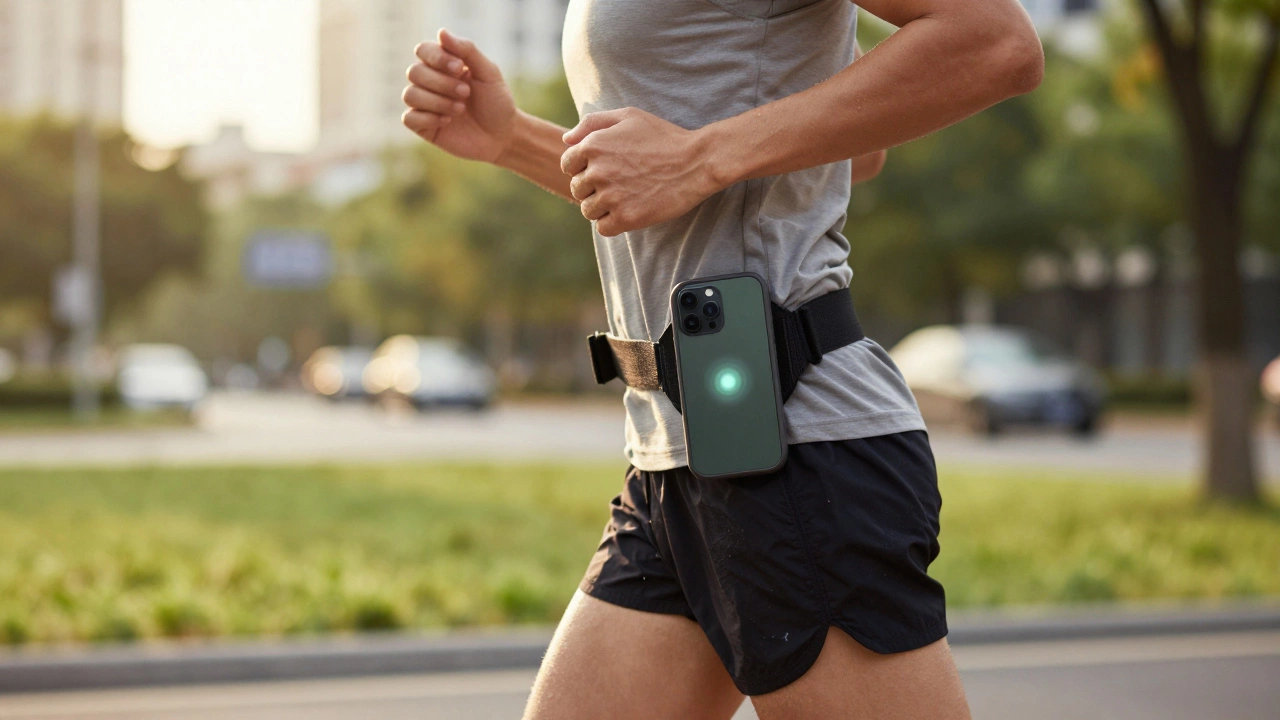
Native software uses the built-in sensors of your phone-accelerometers, gyroscopes, and GPS-to calculate movement. This is the most energy-efficient method because it doesn't require pairing a separate Bluetooth device. Cross-platform aggregators, on the other hand, pull data from multiple sources. For instance, one app might record your run, while another records your heart rate, and the aggregator brings them together.
The distinction matters for battery life. If you rely solely on a third-party app running constantly in the background, you could drain a standard 4000mAh battery by noon. Native systems are optimized by the operating system to wake up only when necessary. For someone working long hours at a desk in the CBD, battery longevity is a practical concern that determines whether you keep the app installed or delete it.
While there are dozens of options, four solutions dominate the free space due to their stability, feature sets, and lack of intrusive advertisements. These tools have been refined since 2023 and continue to evolve with AI-driven coaching tips.
Google Fit remains the gold standard for Android users who want a no-nonsense approach.
If you are on Android, this is already pre-installed on most devices. It focuses heavily on "Heart Points," a metric introduced recently that prioritizes moderate-to-vigorous activity over simple steps. For example, climbing the stairs at your office might give you fewer points than a brisk walk to the bus stop, encouraging intensity rather than just fidgeting. It integrates seamlessly with wearable brands like Garmin or Whoop via API, even if the hardware isn't made by Google. The interface is clean, minimizing distraction, though some power users find it lacking in detailed recovery analytics compared to paid competitors.
Apple Health operates differently as a central hub rather than a standalone collection app.
For iPhone users, this is the backbone of your ecosystem. Unlike Google Fit, which tries to collect all data itself, Apple Health allows hundreds of third-party apps to write data directly into its database. This creates a "source of truth" for your vitals. If you wear an Apple Watch, the data flows here instantly. Without a watch, the phone's motion coprocessors track steps and distance surprisingly accurately indoors. A critical benefit in 2026 is the Health Record access in Australia, where you can legally link hospital visits to your personal health data within this app, providing a comprehensive medical history alongside daily fitness metrics.
Samsung Health bridges the gap between raw data and motivational feedback loops.
This app shines in visualization. Where other free apps might show a flat line of numbers, Samsung Health provides stress scores and water intake reminders that feel personalized. It is particularly strong on non-GPS activities like yoga or resistance training, which can be tricky for phone sensors to detect accurately. The community challenges in 2026 remain a popular feature, allowing friends in different time zones to compete on daily step counts without needing to coordinate times.
Strava is the social heavyweight, though its free version has limits on performance data.
If you are running along the coast road in Fremantle and care about segments and competition, Strava is essential. While the paid "Pro" membership unlocks detailed power analysis and race planning, the free tier offers robust map recording and social sharing. Many users treat Strava as their primary GPS logger because the map accuracy is superior to standard mapping apps. The downside is battery consumption during long hikes, as it requires constant GPS pinging to draw the route correctly.
| Feature | Google Fit | Apple Health | Samsung Health | Strava |
|---|---|---|---|---|
| Primary Platform | Android | iOS | Android/iOS | Android/iOS |
| GPS Accuracy | Moderate | High | High | Excellent |
| Sleep Tracking | Basic | Advanced | Advanced | N/A (Wearable Required) |
| Data Ownership | User Owned | User Owned | User Owned | Limited Sharing |
| Battery Impact | Low | Very Low | Medium | High |
We cannot discuss free tracking without addressing the business model. Companies do not build massive infrastructure for free without an incentive. When you use a free service, the product is often your attention or your data. In the context of health, Data Privacy, the practice of protecting personal information from unauthorized access or misuse in digital environments. becomes a major consideration.
By 2026, regulations in Western Australia regarding biometric data are stricter than before, yet third-party developers based overseas may not adhere to local laws. Apple Health and Samsung Health generally keep data on-device unless you opt-in to cloud syncing. This minimizes the risk of your health leaks influencing insurance premiums or targeted ad profiling. If you are concerned about sensitive information leaking, prioritize native OS solutions over independent web apps.
Many people underestimate the capabilities of the Smartphone Sensor, internal components like accelerometers and gyroscopes that detect physical movement.. Modern phones have sensors rivaling dedicated chest straps for basic step counting. To maximize accuracy without buying a $200 device:
This optimization ensures you aren't left with gaps in your data logs. For example, during a typical 30-minute gym session, if you lose connectivity due to battery restrictions, those 30 minutes might disappear entirely.

In the past decade, steps were king. Today, step counts are considered vanity metrics. They don't necessarily correlate with cardiovascular health or weight loss outcomes. A truly effective free tracker should offer alternative metrics.
Focusing on these deeper metrics prevents burnout. Chasing 10,000 steps every single day can lead to injury, whereas focusing on "active minutes" allows flexibility in how you move.
Picking a free tracker is about sustainability. You need a system you will use every Tuesday evening for three years, not just for the two weeks of New Year's resolutions. The tools mentioned above have proven staying power because they are integrated into larger ecosystems. If an app disappears tomorrow, your data is gone. If you use the native health suite of your phone, your data history persists across device upgrades automatically.
Ultimately, the best free tracker is the one you actually wear or carry. Start with the default app on your phone-it's free, secure, and powerful enough for 90% of general users. Only branch out to specialized apps if you need specific features like cycling maps or social challenges.
Yes, smartphones contain accelerometers and GPS that function effectively as standalone trackers. Native apps like Apple Health or Google Fit utilize these internal sensors without requiring additional hardware.
Native operating system apps like Apple Health or Google Fit drain the least battery because they are deeply integrated into the hardware management layers. Third-party apps often consume more power by running parallel processes in the background.
Native operating system apps like Apple Health or Google Fit drain the least battery because they are deeply integrated into the hardware management layers. Third-party apps often consume more power by running parallel processes in the background.
It varies by platform. Apple Health stores data locally by default. Other free apps may aggregate data for anonymous research or advertising purposes unless specified in their privacy policy. Always check the permissions granted.
It varies by platform. Apple Health stores data locally by default. Other free apps may aggregate data for anonymous research or advertising purposes unless specified in their privacy policy. Always check the permissions granted.
Most modern trackers cache data locally and upload when internet is available. However, real-time GPS mapping might be limited without a signal depending on the app architecture.
Most modern trackers cache data locally and upload when internet is available. However, real-time GPS mapping might be limited without a signal depending on the app architecture.
Yes. Accelerometers detect movement patterns even indoors without GPS. However, without a dedicated heart rate strap, calorie estimates for strength training are approximations based on movement intensity.
Yes. Accelerometers detect movement patterns even indoors without GPS. However, without a dedicated heart rate strap, calorie estimates for strength training are approximations based on movement intensity.