
The article highlights that 90% dropout rates are often myths, but real churn is driven by specific friction points. Select the environment (Gym or Home) that best fits your current situation for each factor to calculate your projected success score.
Predicted Retention Rate
Recommendations based on article insights:
Walk into any commercial gym in January, and you’ll see packed parking lots. Fast forward to April, and those same spots are empty. You’ve probably heard the statistic floating around social media: "90% of people quit the gym after three months." It’s a terrifying number if you’re trying to stick with a new routine. But is it actually true? Does the majority of humanity really give up on their health goals by spring?
The short answer is no. That specific 90% figure is largely an urban legend, often misattributed or exaggerated from older, smaller studies. However, the underlying reality is still uncomfortable: a significant portion of new gym members do stop going within the first few months. Industry data from organizations like the International Health, Racquet & Sportsclubs Association (IHRSA) suggests that churn rates for annual memberships hover closer to 25-40%, not 90%. Still, losing nearly half your users in a year is massive.
So why does this happen? And more importantly, how can you be part of the group that stays? The secret isn’t willpower. It’s understanding the psychology behind why we start-and why we stop.
Where did this 90% number come from? It likely stems from a mix of outdated research and marketing fear-mongering. Some early studies looked at New Year’s resolutions, where commitment levels are famously high but short-lived. Others focused on free trial periods, where drop-off is naturally higher because there’s no financial barrier to leaving.
When you look at broader fitness participation data, the picture changes. According to recent surveys by the American Council on Exercise (ACE), about 60% of people who start an exercise program maintain it for six months or longer. That’s a far cry from 10% retention. But here’s the catch: those numbers improve drastically when people move away from traditional gym settings and toward flexible, self-directed routines.
This shift explains why home workouts are exercise routines performed at home without commercial gym equipment have exploded in popularity since 2020. They remove several friction points that cause people to quit gyms entirely.
If 90% is a myth, what’s driving the real dropouts? Researchers and behavioral psychologists have identified several key reasons why people abandon their fitness goals:
These factors don’t disappear overnight. In fact, they compound over time. But they’re also solvable-especially if you rethink where and how you train.
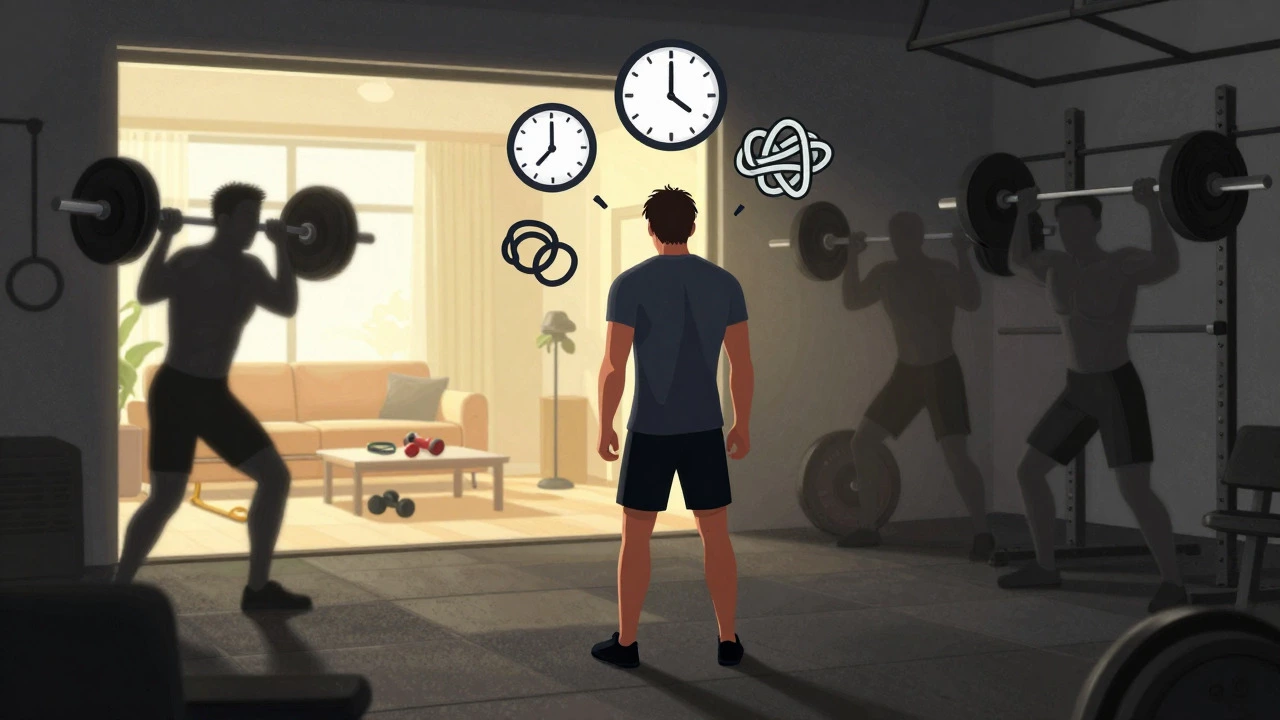
Let’s talk about why training at home might be your best bet for long-term consistency. Unlike commercial gyms, home workouts offer flexible, convenient exercise sessions tailored to individual schedules and spaces. Here’s how they address the main reasons people quit:
| Factor | Traditional Gym | Home Workout |
|---|---|---|
| Time Commitment | 30-60+ minutes including travel | 15-45 minutes, no commute |
| Cost | $30-$100/month membership | $0-$50 one-time setup |
| Flexibility | Fixed operating hours | Train anytime, anywhere |
| Social Pressure | High (judgment, comparison) | Low (private environment) |
| Variety | Dependent on facility offerings | Unlimited via apps/videos |
Notice how home workouts eliminate the biggest barriers: time, cost, and social anxiety. You don’t need a garage full of expensive machines either. A simple resistance band, a pair of dumbbells, or even just your body weight can deliver effective results.
Apps like Nike Training Club, FitOn, and Freeletics provide structured programs that adapt to your level. These digital coaches replace the personal trainer role while keeping things engaging through gamification and community challenges.
Motivation fades. Discipline doesn’t-but discipline is hard to build from scratch. Instead of relying on sheer willpower, focus on creating systems that make sticking with your routine easier than quitting.
Remember, perfection is the enemy of progress. Missing one day doesn’t mean failure. What matters is getting back on track quickly.

One reason people quit is unrealistic expectations. You won’t look like a fitness model in three weeks. But you *will* feel better, sleep deeper, and gain energy within days of starting regular movement.
Studies show that most people experience mental health benefits-reduced stress, improved mood-within the first two weeks of consistent exercise. Physical changes follow later. Understanding this timeline helps manage frustration.
Also, consider shifting your goal from “losing weight” to “building strength” or “improving endurance.” Process-oriented goals are more controllable and satisfying than outcome-based ones.
No, the 90% figure is largely exaggerated. Realistic industry data shows churn rates between 25-40% annually. While many people do quit, it’s not nearly as extreme as the myth suggests.
Common reasons include lack of immediate results, inconvenience, boredom, gym intimidation, and setting unrealistic goals. These factors create friction that makes consistency difficult.
Yes, especially for general fitness, weight management, and strength building. With proper programming and progressive overload, home workouts can match gym results. Advanced athletes may eventually need specialized equipment, but most people thrive at home.
Focus on building habits, not motivation. Start small, track progress, pair workouts with enjoyable activities, plan ahead, and find accountability partners. Make exercise easy and rewarding.
Expect increased energy, better sleep, reduced stress, and gradual improvements in strength and endurance. Visible physical changes may take 8-12 weeks. Mental benefits often appear sooner than physical ones.
Not at all. Bodyweight exercises, resistance bands, and basic dumbbells are sufficient for most fitness goals. Invest gradually based on your needs and preferences.
Absolutely. Progressive overload through added reps, slower tempos, or increased resistance allows muscle growth. Many successful bodybuilders started with minimal equipment.
Aim for 3-5 sessions per week, depending on your goals and recovery capacity. Consistency matters more than frequency. Even 2-3 quality sessions weekly yield noticeable benefits over time.
Never. Missing one session doesn’t erase your progress. Get back on track immediately. Perfection isn’t required-consistency over months and years is what creates lasting change.
Many free apps offer excellent content suitable for beginners and intermediates. Paid versions often add personalized plans and advanced features, but free options can absolutely help you achieve your goals.