Select your planned outfit to see how well it meets the criteria for a productive personal training session.
Make selections and click "Check My Gear" to see your analysis.
You just booked your first personal training session. You are excited, maybe a little nervous, and staring at your closet wondering what on earth you should wear. Do you need matching sets? Expensive brands? Or is an old t-shirt enough? The truth is simpler than the marketing wants you to believe. What you wear affects how you move, how comfortable you feel, and frankly, how much your trainer can actually see of your form.
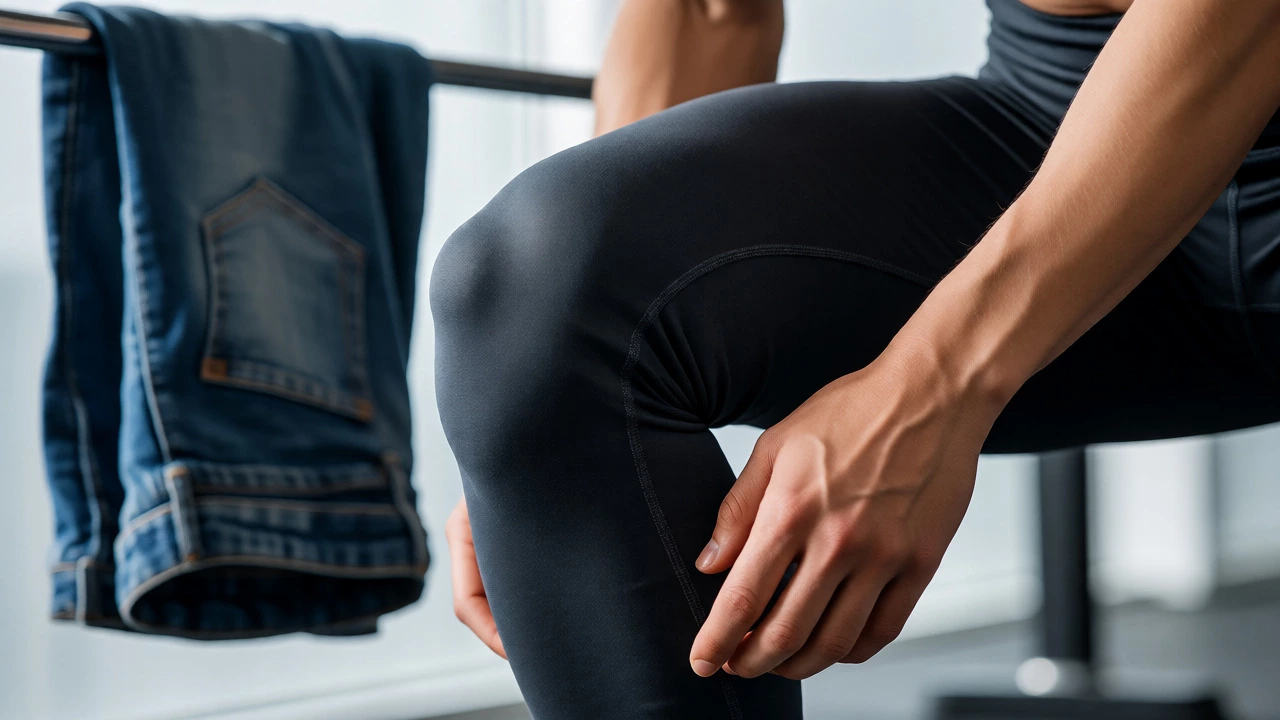
Think about it this way: if you show up in denim jeans to do squats, you aren't just being stubborn; you're physically restricting your range of motion. If you wear cotton that soaks up sweat like a sponge, you'll be heavy, chafing, and distracted by minute twenty. This guide breaks down exactly what works, what fails, and why, based on real-world gym floor experience rather than fashion magazine fluff.
Before you worry about looking good, worry about moving well. Your clothing is essentially equipment. It needs to support the specific type of movement you will be doing. A static yoga pose requires different fabric tension than a explosive box jump. If you don't know your exact program yet, aim for versatility. You want gear that transitions from lifting weights to light cardio without needing a wardrobe change.
Here is the basic hierarchy of priority:
If a piece of clothing fails any of these checks, leave it at home. It doesn't matter if it's the latest trend from a major brand like Nike or Lululemon. If it restricts your hips during a deadlift setup, it's bad equipment.
Not all fabrics are created equal. In fact, some common materials are actively working against you in a high-intensity environment. Understanding the difference between natural fibers and synthetics can save you from discomfort.
Cotton is the enemy of intense workouts. It is hydrophilic, meaning it loves water. When you sweat, cotton absorbs that moisture and holds it close to your skin. This makes the shirt heavy, cold, and prone to chafing. Unless you are doing very low-intensity stretching, avoid 100% cotton.
Synthetics like polyester and nylon are designed to be hydrophobic. They repel water. Instead of absorbing sweat, they allow it to spread across the surface of the fabric where it evaporates quickly. This keeps you cooler and lighter. Look for terms like "moisture-wicking," "quick-dry," or "performance blend" on the label.
Elastane (also known as Spandex or Lycra) is crucial for stretch. Without it, your clothes won't move with you. Most quality activewear contains 5-15% elastane. If you buy leggings that have zero stretch, you will feel boxed in. Conversely, too much cheap elastane can lead to sagging after a few washes. Balance is key.
| Fabric Type | Best For | Drawbacks | Recommendation |
|---|---|---|---|
| Cotton | Low intensity, casual wear | Holds sweat, heavy, slow drying | Avoid for HIIT or weightlifting |
| Polyester | High intensity, running, cycling | Can retain odor if not treated | Excellent for most gym sessions |
| Nylon | Leggings, tight-fitting gear | Less breathable than polyester | Great for durability and softness |
| Bamboo/Rayon | Yoga, Pilates, low impact | Loses shape faster, slower dry time | Good for comfort-focused sessions |
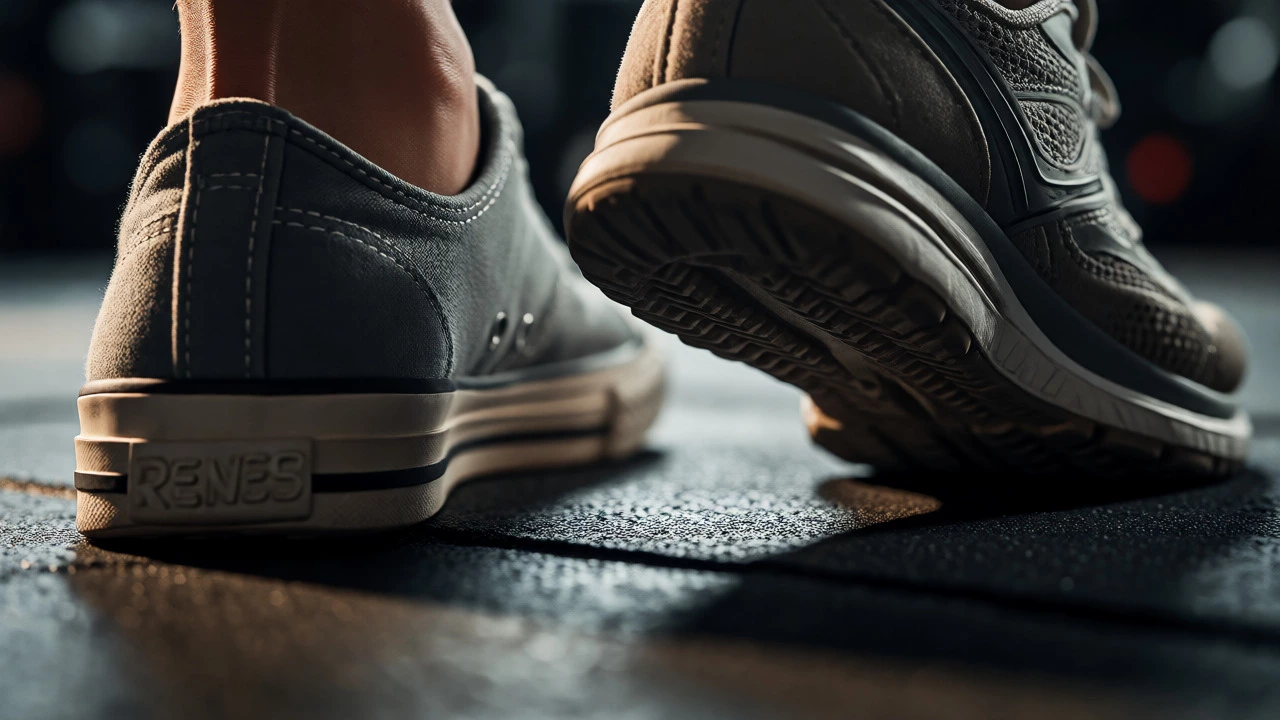
Your shoes are arguably the most important part of your outfit. Wearing the wrong shoe can throw off your biomechanics, leading to knee pain or ankle rolls. Many people make the mistake of wearing generic "gym shoes" which are often just cushioned running shoes.
For strength training, you need stability, not cushion. Running shoes have thick, squishy soles designed to absorb impact from heel strikes. When you squat or deadlift, that squishiness creates instability. Imagine trying to balance on a foam mattress versus a wooden floor. You want the wooden floor effect. Look for flat-soled shoes with minimal drop (the difference in height between heel and toe).
Converse Chuck Taylors or Vans are surprisingly popular among lifters because they offer a hard, flat base. Specialized lifting shoes exist, but they are expensive and niche. For general personal training involving mixed modalities, a cross-trainer is a safer bet. These shoes offer lateral support for side-to-side movements and have a firmer sole than runners.
Never train barefoot unless your facility explicitly allows it and has sanitized floors. Gyms are dirty places. Bacteria, fungi, and dropped weights are real hazards. Always wear closed-toe shoes. Sandals are a safety violation in almost every commercial gym.
When choosing a top, think about your arms and shoulders. If you are doing overhead presses, pull-ups, or swimming motions, restrictive sleeves will hinder your performance. Raglan sleeves (where the seam runs diagonally from the underarm to the neck) generally offer better mobility than standard set-in sleeves.
For women, sports bras are critical. A regular bra is not designed for vertical bounce. High-impact activities require encapsulation bras that separate and support each breast individually. Low-impact activities like yoga might suffice with compression styles. Ill-fitting bras cause back pain and distraction. Ensure the band is snug around your ribcage, providing 80% of the support, while the straps only handle 20%.
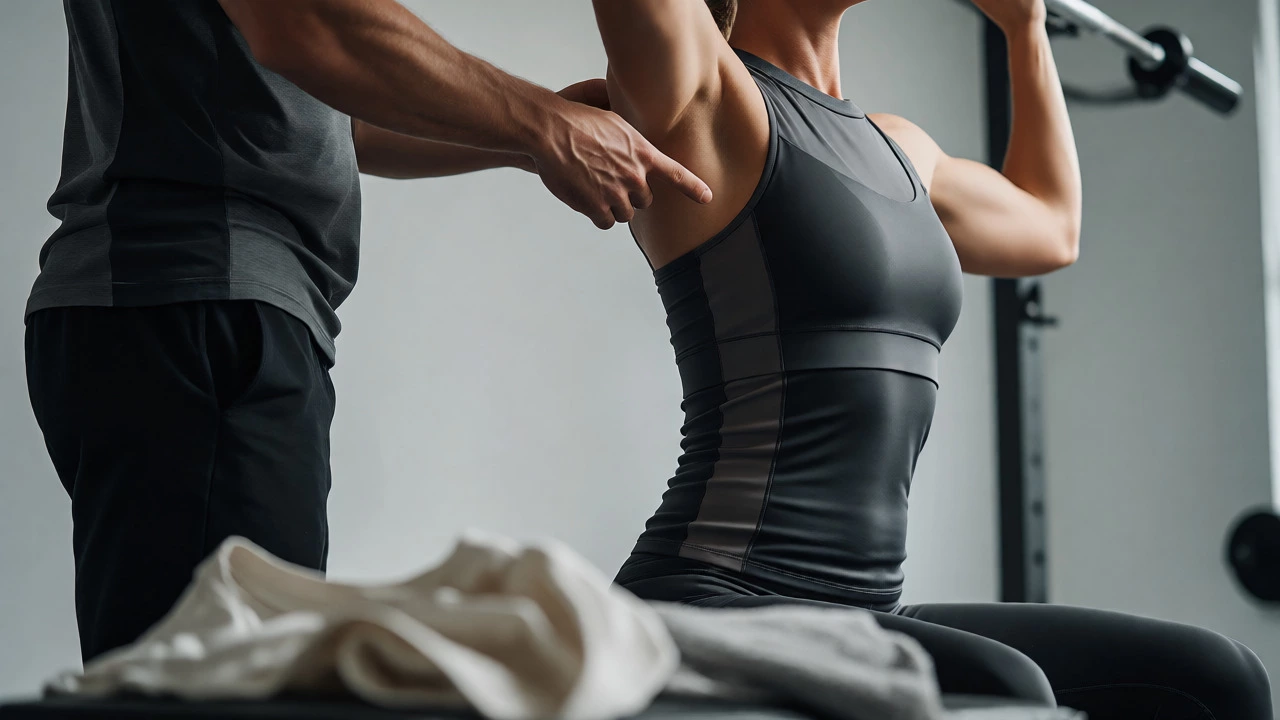
Men often overlook tops, assuming any t-shirt works. But loose, baggy shirts can get caught on cable machines or obscure your posture cues. Fitted technical tees allow your trainer to see muscle engagement and spinal alignment. If you prefer loose fits, choose lightweight synthetics that drape rather than cling when wet.
Shorts and leggings face two main enemies: transparency and chafing. Nothing ruins confidence faster than realizing your underwear shows through when you bend over. Test your shorts before the session. Do a deep squat in front of a mirror in bright light. If you can see more than intended, switch to darker colors or thicker fabrics.
Chafing occurs where skin rubs against skin or fabric. Inner thighs are a common hotspot. Compression shorts or longer inseams can prevent this. If you prefer loose shorts, ensure the inner lining isn't rough. Some brands use anti-chafe bands at the hem to stop riding up.
For men, boxer briefs made of synthetic blends are superior to cotton boxers. Cotton boxers bunch up and lose shape. Synthetic boxer briefs stay put and wick moisture. Avoid jeans entirely. Denim has no stretch and causes severe restriction during hip hinges.
Don't ignore the small details. Socks seem trivial until you get blisters. Choose athletic socks with reinforced heels and toes. Avoid ankle socks if you wear high-top trainers, as they slip down. Crew-length performance socks are a safe universal choice.
Gloves are controversial. Some trainers hate them because they reduce grip strength development. Others love them for preventing calluses. If you use gloves, ensure they fit tightly. Loose gloves slide around, creating a false sense of security. Wrists wraps are useful for heavy pressing but usually unnecessary for beginners.
Bring a towel. Even if the gym provides them, having your own ensures hygiene. Also, consider a hair tie if you have long hair. Dangling hair gets in the eyes and can get caught in machinery. Keep jewelry minimal. Rings can swell with blood flow during exercise and become painful or stuck. Earrings can snag on collars or straps.
If you are training in Perth, Australia, you deal with heat. Layering is tricky here. You might start cool in an air-conditioned studio but overheat within ten minutes. Wear breathable layers that you can easily remove. A light zip-up hoodie is better than a pullover because you can unzip it partially to dump heat without taking it off completely.
In summer, prioritize ventilation. Mesh panels on backs and sides help airflow. Lighter colors reflect sunlight if you are doing outdoor boot camps. In winter, mornings can be chilly. Arrive warm, but expect to strip down. Remember that your body temperature rises significantly during exercise. Dressing for the weather outside often means overdressing for the workout inside.
Your clothes smell. Sweat itself is odorless, but bacteria breaking down sweat produces the smell. Synthetics trap bacteria more than natural fibers. Wash your workout gear immediately after use. Do not let sweaty clothes sit in a hamper overnight. This breeds bacteria that detergents struggle to remove.
Avoid fabric softeners. They coat the fibers, blocking moisture-wicking capabilities. Use a specialized sports detergent or add a cup of white vinegar to the rinse cycle to neutralize odors. Air dry when possible. High heat in dryers degrades elastane, causing your leggings to lose their snap-back ability.
First, showing up in brand-new, unwashed clothes. New fabrics contain sizing chemicals and stiffeners. Wash them once before the first workout to soften them and remove potential irritants.
Second, ignoring fit. Clothes that are too loose get caught; clothes that are too tight restrict circulation. There should be no pinching. If you can't take a deep breath, it's too tight. If you can pinch three inches of fabric, it's too loose.
Third, forgetting to check the gym's dress code. Some boutique studios prohibit shoes with black soles to protect floors. Others require full coverage for modesty reasons. Call ahead or check the website. Showing up in prohibited footwear wastes your warm-up time.
Ultimately, the best outfit is one you forget about. If you are constantly adjusting your waistband or pulling down your shirt, you aren't focused on the workout. Invest in a few key pieces that fit perfectly rather than a closet full of trendy mismatches. Comfort builds confidence, and confidence leads to better performance. Ask your trainer for feedback on your gear. They see hundreds of clients and know what works and what doesn't.
No, jeans are generally unsuitable for personal training. Denim lacks the elasticity needed for dynamic movements like squats and lunges. It also traps heat and sweat, leading to discomfort and potential skin irritation. Opt for flexible athletic fabrics instead.
While not strictly mandatory for beginners, flat-soled shoes provide better stability than cushioned running shoes. Running shoes compress under heavy loads, creating instability. Cross-trainers or flat sneakers like Converse are excellent alternatives to specialized lifting shoes.
Cotton is acceptable for very low-intensity sessions but poor for moderate to high intensity. Cotton absorbs sweat, becoming heavy and cold, which can cause chafing. Moisture-wicking synthetic blends are preferred for keeping dry and comfortable.
It depends on frequency. For twice-weekly sessions, three to four sets are sufficient to account for laundry cycles. Rotate tops and bottoms to extend garment life. Having spares prevents last-minute stress about clean gear.
Minimal is best. Watches can interfere with wrist movements or break during contact exercises. Jewelry can snag on equipment or cause injury. Smartwatches are fine if they are secure and waterproof, but traditional metal jewelry should be removed.