
Select the muscle group that is lagging behind in your physique development to analyze its difficulty level and get a custom growth protocol.
Gastrocnemius & Soleus
Medial Deltoid Head
Gluteus Maximus
You’ve been hitting the gym consistently. You’re eating in a surplus. You’re sleeping eight hours a night. Yet, when you look in the mirror, one part of your physique seems stuck in time while everything else has transformed. It’s frustrating, right? You might be asking yourself: what muscle is hardest to grow?
The short answer is that it depends on your genetics, but for most people, the calves and side delts are the toughest challenges. However, understanding *why* certain areas lag behind requires looking at anatomy, fiber types, and training history. If you want to fix those weak spots, you need more than just effort; you need strategy.
To understand why some muscles resist growth, we have to look at how they are built. Not all muscle fibers are created equal. There are two main types: slow-twitch (Type I) and fast-twitch (Type II). Fast-twitch fibers have a higher potential for size increase, which is why chest and biceps often respond quickly to heavy lifting. Slow-twitch fibers, however, are built for endurance. They fatigue slowly and don’t pack on mass as easily.
This brings us to the calves. The calf complex consists of the gastrocnemius and soleus muscles. The soleus, in particular, is dominated by slow-twitch fibers. Why? Because your calves work all day long, keeping you upright against gravity. They are conditioned for stamina, not explosive power or massive size. This biological design makes them incredibly resilient to change. You can’t just blast them with low reps and expect miracles like you would with your quads.
Another major factor is genetic insertion points. Some people are born with long muscle bellies and short tendons, which creates a larger visual sweep when developed. Others have short muscle bellies and long tendons. No amount of training will change where your muscle attaches to the bone. This doesn’t mean you can’t grow them; it just means the ceiling for aesthetic impact might be lower than someone with “genetic lottery” insertions.
If there is a universal consensus among lifters, it’s that calves are notoriously difficult to develop. Aside from their high percentage of slow-twitch fibers, they are subjected to constant daily stimulus. Walking, standing, running-your calves are always working. This means they are rarely truly “fresh” when you step into the gym.
Many people make the mistake of treating calves like any other muscle group. They do three sets of ten repetitions at the end of a leg day and call it quits. That volume is nowhere near enough to overcome the chronic tension these muscles live under. To stimulate hypertrophy in such adapted tissue, you need significantly higher volumes and varied intensities.
Furthermore, the range of motion matters immensely. A partial rep does nothing for stubborn calves. You need a deep stretch at the bottom and a hard contraction at the top. If you bounce out of the bottom position, you’re using elasticity rather than muscular force, rendering the exercise ineffective.
While calves get the most complaints, the medial head of the deltoid-the side delt-is another common pain point. The side delt gives your shoulders that wide, V-tapered look. Without it, even a huge chest and back can make you look narrow.
The problem with side delts is interference. Many compound movements, like overhead presses and incline bench presses, recruit the anterior (front) delt heavily. The side delt gets involved, but not enough to drive significant growth on its own. Additionally, many people lack the mind-muscle connection required to isolate this smaller muscle head effectively.
Unlike the front delt, which is strong and used in pushing motions, the side delt is primarily responsible for abduction-lifting your arm out to the side. It’s a stabilizer first and a mover second in many contexts. To grow it, you need direct isolation work. Lateral raises are king here, but they must be performed with strict form. Swinging the weight uses momentum, bypassing the target muscle entirely.
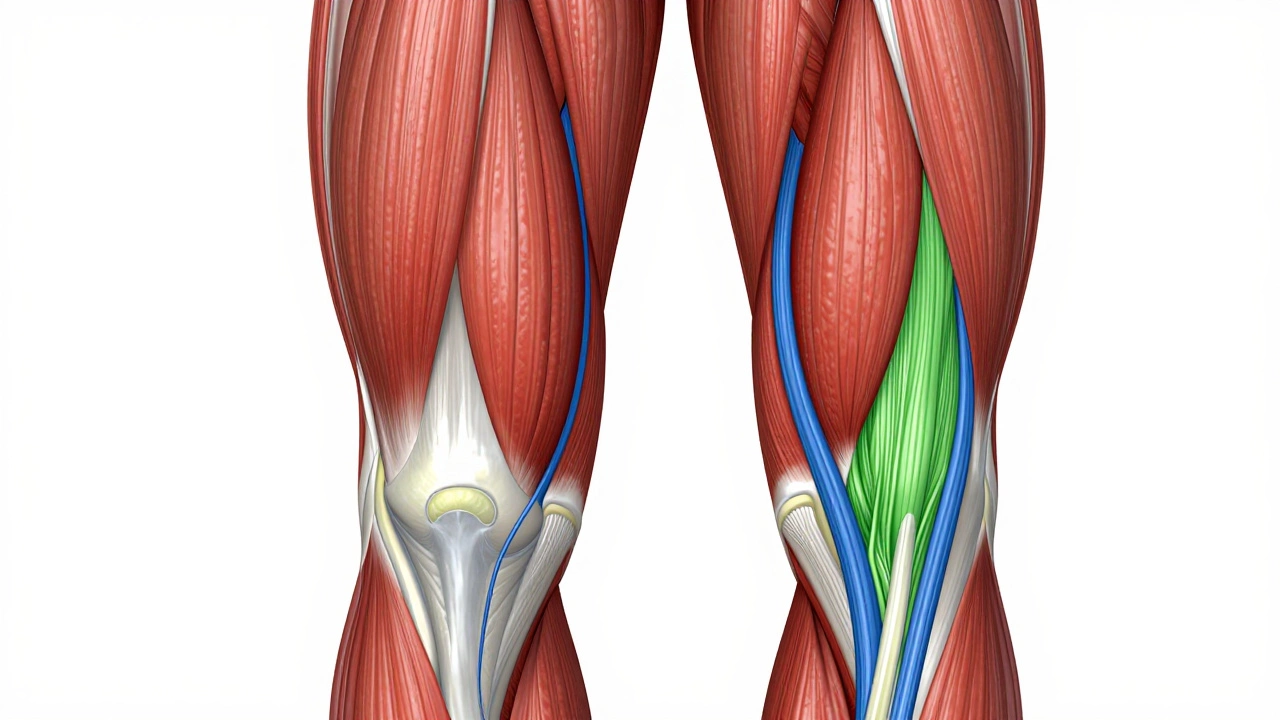
For many men, especially those who grew up playing sports that emphasized quadriceps dominance, the glutes can be surprisingly stubborn. In women, glute development is often a primary goal, yet it remains elusive for many due to poor activation patterns.
The issue usually isn’t lack of effort; it’s neural drive. If you spend your life sitting in chairs, your glutes become “amnesiac.” They forget how to fire properly. When you start squatting or deadlifting, your hamstrings and lower back take over because they are stronger and more active. This is known as synergistic dominance.
To fix this, you need to re-educate your nervous system. Before loading heavy weights, you must activate the glutes through exercises like hip thrusts, clamshells, and banded walks. Only then can you transfer that activation to heavy compounds like squats and Romanian deadlifts. Without this foundational step, you’re just building strong legs and backs, not big glutes.
Some muscles seem to grow regardless of what you do. Thick forearms and towering traps are often cited as examples. However, for some individuals, these areas remain underdeveloped despite years of heavy pulling. This is largely due to the fact that these muscles are highly sensitive to genetic predisposition.
Forearms consist of many small muscles responsible for grip and wrist movement. They are constantly engaged in daily life and almost every upper-body lift. Like calves, they are workhorses. If they aren’t growing, it’s likely because the stimulus from daily activities and indirect training is sufficient to maintain their current size but not enough to push them past their genetic baseline without extreme, targeted overload.
Traps, on the other hand, are powerful muscles that respond well to heavy loading. If they aren’t growing, check your shrug technique. Are you holding the peak contraction? Are you using a full range of motion? Often, the issue is subtle technical flaws that prevent adequate tension.

Knowing which muscle is hardest to grow is only half the battle. The real value comes from knowing how to attack it. Here is a practical framework for tackling stubborn areas:
It’s also worth noting that patience is non-negotiable. Genetics play a massive role. Some people will never have huge calves, no matter what they do. Accepting this doesn’t mean giving up; it means focusing on maximizing what you have and balancing your physique so that your strengths highlight your overall shape.
Sometimes, distractions creep into our routine, making us lose focus on our primary goals. Whether it's managing travel logistics or finding reliable information online, staying organized helps maintain discipline. For instance, if you ever find yourself needing to navigate complex directories for personal services abroad, resources like this directory can help streamline specific searches, allowing you to keep your mind clear for your next workout session.
Finally, never underestimate the power of intention. Studies show that focusing intently on the muscle being worked can increase electromyographic (EMG) activity, meaning more motor units are recruited. When you train stubborn muscles, slow down the tempo. Control the eccentric (lowering) phase. Feel the burn. If you’re just moving weight from point A to point B, you’re leaving gains on the table.
Remember, consistency beats intensity in the long run. Pick a plan, stick to it for at least 12 weeks, and track your progress. Take photos, measure circumferences, and log your lifts. Data removes emotion from the equation and shows you exactly what’s working and what isn’t.