
Not sure which brutal class is right for you? Answer three quick questions to find your match.
You walk into a studio, music blasting, lights dimmed, and everyone looks like they’ve been doing this for years. You’re nervous. You’re wondering if you’ll survive the hour. Then the coach says, “We’re doing burpees until someone quits.” And you think: what is the hardest fitness class? It’s not just about sweat-it’s about mental grit, physical limits, and whether your body can handle the pressure without breaking down.
Here’s the truth: there’s no single “hardest” class for everyone. Your fitness level, injury history, and even your mood on that Tuesday evening change what feels impossible. But some classes consistently push people to their breaking point. Let’s break down which ones actually hurt-and why-so you don’t sign up blindfolded.
If you’ve ever watched a CrossFit box in action, you know it’s not your grandma’s aerobics. CrossFit is a high-intensity functional fitness program that combines Olympic weightlifting, gymnastics, and cardio movements in constantly varied workouts. Founded by Greg Glassman in 2000, it now has over 15,000 affiliates worldwide. The workouts (called WODs) are timed, scored, and often brutal.
Why it’s hard: You’re lifting heavy barbells while fatigued, doing pull-ups when your shoulders scream, or running 400-meter sprints between sets of thrusters. There’s no rest unless you take it. In Perth, boxes like CrossFit Swan Valley run sessions where members hit heart rates above 90% max for 20+ minutes straight. If you’re new, scaling options exist-but ego kills more beginners than bad form.
Who struggles most: People with poor mobility or those who skip warm-ups. One wrong lift under fatigue leads to tweaks that sideline you for weeks. Also, if you hate competition, the leaderboard culture might stress you out more than the barbell does.
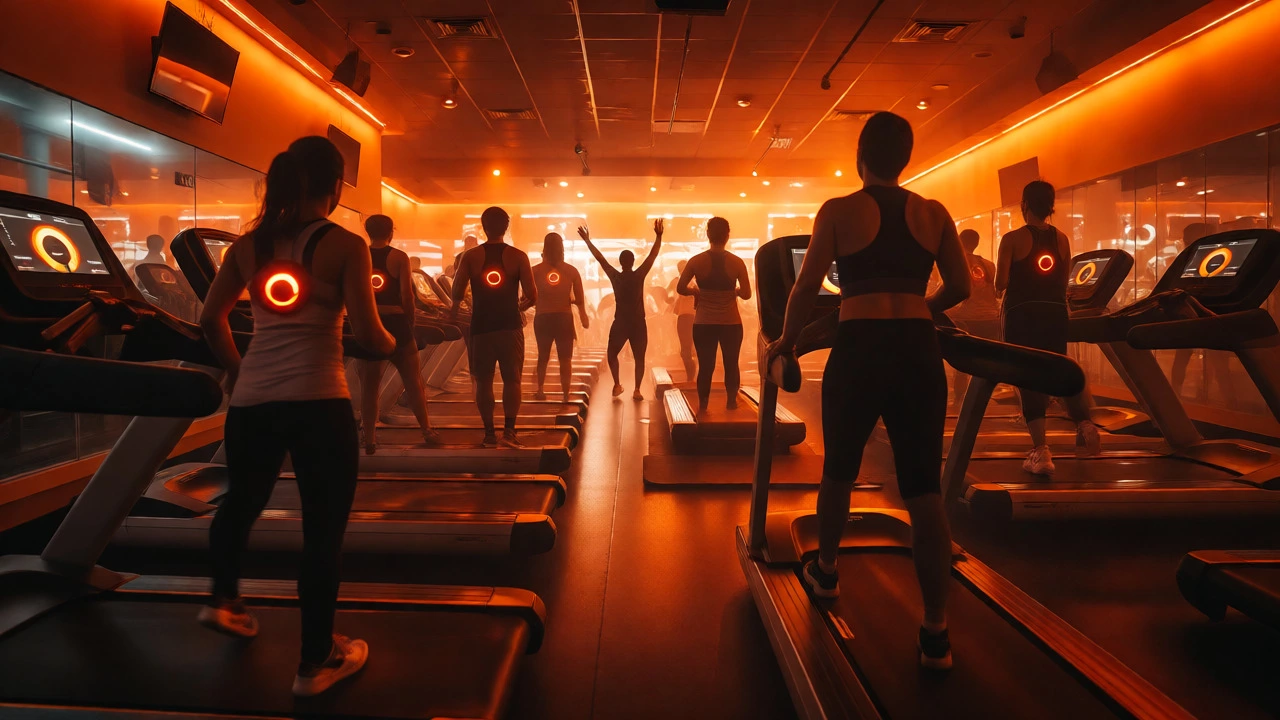
OrangeTheory Fitness is a boutique fitness studio chain that uses heart rate monitoring to guide interval training across treadmill and floor stations. Launched in 2010, it’s grown to over 1,300 locations globally. The goal? Keep your heart rate in the “orange zone” (84-91% of max) for at least 12 minutes per class.
Why it’s hard: It’s not just physical-it’s psychological. That beep every time you drop below orange? It nags you. You’re sprinting, then dropping to a jog, then sprinting again. By minute 45, your legs feel like lead. In my experience coaching clients here, many quit because they can’t mentally handle the constant feedback loop. Plus, if you’re on beta-blockers or have a low max HR, the zones don’t work right, making the class either too easy or impossibly hard.
Pro tip: Wear a chest strap monitor, not a wrist one. Accuracy matters when your paycheck depends on hitting orange.
Barry’s Bootcamp is a luxury boutique fitness brand known for its “Red Room” studios featuring high-energy HIIT workouts combining treadmill sprints and strength training. Originating in Los Angeles in 1998, it’s expanded to major cities including Sydney and Melbourne. Think dark rooms, loud music, and instructors who yell motivational quotes while you’re dying on the treadmill.
Why it’s hard: The intervals are short but savage. You might do 30 seconds of all-out sprinting followed by 10 seconds of rest, repeated eight times. Then you jump off and grab dumbbells. No water breaks unless you sneak them. Members call it “the best hour of your life and the worst.” Why? Because after class, you’re so depleted you can barely drive home. Yet you book the next session anyway.
Watch out: If you have knee issues, the repetitive jumping and sprinting can aggravate patellar tendonitis. Modify the jumps if needed-no shame in it.
| Class Type | Primary Stressor | Avg Duration | Best For | Risk Factor |
|---|---|---|---|---|
| CrossFit | Heavy lifting + skill moves under fatigue | 60 mins | Competitive athletes | Injury from poor form |
| OrangeTheory | Sustained high heart rate intervals | 50 mins | Data-driven exercisers | Mental burnout from beeps |
| Barry’s Bootcamp | All-out sprints + strength circuits | 50 mins | Time-efficient seekers | Knee/joint strain |
| Spin (SoulCycle-style) | Standing climbs + resistance holds | 45 mins | Cardio lovers | Glute soreness for days |
| Boot Camp (Outdoor) | Bodyweight drills + partner work | 60 mins | Group motivation fans | Overtraining in heat |
Don’t let the stationary bike fool you. Modern spin classes like SoulCycle or local Perth studios like Revolve aren’t casual rides. They’re choreographed dance-on-a-bike experiences with hills, sprints, and arm weights. Spin Class is an indoor cycling workout performed on stationary bikes with varying resistance levels and cadence targets set by an instructor.
Why it’s hard: Standing climbs with high resistance torch your glutes and quads. Arm exercises while pedaling add upper-body fatigue. After 45 minutes, your hands may cramp from gripping handlebars, and your sit bones ache. First-timers often underestimate the saddle discomfort-invest in padded shorts or use a gel seat cover.
Real talk: If you skip stretching post-class, you’ll waddle like a penguin for two days. Don’t be that person.
In places like Kings Park or along the Swan River, outdoor boot camps thrive. These mix bodyweight exercises, partner carries, and hill sprints. Boot Camp is a group fitness class typically held outdoors, focusing on functional movements using minimal equipment and high-intensity intervals.
Why it’s hard: Weather adds chaos. Rain makes grass slippery. Heat in Perth summers spikes core temp fast. Plus, you’re exposed-no mirrors, no hiding. If you’re self-conscious, the open space amplifies anxiety. Coaches often use military-style commands (“Drop! Push-up! Up!”), which triggers fight-or-flight responses.
Tip: Bring water and electrolytes. Dehydration hits harder outside than in AC’d studios.

Ask yourself three questions before signing up:
Also, check reviews specifically mentioning “beginner-friendly” or “scaling options.” Avoid classes where coaches ignore modifications-that’s a red flag for injury risk.
Not universally. While CrossFit demands technical skill under fatigue, someone with strong endurance might find OrangeTheory’s sustained heart rate zones tougher. The “hardest” depends on your weaknesses-strength, stamina, or mental focus.
On average, CrossFit and Barry’s Bootcamp burn 500-800 calories per hour due to combined strength and cardio intensity. However, individual results vary based on effort, body mass, and efficiency. Use a wearable tracker for personal data.
Yes, if scaled properly. Look for studios offering introductory packages or beginner-specific slots. Always inform your coach about injuries beforehand. Skipping scaling to keep up with others is the #1 cause of early dropout and injury.
Limit high-intensity classes to 2-3 times weekly. Overtraining leads to burnout, joint pain, and immune suppression. Mix in low-intensity recovery days like walking or yoga to balance stress hormones.
For CrossFit: flat-soled shoes (not running shoes), gloves for bars, and chalk. For OrangeTheory/Barry’s: supportive sneakers and moisture-wicking clothes. For spin: padded shorts and a water bottle. Most studios provide mats and basic equipment.