How Should a Beginner Start Yoga? A Simple Step-by-Step Guide
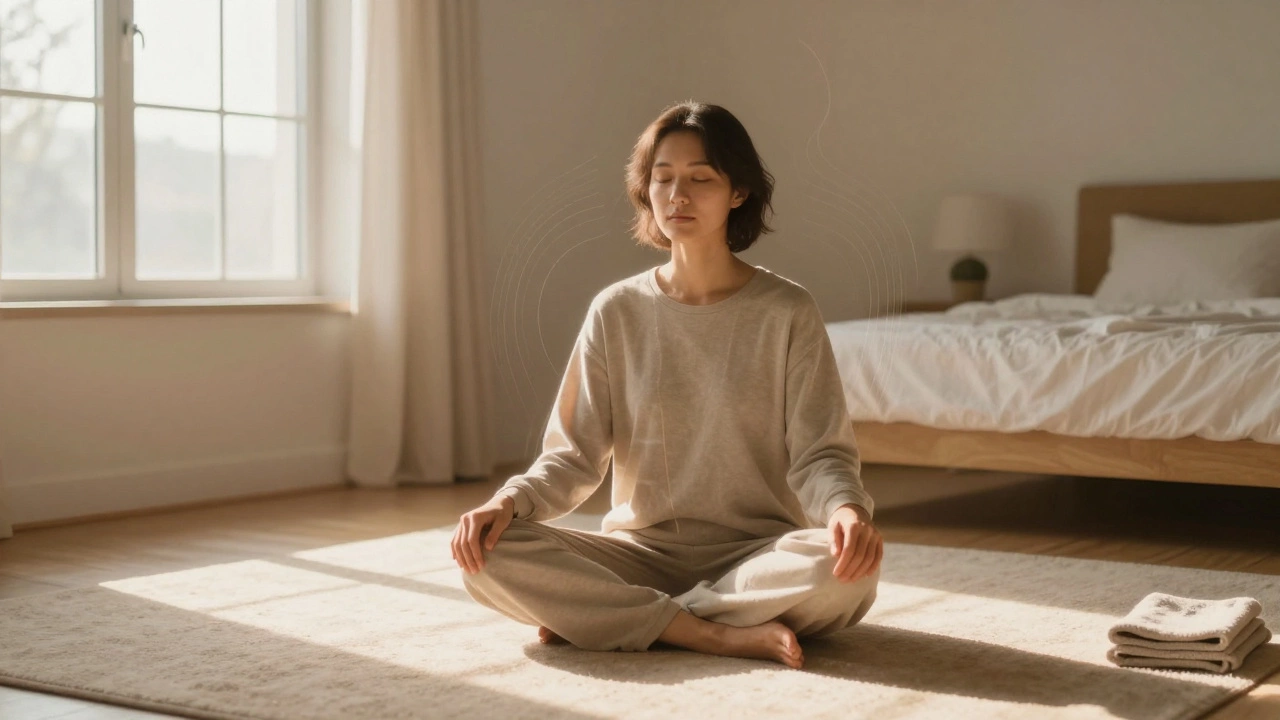
Starting yoga doesn’t require fancy gear, a perfect body, or hours of free time. It just requires a quiet space, a little curiosity, and the willingness to show up - even if you can’t touch your toes. If you’re new to yoga and wondering where to begin, you’re not alone. Millions of people start each year, and most of them begin exactly where you are: unsure, a little stiff, and wondering if they’re doing it right.
Start with the basics - not the poses
< p>Before you try to twist into a downward dog or balance on one leg, understand what yoga really is. It’s not just stretching. It’s not a competition. It’s a practice that connects breath, movement, and awareness. The goal isn’t to look like someone on Instagram. It’s to feel more grounded, less tense, and more in tune with your own body.
< p>Many beginners jump straight into YouTube videos or studio classes and get discouraged when their hamstrings scream or their balance wobbles. That’s normal. But skipping the foundation makes it harder to stick with it. Start by learning how to breathe properly. Inhale through your nose for a count of four. Hold for two. Exhale through your nose for six. Repeat. Do this for five minutes while sitting on the floor or in a chair. That’s your first yoga session.
Find your space - no studio needed
< p>You don’t need a yoga mat to begin. A towel on a carpeted floor works. A non-slip rug works too. What matters is that your space is quiet, clean, and free of distractions. Turn off your phone. Put on something comfortable. If you’re in a small apartment, clear a space the size of your body. That’s all you need.
< p>Try doing your first few sessions at the same time every day. Morning works for most people - it sets the tone for the day. But if you’re a night owl, evening is just as good. Consistency beats timing. Even 10 minutes a day, five days a week, builds more momentum than an hour once a week.
Learn these five beginner poses - no equipment required
< p>Here are five foundational poses that form the backbone of most beginner routines. Do them slowly. Hold each for 30 seconds to a minute. Breathe. Don’t force anything.
< ul>
Mountain Pose (Tadasana): Stand with feet hip-width apart. Arms relaxed. Feel your weight evenly distributed. This isn’t just a standing pose - it’s your anchor. It teaches you how to stand like you belong in your own body.
Downward-Facing Dog (Adho Mukha Svanasana): Start on hands and knees. Lift your hips up and back. Keep knees slightly bent if your hamstrings are tight. Let your head hang. This pose stretches your back, shoulders, and legs - and it’s a reset button for your whole body.
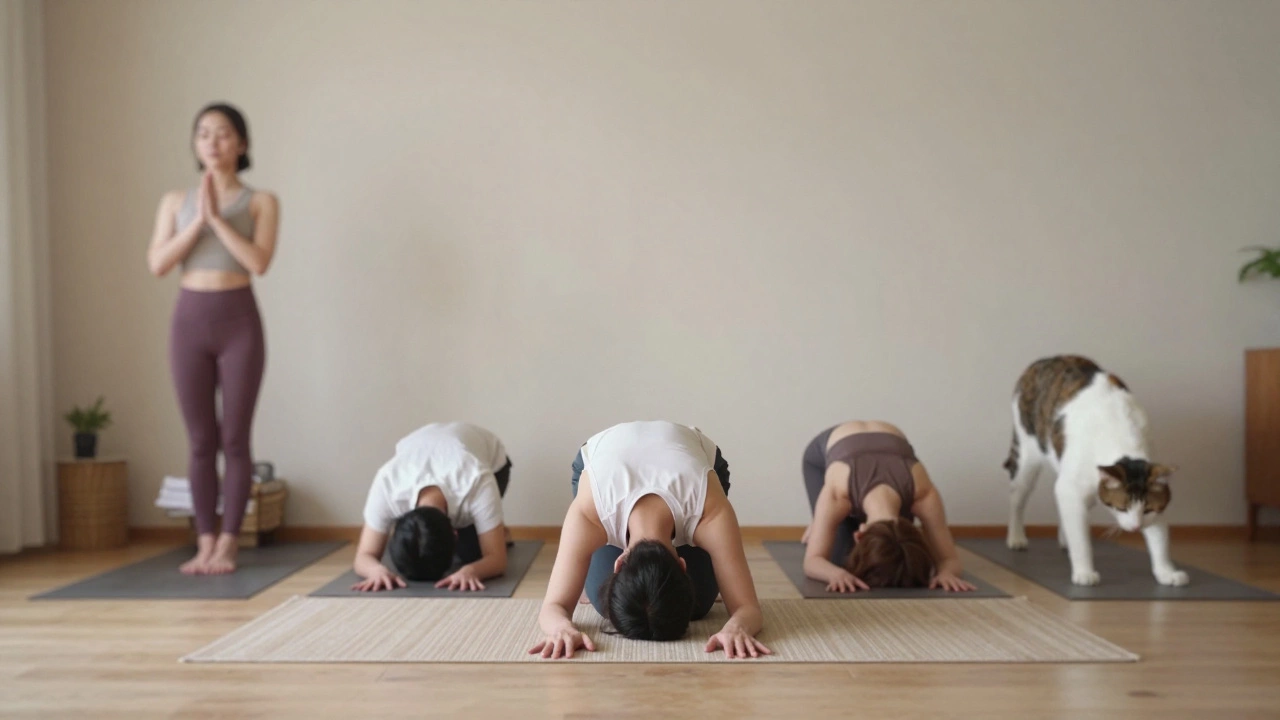
Child’s Pose (Balasana): Knees wide, big toes touching. Lower your chest to the floor. Arms stretched out or resting by your sides. This is your safe space. If you feel overwhelmed, come here. Breathe into your back.
Cat-Cow Stretch (Marjaryasana-Bitilasana): On hands and knees. Inhale, arch your back, lift your head (cow). Exhale, round your spine, tuck your chin (cat). Repeat five times. This movement warms up your spine and teaches you how breath moves your body.
Corpse Pose (Savasana): Lie flat on your back. Arms relaxed by your sides, palms up. Close your eyes. Do nothing. Just breathe. Stay here for three to five minutes. This is where yoga actually starts - in stillness.
< p>Do this sequence three times a week. No need to rush. Hold each pose longer than you think you can. You’ll notice your breath gets deeper, your shoulders drop, and your mind quiets.
Use free resources - skip the apps for now
< p>There are hundreds of yoga apps and paid programs out there. But for a beginner, they’re often overwhelming. Stick to free, trusted sources for your first month.
< p>Try
Yoga with Adriene is a popular YouTube channel with over 10 million subscribers and beginner-friendly routines that focus on mindfulness over perfection. Also known as Yoga with Adriene, it was launched in 2012 and has since helped millions start their yoga journey. Her approach is calm, encouraging, and free of pressure. Her 30-day "Find Your Focus" series is perfect for total beginners. Each video is 20 minutes or less. She never says "do this perfectly." She says, "do what feels right."
< p>Another great option is the
DoYogaWithMe website - a free platform with hundreds of guided sessions, including 10-minute beginner flows. No sign-up required.
What to expect in the first 30 days
< p>Don’t expect to become flexible overnight. Yoga doesn’t work that way. Here’s what actually changes in the first month:
< ul>
Day 5-7: You’ll notice you’re breathing deeper during stressful moments - like waiting in line or stuck in traffic.
Day 10-14: Your sleep improves. You might fall asleep faster or wake up feeling less stiff.
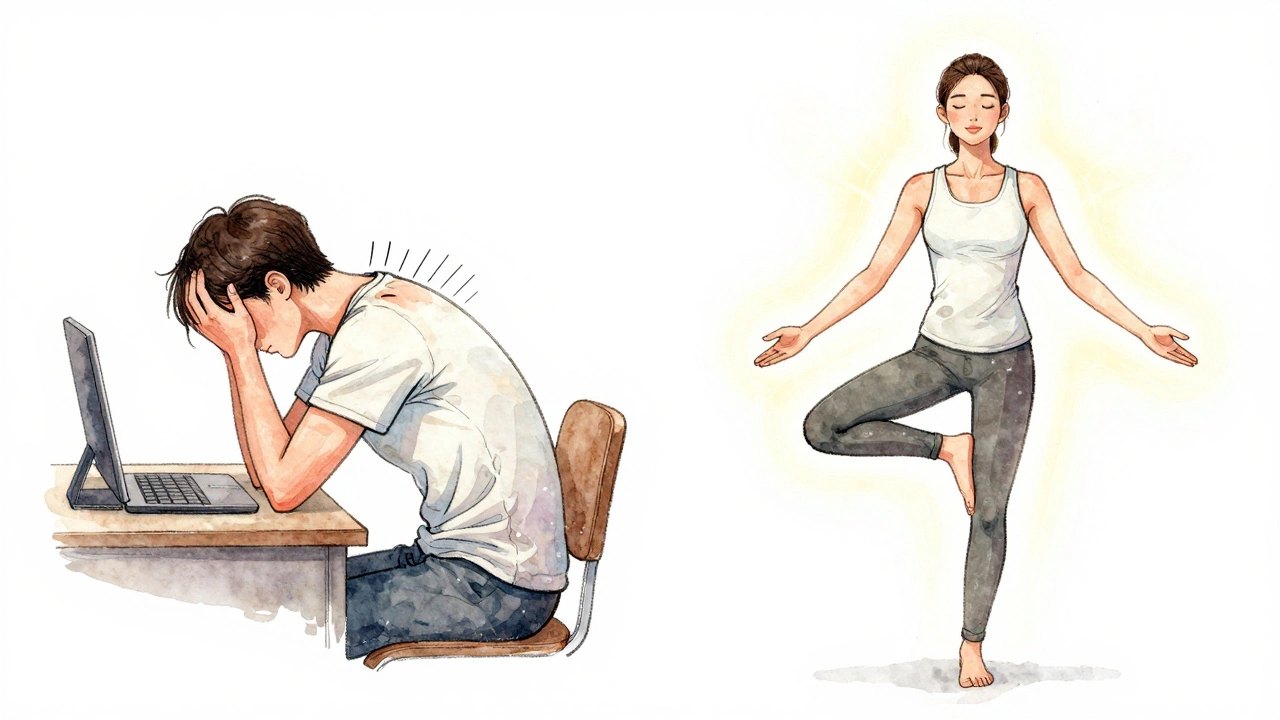
Day 21: You’ll catch yourself standing taller. Your shoulders aren’t hunched. You’re not slouching on the couch.
Day 30: You look forward to your practice. It’s not about fitness anymore. It’s about feeling calm.
< p>These are the real wins. Not being able to touch your toes. Not doing a handstand. Just feeling more like yourself.
Common mistakes beginners make - and how to avoid them
< p>Most people quit yoga because they get it wrong in the first week. Here are the top three mistakes:
< ul>
Mistake 1: Pushing into pain. Yoga isn’t about stretching until it hurts. If you feel sharp pain, stop. Discomfort is okay. Pain is a red flag. Your body will open over time - no rush.
Mistake 2: Comparing yourself. You’ll see someone else in class or online who’s more flexible. That’s their journey. Yours is different. Your body, your pace.
Mistake 3: Skipping rest. Savasana isn’t optional. It’s where your body integrates the practice. If you skip it, you’re missing half the benefit.
< p>Remember: yoga isn’t about performance. It’s about presence.
When to move to the next level
< p>After 4-6 weeks, you’ll know you’re ready to go deeper when:
< ul>
You can hold each of the five poses without struggling to breathe
You look forward to your practice instead of dreading it
You notice small changes in your daily life - less tension, better sleep, calmer reactions
< p>Then, try adding one new pose every week. Maybe a gentle forward fold. Or a seated twist. Or a standing balance. Keep it simple. Keep it consistent.
Yoga isn’t a workout - it’s a reset
< p>Most fitness routines are about pushing harder. Yoga is about slowing down. It’s the only exercise where you’re rewarded for doing less. For breathing instead of sweating. For listening instead of forcing.
< p>If you stick with it, you’ll find that yoga doesn’t just change your body. It changes how you show up in the world. You’ll be kinder to yourself. Less reactive. More patient. That’s the real benefit - and it’s the one no app can sell you.
Can I do yoga if I’m not flexible?
Absolutely. Yoga isn’t about flexibility - it’s about improving it. Most beginners start stiff. That’s why the practice exists. You don’t need to be flexible to begin. You become flexible by doing yoga - slowly, consistently, without pressure.
How often should a beginner practice yoga?
Three times a week is ideal for beginners. But even once or twice a week makes a difference. The key is consistency, not intensity. Ten minutes daily is better than an hour once a week. Over time, you’ll naturally want to do more.
Do I need a yoga mat to start?
No. A towel, carpet, or even a rug works fine. A mat helps with grip and cushioning, but it’s not required. Focus on showing up first. You can buy a mat later if you decide to stick with it.
Can yoga help with back pain?
Yes, especially when done gently. Gentle movements like Cat-Cow and Child’s Pose help relieve tension in the spine. Many people with mild lower back pain find relief after a few weeks of consistent practice. Always move slowly and avoid deep forward bends if you have acute pain.
Is yoga a good workout for weight loss?
Yoga alone won’t burn enough calories to cause major weight loss. But it supports weight management by reducing stress, improving sleep, and helping you tune into hunger cues. When combined with healthy eating, yoga can be a powerful tool - not because it’s intense, but because it changes your relationship with your body.