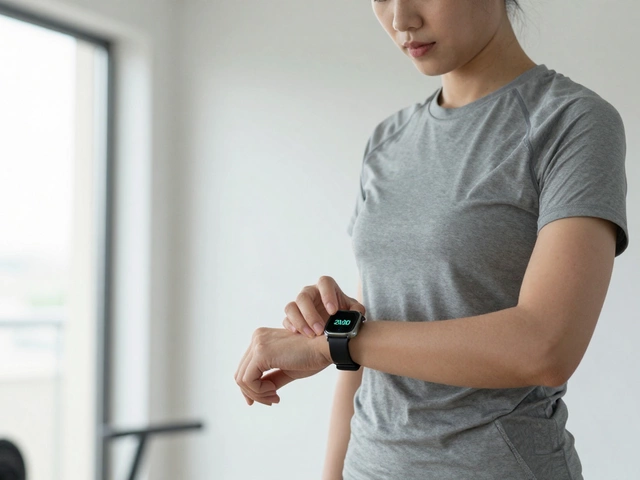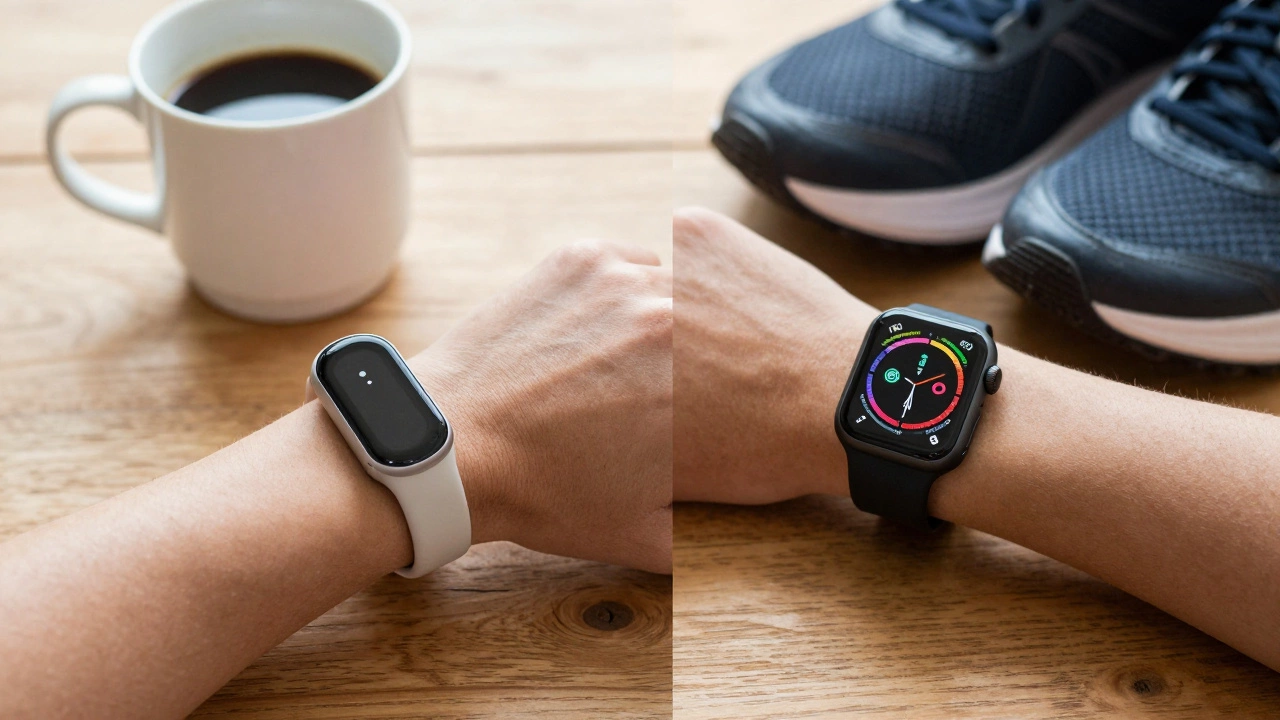
Ever stared at two devices that look almost identical-one called a fitness watch, the other a fitness tracker-and wondered why one costs twice as much? You’re not alone. People buy these gadgets thinking they’re getting the same thing. But the truth? They’re built for different jobs. One’s a simple step counter. The other’s a full-on health command center. Knowing the difference saves you money, avoids confusion, and helps you pick the right tool for your goals.
A fitness tracker is designed for one thing: tracking basic movement. It counts your steps, estimates calories burned, and sometimes monitors your sleep. That’s it. Most models don’t have a color screen. Many don’t even let you check the time without pressing a button. They’re small, lightweight, and built to wear all day without you noticing.
Brands like Fitbit Inspire, Xiaomi Mi Band, and Garmin Vivosmart are classic examples. They use a single LED light to measure your heart rate. They sync with your phone to show daily totals. If you want to know how many steps you took yesterday, they’ll tell you. If you want to know how hard your heart worked during a 5K run? They’ll guess. And that’s fine-if your goal is just to move more.
These devices last 5 to 7 days on a single charge. They cost between $40 and $100. You don’t need a smartphone to get value from them. They work fine on their own. That’s why they’re popular with older adults, people who hate tech clutter, and anyone who just wants a nudge to walk more.
A fitness watch is a smartwatch with serious health tools built in. It does everything a fitness tracker does-but way more. It tracks your heart rate continuously, monitors blood oxygen levels, detects irregular heart rhythms, and even measures your stress levels. Some models can take an ECG, track your menstrual cycle, or alert you if you fall.
Devices like the Apple Watch Series 9, Samsung Galaxy Watch 6, and Garmin Fenix 7 are fitness watches. They have full-color touchscreens, GPS built in, and apps you can download. You can reply to messages, play music, make payments, and get weather updates-all without pulling out your phone.
They’re heavier. They cost $200 to $700. They need to charge every day or two. But if you care about detailed health data-not just steps-you’ll notice the difference. For example, a fitness watch can tell you your heart rate was spiking during sleep because you were stressed, not because you were sick. A fitness tracker just says you slept 6 hours.
Both devices use optical sensors to measure heart rate. But fitness watches have more powerful processors and better algorithms. A 2023 study by the Journal of Medical Internet Research tested 12 popular wearables during treadmill runs. The fitness watches were within 5% of a chest strap monitor. The basic trackers? Some were off by 20% or more during high-intensity intervals.
GPS is another big divider. Fitness trackers often rely on your phone’s GPS. That means if you leave your phone at home during a run, you won’t get distance or route data. Fitness watches have built-in GPS. They track your exact path, elevation gain, and pace-no phone needed.
And don’t assume more sensors = better sleep tracking. Some fitness trackers actually do sleep analysis better than watches because they’re lighter and don’t distract you at night. But if you want to know your deep sleep percentage, REM cycles, or how your heart rate variability changed overnight? Only a fitness watch gives you that level of detail.
If you’re trying to get off the couch and walk 8,000 steps a day, a fitness tracker is perfect. It’s cheap, simple, and gets the job done. You’ll feel motivated by the daily goals and the little vibration that says, “You’ve got 300 steps left!”
If you’re training for a marathon, managing a heart condition, or just want to understand your body’s patterns over time, you need a fitness watch. You’ll want to see trends-like how your resting heart rate drops after six weeks of training. Or how your oxygen levels dip during altitude hikes. That kind of insight changes how you live.
Here’s a quick guide:
The price difference isn’t just about hardware. It’s about software, data, and support.
Fitness trackers give you basic apps. You open them once a day to check your steps. That’s it.
Fitness watches come with ecosystems. Apple Health, Google Fit, Garmin Connect-they turn your data into trends, insights, and even coaching. Some watches analyze your running form and suggest adjustments. Others alert you if your stress levels are climbing and suggest a breathing exercise.
And when your device breaks? Fitness watches often come with warranty support, water resistance ratings up to 50 meters, and repair programs. Most trackers? You buy a new one.
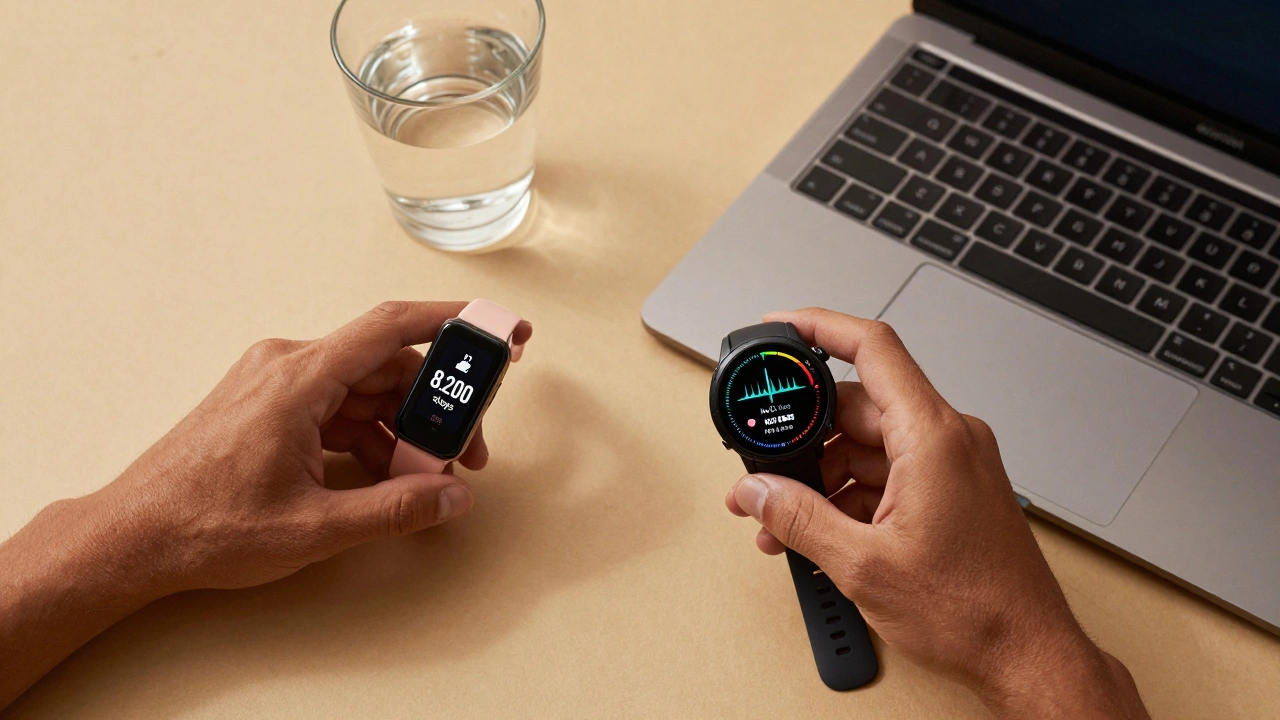
In Perth, a lot of people use fitness trackers to walk along the Swan River or hike in Kings Park. They don’t need GPS or heart rate variability-they just want to know if they hit 10,000 steps. A $60 Fitbit Inspire 3 does that perfectly.
But take a runner training for the Perth Marathon. She uses a Garmin Forerunner 265. It tracks her lactate threshold, recovery time, and even predicts her race finish based on recent training. She checks her data every morning before coffee. That’s not just tracking-it’s performance management.
One woman, 68, wears a Xiaomi Band 8 because it vibrates when her heart rate goes too high during yoga. She doesn’t care about apps or maps. She just wants to stay safe. That’s the tracker’s strength: simplicity for safety.
Another, 32, wears an Apple Watch and tracks her sleep, stress, and menstrual cycle. She uses the data to adjust her workouts, diet, and rest days. She’s not just fit-she’s optimizing her health. That’s the watch’s strength: depth for control.
There’s no “better” device. Only the right one for your life.
If you’re just starting out, or you don’t want to think about tech, go with a fitness tracker. It’s like a pedometer with a screen. It works.
If you’re serious about your health, want to understand your body’s signals, or use tech to improve performance, a fitness watch is worth the investment. It’s like having a personal coach on your wrist.
Don’t let marketing fool you. Both devices help you move more. But only one helps you understand why you’re moving-or not moving-so much.
Only if your goals are basic: counting steps, tracking sleep, and getting reminders to move. If you want advanced metrics like ECG, blood oxygen, stress tracking, or GPS without your phone, then no. A fitness tracker lacks the sensors and software to replace a fitness watch.
Yes, but with limits. Most fitness watches can track workouts, store heart rate data, and even play music offline. But you’ll need your phone to sync data, get notifications, update software, or download apps. Basic trackers don’t need a phone at all.
They’re decent for resting and steady-state activity, like walking. During high-intensity workouts, they’re often off by 10-20%. Fitness watches use better sensors and algorithms, making them more reliable during intervals, sprints, or strength training.
Fitness trackers typically last 5 to 10 days. Fitness watches last 1 to 4 days, depending on usage. If you use GPS, music, or constant heart rate monitoring, your watch might need charging every night.
Most fitness watches are water-resistant up to 50 meters and can track swim strokes, laps, and pace. Basic trackers may be splash-proof but aren’t designed for pool or open-water swimming. Always check the IP rating before swimming.
If you’re just trying to walk more, no. But if you want to understand your health trends, optimize training, or monitor potential risks like irregular heart rhythms, then yes. The extra cost buys you insights-not just data.