
The 12-3-30 workout isn’t a fancy app, a high-tech gadget, or a celebrity-endorsed trend that fades in a month. It’s a simple treadmill routine that’s turned millions of people-especially runners-into consistent, confident exercisers. If you’ve ever felt overwhelmed by complicated running plans or intimidated by speed drills, this is the one that cuts through the noise. It doesn’t ask you to run faster. It doesn’t ask you to run farther. It just asks you to walk at a steady pace on an incline. And for many, that’s enough to change everything.
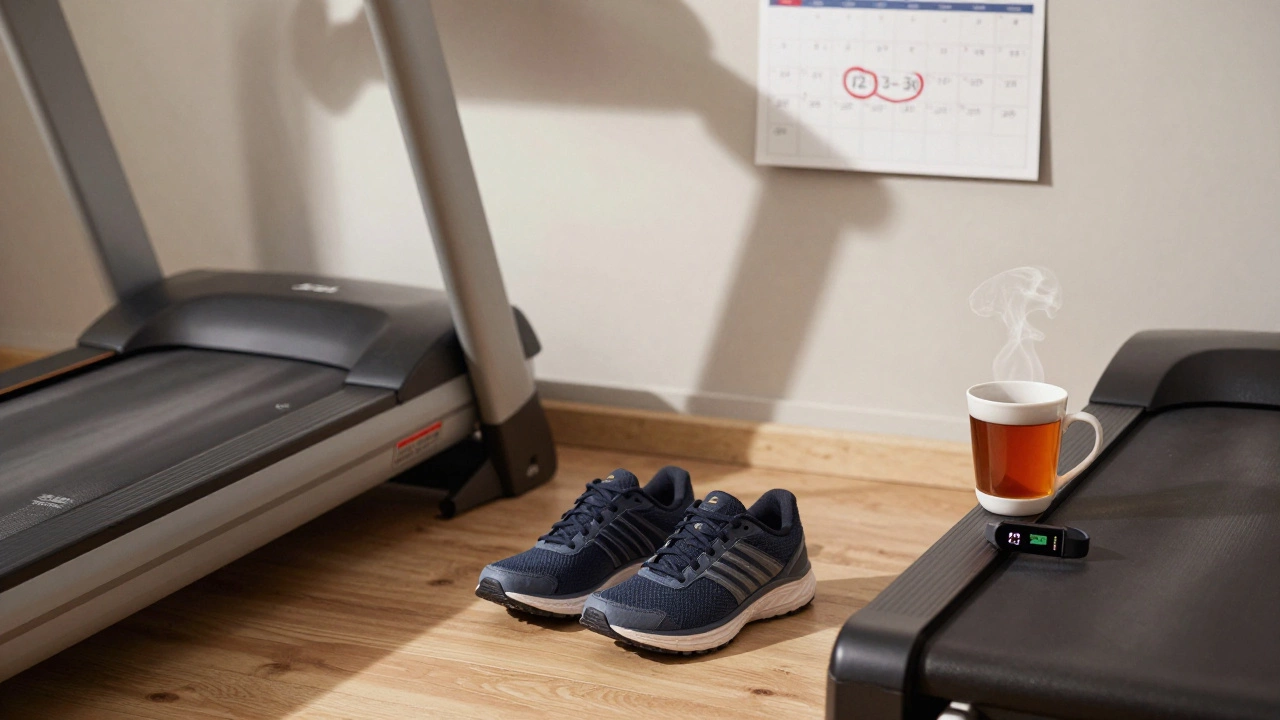
The name says it all: 12% incline, 3 mph speed, 30 minutes. That’s it. You set your treadmill to a 12% grade, walk at three miles per hour, and keep going for half an hour. No running. No intervals. No counting reps. Just steady, controlled movement.
This routine was popularized by social media, especially TikTok, where users shared their daily sessions and visible results. But the science behind it isn’t new. Walking uphill increases heart rate without the joint stress of running. It activates more muscles in your glutes, hamstrings, and calves. And because you’re moving at a steady pace, you can sustain it without burning out.
For runners, this isn’t about replacing long runs. It’s about recovery, consistency, and building aerobic endurance without adding wear and tear. If you’re training for a 5K, 10K, or marathon, this can be your easy day. Or your rest day that actually does something.
Most runners know the struggle: too much mileage leads to injury. Too little leads to stagnation. The 12-3-30 workout sits right in the sweet spot. It’s low impact, so your knees and shins get a break. But it still pushes your cardiovascular system.
One runner from Portland, Sarah M., started doing this after a stress fracture sidelined her for six weeks. She couldn’t run, but she didn’t want to lose fitness. She tried 12-3-30 three times a week. After four weeks, her resting heart rate dropped by 8 beats per minute. She didn’t run a single mile during that time-and when she returned to running, she felt stronger than before.
It also helps with mental recovery. After long runs or hard speed sessions, your brain is tired. The 12-3-30 workout doesn’t demand focus. You can listen to a podcast, watch a show, or just zone out. It’s active recovery disguised as a walk.
Let’s say you’re used to running 5 miles at 8-minute pace. That’s about 40 minutes of steady effort. Now compare that to 30 minutes of 12-3-30 walking.
| Factor | 12-3-30 Walk | 5-Mile Run (8:00/mile pace) |
|---|---|---|
| Duration | 30 minutes | 40 minutes |
| Calories burned | ~250-300 | ~500-550 |
| Impact on joints | Low | High |
| Muscles engaged | Glutes, hamstrings, calves | Quads, hip flexors, calves |
| Recovery time needed | 0-12 hours | 24-48 hours |
| Cardiovascular benefit | High (steady state) | High (higher intensity) |
The 12-3-30 doesn’t burn as many calories as a run, but it’s far easier to do daily. And that’s the point. Consistency beats intensity when you’re building long-term fitness. Runners who add 12-3-30 sessions to their weekly plan often report fewer injuries, better sleep, and more energy for their actual runs.

Not everyone needs this. But if any of these sound like you, it’s worth a shot:
It’s especially helpful for runners over 40, those with joint sensitivity, or anyone who’s burned out on high-intensity training. You don’t need to be fit to start. You just need to show up.
It’s simple, but people still mess it up. Here’s how to get it right:
Don’t hold onto the handrails. That cuts the effectiveness in half. Let your arms swing naturally. Engage your core. Stand tall. Think of it like walking up a hill in the woods-not a stair climber.
Most runners do it 2-4 times a week. It’s not meant to replace your long run or tempo workout. Think of it as a recovery tool, a mobility builder, or a cardio boost on rest days.
Here’s a sample weekly plan for a runner training for a 10K:
That’s three 12-3-30 sessions. No running on those days. Just steady, low-impact movement. It adds up.
Even though it’s simple, people still make these errors:
The biggest mistake? Thinking it’s too easy. That’s exactly why it works.
People who do 12-3-30 consistently for 8 weeks report:
One woman from Ohio, who started this after turning 50, lost 18 pounds over five months-not by dieting, but by walking 12-3-30 every morning before work. She didn’t change her food. She just moved more, consistently, without pain.
It’s not about transformation. It’s about accumulation. One 30-minute walk at a time.
The 12-3-30 workout doesn’t promise miracles. It doesn’t need to. It just gives you a reliable, safe, and effective way to move every day. For runners, it’s the perfect counterbalance to high-impact training. It builds aerobic capacity without breaking you down. It keeps you moving when you’re tired, injured, or just plain bored.
You don’t need fancy gear. You don’t need a coach. You just need a treadmill and 30 minutes. And if you’re serious about running for life-not just for a race-this might be the simplest tool you’ve ever found.
Yes, but it’s harder. You can mimic it on a hill outdoors by walking at a brisk pace up a steep incline for 30 minutes. A 12% grade is roughly equivalent to a hill that rises 12 feet for every 100 feet forward. If you can’t find a hill that steep, use stairs or a stair climber machine. The key is maintaining the incline and pace-don’t rush it.
Not directly. But it helps indirectly. By improving your aerobic base, reducing fatigue, and strengthening your posterior chain, you’ll recover faster between hard runs. That means you can train more consistently-and consistency is what makes runners faster over time.
It can be, but only if you’re consistent and combine it with balanced eating. Burning 250-300 calories per session adds up over time. One person who did this five times a week for six months lost 22 pounds-not because they cut calories, but because they moved more every day without feeling deprived.
Absolutely. It’s one of the safest cardio options for beginners. Start with 10-15 minutes if 30 feels too long. Gradually increase the time by 5 minutes each week. Focus on form, not speed. You’re building a habit, not a race.
It depends on your goal. Do it before if you want to warm up your muscles and activate your glutes for your run. Do it after if you want to cool down and extend your cardio session without adding impact. Most runners prefer it on separate days to avoid fatigue.
If you’ve been stuck in a cycle of overtraining and burnout, the 12-3-30 workout might be the reset you didn’t know you needed. It’s not glamorous. But it’s real. And sometimes, that’s all that matters.