Under $1,500 recommended budget for a complete setup
Based on your selections, your estimated budget is $1,520.00. This includes all essential equipment from the article. Remember that the power rack and barbell are the most critical pieces for building strength safely.
Setting up a full home gym doesn’t mean buying every piece of equipment on the market. It means getting the right tools that let you build strength, move well, and stick with it long-term. You don’t need a 1000-square-foot garage full of machines. In fact, most people who try to build a fancy home gym end up using just three or four pieces. The rest gathers dust. So what actually works? Let’s cut through the noise.
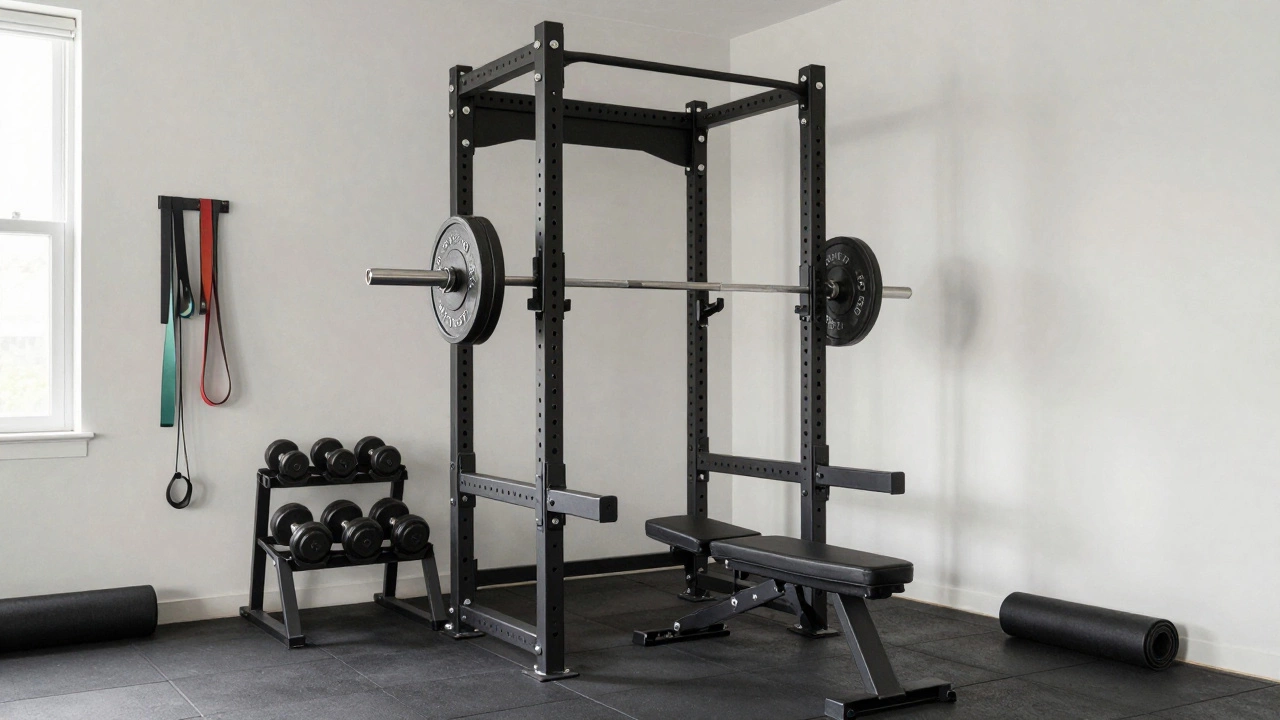
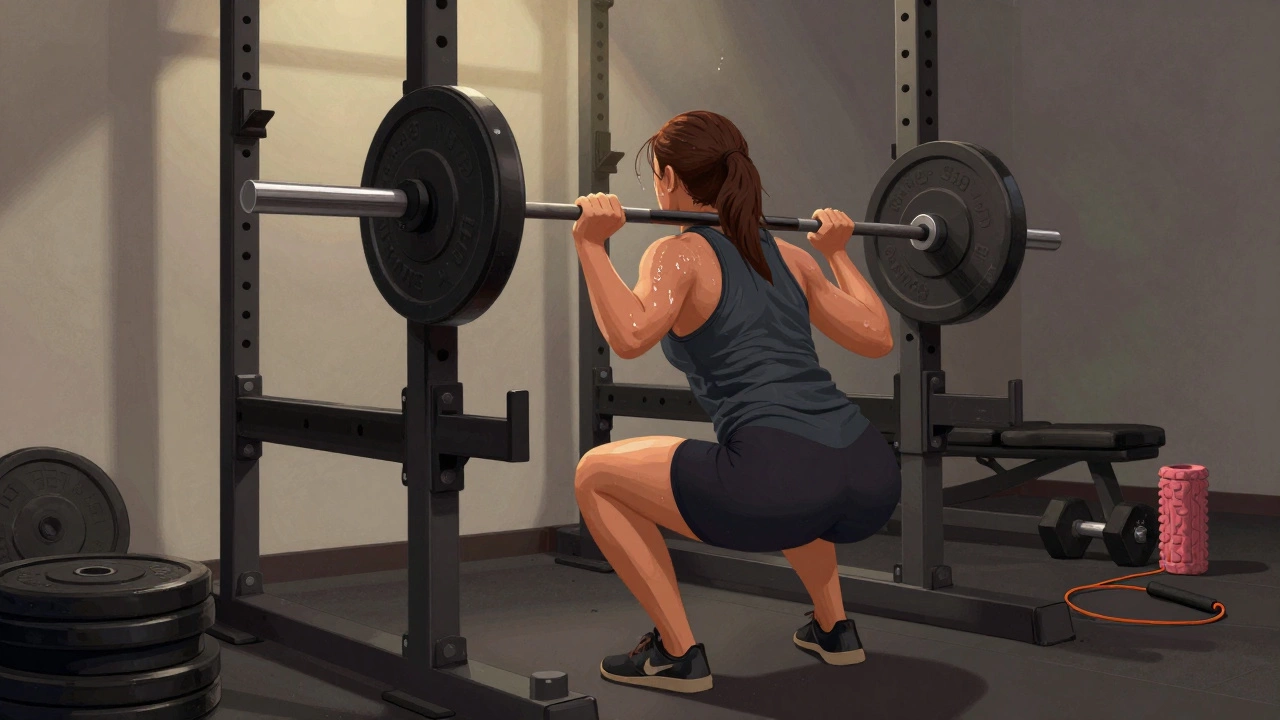
The power rack is the backbone of any serious home gym. It’s not flashy, but it’s the only piece of equipment that lets you safely do squats, deadlifts, bench presses, and pull-ups without a spotter. A basic adjustable power rack with safety pins and pull-up bar costs between $400 and $800. Brands like Rep Fitness, Rogue, and Titan offer solid models that last decades. If you’re tight on space, look for a wall-mounted or compact rack that folds or tucks into a corner. You’ll use this every single workout. It’s the reason you can progress safely over years, not months.
Once you have a rack, you need a barbell. A standard 7-foot Olympic barbell (20kg / 44lbs) is the most versatile tool you’ll own. It’s used for squats, deadlifts, overhead presses, rows, and even curls. Pair it with a set of cast iron or bumper plates. Start with 100kg (220lbs) total - that’s two 20kg plates, two 15kg, two 10kg, two 5kg, and two 2.5kg. Bumper plates are worth the extra cost if you plan to drop weights - they protect your floor and your joints. If you’re on a budget, steel plates work fine, but you’ll need to be more careful. You don’t need 200kg. You need enough to challenge yourself for the next 12-18 months. Most men will max out around 120-140kg on squats and deadlifts. Most women will peak around 80-100kg. Build up to that, don’t buy more than you’ll use.
Fixed dumbbells take up too much space. Adjustable dumbbells solve that. The best option right now is the Bowflex SelectTech 552 or the PowerBlock Sport 50. Both let you go from 5lbs to 52.5lbs or 50lbs per dumbbell with a simple turn of a dial. That’s enough for everything from shoulder presses to lunges to bicep curls. You’ll replace your entire dumbbell rack with two handles. Some models even come with a stand that doubles as a bench. If you’re not lifting heavy, you can get away with a lower max weight - 40lbs per dumbbell is fine for most women and beginners. But if you’re serious about strength, go for 50lbs or more. Adjustable dumbbells are the most space-efficient upgrade you can make.
A flat bench is fine, but an adjustable bench is smarter. You’ll use it for incline presses, decline presses, seated shoulder presses, and even step-ups or core work. Look for one that locks into at least three positions: flat, incline (45 degrees), and decline. The fitness brand Marcy offers solid budget options under $200. If you want something sturdier, the REP Fitness AB-3100 is a beast. Avoid folding benches unless you’re super short on space - they wobble. A solid bench lets you lift heavier and safer. You’ll also use it for bodyweight exercises like Nordic curls and elevated push-ups. Don’t skip this. It’s not optional if you want to train your chest and shoulders properly.
Resistance bands are cheap, portable, and surprisingly powerful. Get a set of loop bands with varying resistance - light, medium, heavy, and extra-heavy. Use them for warm-ups, glute activation, rehab, or adding resistance to bodyweight squats. They’re also great for travel. A pull-up bar is non-negotiable. You can mount one in a doorway (like the Iron Gym or Perfect Fitness Multi-Gym) or attach it to your power rack. Pull-ups and chin-ups are the best upper-body builders you can do at home. If you can’t do one yet, use a band for assistance. Do them three times a week. Your back, shoulders, and grip will thank you.
You don’t need these to build muscle, but they make your routine sustainable. A foam roller helps with recovery - roll out your quads, hamstrings, and lats after every workout. A jump rope costs less than $20 and burns more calories in 10 minutes than most machines do in 30. It’s also great for warming up or conditioning. A thick exercise mat protects your floor and gives you grip for floor exercises like planks, sit-ups, and yoga. You can get a 1/2-inch thick PVC foam mat for under $50. These aren’t the stars of your gym, but they’re the supporting cast that keeps you injury-free and consistent.
Let’s be clear: you don’t need a treadmill, elliptical, or stationary bike. Most people who buy them use them once a month. If you want cardio, use your jump rope, do kettlebell swings, or go for a run outside. You don’t need a leg press machine. Squats on a power rack are better. You don’t need cable machines. Resistance bands and dumbbells can mimic 90% of their movements. You don’t need a full set of fixed dumbbells. Adjustable ones save space and money. You don’t need a bench press station separate from your power rack. And you definitely don’t need a mirror on the wall - it’s for vanity, not results.
Here’s what a real, functional home gym looks like on a budget:
Total: $1,520. That’s it. You can squat, deadlift, press, pull, and move in every plane of motion. You can build muscle, lose fat, and get stronger for years. No more excuses.
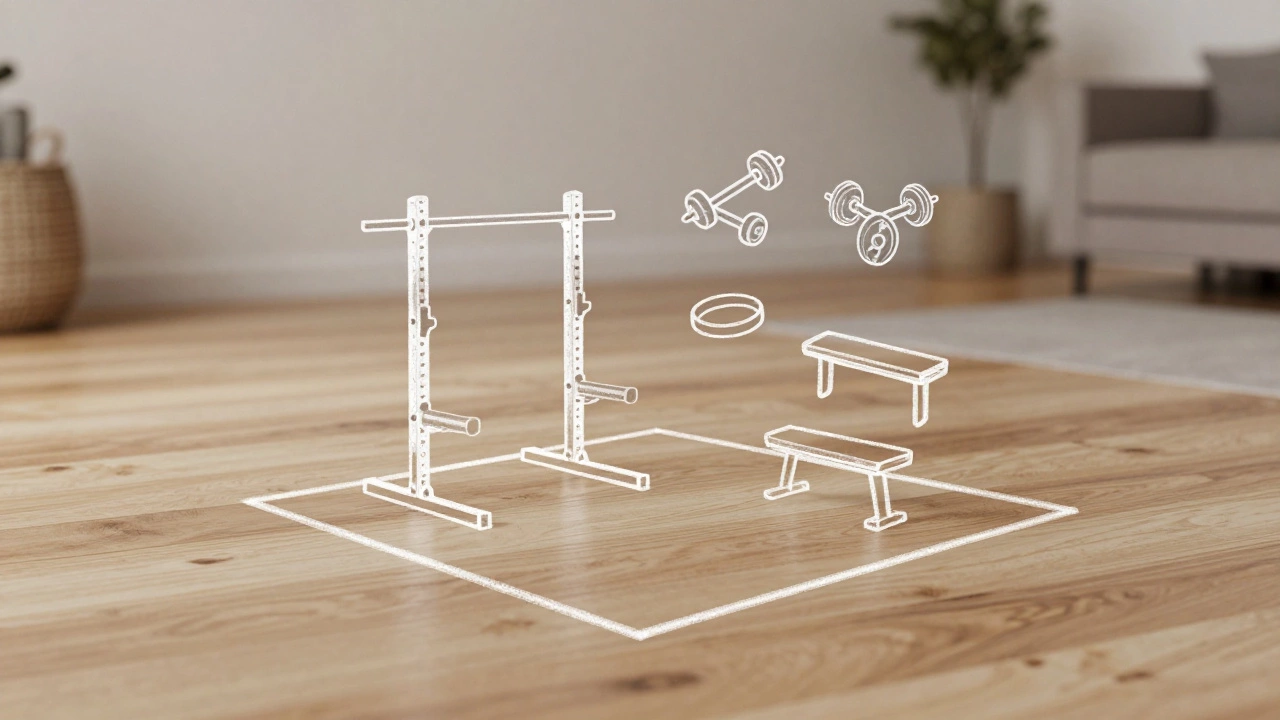
You don’t need a garage. A spare bedroom, a corner of the living room, or even a section of the basement works. Clear a 6x6 foot space. That’s enough for the rack, bench, and a little room to move. Use rubber flooring tiles - they’re affordable, easy to install, and protect your floor from dropped weights. Keep your weights on a rack or shelf so everything stays tidy. A clean space makes you more likely to use it. If your gym looks like a storage closet, you’ll avoid it. Make it inviting. A small fan, a speaker, and a water bottle on a shelf go a long way.
Don’t buy everything at once. Start with the power rack and barbell. Get those two, then add dumbbells after a month. Then the bench. Then bands. Build it slowly. That way, you’ll know what you actually use. Most people buy too much too fast and get overwhelmed. You don’t need to be perfect. You just need to be consistent. Show up three times a week. Do compound lifts. Get stronger. That’s the whole game.
The equipment is just a tool. What matters is what you do with it. A $10,000 gym won’t make you fit if you never use it. A $1,500 setup with discipline will change your body. Your home gym should feel like a place you want to be - not a showroom. Keep it simple. Keep it clean. Keep it moving. That’s all you need.
No. Most people who buy treadmills use them less than once a month. For cardio, use a jump rope, do kettlebell swings, or go for a run outside. These are cheaper, more effective, and take up no space.
Yes, but only up to a point. Dumbbells and bands are great for beginners and intermediates. But if you want to keep getting stronger past 120kg on squats or 100kg on deadlifts, you need a barbell and a power rack. Those are the only tools that let you safely overload your muscles enough to keep progressing.
A minimum of 6x6 feet (1.8x1.8 meters) is enough for a power rack, bench, and some movement room. You can fit everything in a spare bedroom, corner of the living room, or even a large closet if you use wall-mounted racks. The key is keeping it clear and organized.
Yes, if you’re short on space or on a budget. A set of adjustable dumbbells replaces 15-20 pairs of fixed dumbbells. They cost more upfront - around $300 - but save you hundreds in storage space and future purchases. They’re the most efficient upgrade for home gyms.
The power rack. It’s the only piece that lets you safely do squats, deadlifts, bench presses, and pull-ups without a spotter. Everything else - dumbbells, bands, bench - supports what you do in the rack. Without it, your strength gains will plateau fast.