
Drinking a protein shake before bed used to be something only bodybuilders did in secret. Now, it’s on grocery store shelves, fitness influencers’ routines, and even recommended by nutritionists. But if you’re not training like an Olympian, does it even matter? The short answer: yes, it can help-if you know why and how to do it right.
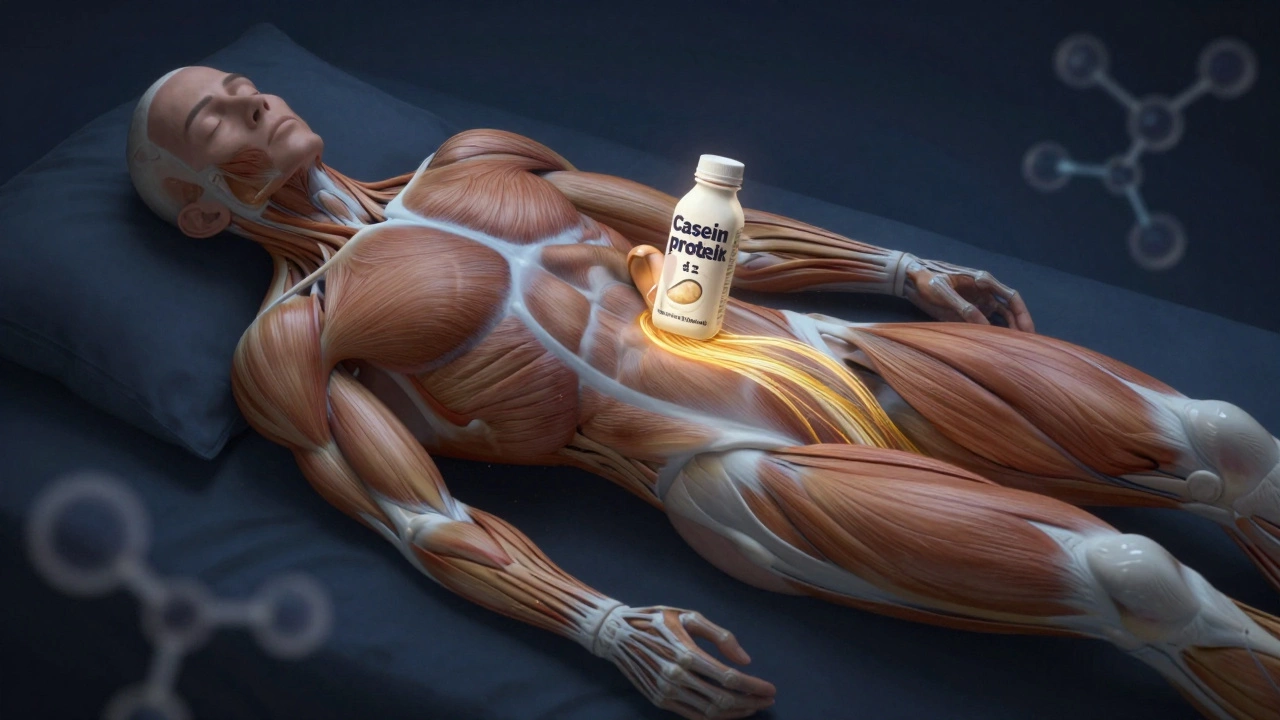
Here’s the science: after a meal, your blood amino acid levels rise and stay elevated for about 3-4 hours. But during an 8-hour sleep window, that supply runs out. That’s where a bedtime protein shake comes in. It keeps your muscles fed with amino acids all night long, so recovery doesn’t stall.
Casein protein, on the other hand, digests slowly. It forms a gel in your stomach and releases amino acids over 6-8 hours. That’s why casein is the gold standard for nighttime use. It’s the same protein found in milk, and it’s why milk has been a traditional bedtime drink for generations.
Studies show that people who consumed 40 grams of casein before bed gained more muscle and strength over 12 weeks compared to those who didn’t. The difference wasn’t huge-but it was consistent. And it didn’t lead to fat gain, even in people eating at maintenance calories.
Still, if you’re vegan or lactose intolerant, a plant-based shake is better than nothing. Just make sure it has at least 20 grams of protein per serving. And pair it with a small amount of healthy fat-like a tablespoon of almond butter-to slow digestion even more.
But don’t expect a miracle. If you’re drinking a shake with added sugar, artificial flavors, or caffeine (yes, some protein powders have it), you’re sabotaging your sleep. Always check the label. Look for shakes with zero added sugar and no stimulants.
Then a bedtime protein shake makes sense. For someone who’s mostly sedentary or eats a high-protein dinner (like grilled chicken, eggs, or tofu), it’s probably unnecessary.
More than 40 grams doesn’t mean better results. Your body can’t use excess protein for muscle repair overnight-it just turns it into energy or stores it as fat. Stick to the range.
Try it for two weeks. Track how you feel in the morning: Are you less sore? Do you feel more energized? Did you sleep better? Those are your real indicators-not what some influencer says.

But here’s the twist: protein keeps you full. People who drink a protein shake before bed often eat less the next day. One study found that participants consumed 12% fewer calories at breakfast after having a nighttime protein shake. That’s a hidden benefit.
And if you’re on medication that affects kidney function, talk to your doctor first. Protein isn’t dangerous for healthy people, but if your kidneys are already stressed, extra protein can be a risk.
It’s not about getting jacked overnight. It’s about making sure your body doesn’t waste away while you sleep. That’s worth a few minutes before bed.
No, not if your total daily calorie intake is balanced. A typical casein shake before bed has around 160 calories. It won’t cause weight gain on its own. In fact, some people end up eating less the next day because protein keeps them full longer. Weight gain happens when you eat more calories than you burn-no matter when you eat them.
Yes. Casein digests slowly, releasing amino acids over 6-8 hours, which matches your sleep cycle. Whey digests in under an hour, so most of it is gone before you hit deep sleep. If your goal is overnight muscle recovery, casein is the clear choice. But if you only have whey, it’s still better than nothing.
Yes, especially if you’re vegan or lactose intolerant. Soy protein is the most complete plant-based option and works well. Pea protein is fine too, but pair it with a small amount of fat-like almond butter-to slow digestion. Make sure the shake has at least 20 grams of protein per serving.
30 to 40 grams is the ideal range. That’s about one scoop of casein powder or a cup of cottage cheese. More than that won’t give you extra benefits-your body can’t use it all for muscle repair overnight. Stick to this range for the best results without excess calories.
It might. Protein contains tryptophan, which your body converts into melatonin, the sleep hormone. Casein has more tryptophan than whey, so it may help slightly. But if your shake has added sugar, caffeine, or artificial sweeteners, it could hurt your sleep instead. Stick to clean, unsweetened options.
Not necessarily. If your dinner includes 30+ grams of high-quality protein-like chicken, fish, eggs, or tofu-you’re likely fine. But if you’re older, recovering from injury, or training hard, your body needs more sustained protein overnight. A shake fills that gap without requiring you to eat a heavy meal before bed.