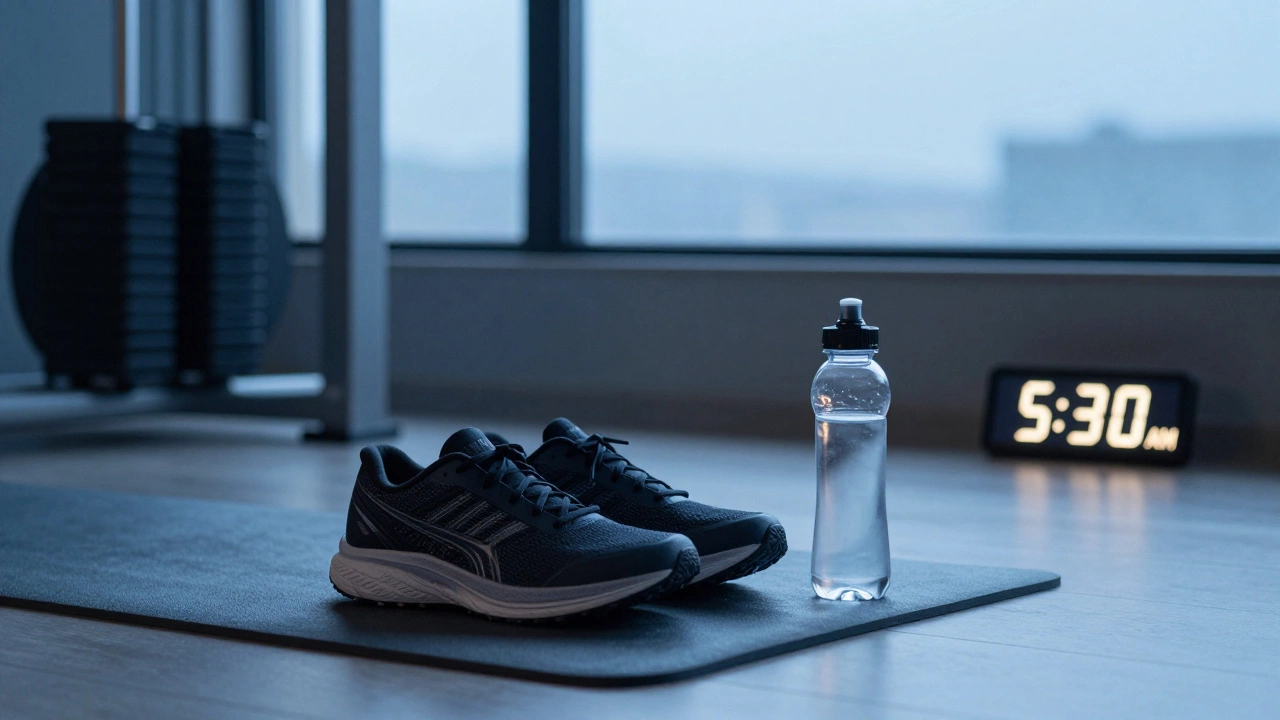
Answer a few questions to find your biological and logistical "sweet spot" for exercising.
You've seen the conflicting advice. One fitness influencer swears that a 5 AM workout is the only way to unlock peak productivity, while another claims that your strength peaks at 6 PM. If you're staring at your alarm clock wondering if you should wake up two hours early or risk the post-work rush at the gym, you aren't alone. The truth is, the "best" time isn't a universal rule; it's a mix of your biology, your schedule, and what you're actually trying to achieve.
To get this right, we need to look at how your body functions throughout the day. Whether you're aiming for maximum muscle growth or just trying to clear your head after a stressful day at the office, the clock plays a bigger role than you might think. Instead of following a trend, let's look at the actual mechanics of your body to decide which slot works for you.
There is a reason why "morning people" seem so disciplined. When you hit the gym first thing, you remove the primary excuse for skipping: the "life happened" factor. By 6 PM, you might have a late meeting, a family emergency, or just be completely drained. At 6 AM, the world is quiet, and your to-do list hasn't started screaming yet.
From a biological standpoint, Circadian Rhythm is the internal 24-hour clock that regulates sleep-wake cycles and influences hormone release . For some, waking up and moving immediately helps align this rhythm, leading to better sleep quality at night. There's also a specific benefit to fasted training. While the "fat burning" claims are often exaggerated, working out before breakfast can increase insulin sensitivity, which is a win for those managing blood sugar or aiming for lean muscle.
Think about the mental shift. A morning session acts like a cognitive reset. Instead of starting your workday in a reactive state-answering emails and putting out fires-you start in a proactive state. You've already won the hardest battle of the day before most people have had their first coffee.
If the morning is about discipline, the evening is about performance. If you look at Olympic schedules or professional sports, most major events happen in the late afternoon or evening. Why? Because that's when the human body is physically at its peak.
Your Core Body Temperature is the internal temperature of the body's center, which typically peaks between 2 PM and 6 PM . When your temperature is higher, your muscles are more flexible, and your joints are more lubricated. This means you're less likely to pull a muscle and more likely to hit a new personal record on the bench press. If your goal is best time to workout for pure strength and hypertrophy, the evening usually wins.
Then there's the "decompress' factor. For many, the gym is a sanctuary. After eight hours of staring at a screen, lifting heavy weights or hitting a treadmill allows you to vent that accumulated frustration. It's a physical boundary between your professional life and your home life, acting as a mental bridge that helps you switch off from work mode.

To decide, you have to weigh what you're sacrificing. A morning workout might mean you're a bit sluggish during your 2 PM meeting, while an evening workout might interfere with your sleep if you go too hard too late.
| Feature | Morning Session | Evening Session |
|---|---|---|
| Energy Levels | Higher mental focus, lower raw power | Higher physical strength, higher endurance |
| Consistency | High (fewer interruptions) | Moderate (prone to schedule slips) |
| Sleep Impact | May improve sleep onset | Can disrupt sleep if too close to bed |
| Metabolism | Boosts metabolic rate early | Helps regulate blood sugar post-meal |
| Risk of Injury | Higher (stiff muscles/joints) | Lower (body is warm and primed) |
When talking about growth, we have to mention Muscle Protein Synthesis is the process of building muscle protein, which is essential for muscle growth and repair after exercise . Some argue that training in the evening allows you to fuel your workout better because you've had two or three meals already. This provides a steady stream of glycogen, the primary fuel for high-intensity exercise.
However, recovery happens while you sleep. If you train in the morning, you have the entire day to feed your body the nutrients it needs to repair those muscle fibers. If you train late at night, you might find that your heart rate remains elevated, making it harder to fall into the deep REM sleep required for hormone regulation and tissue repair.
Consider the role of Cortisol is a steroid hormone produced by the adrenal glands, often called the stress hormone . Cortisol levels are naturally highest in the morning. For some, adding a high-intensity workout on top of this peak can feel overwhelming. For others, the exercise helps "burn off" that cortisol, leaving them calm and focused for the day.

Regardless of when you choose, there are a few traps that can ruin your progress. If you go in the morning, the biggest mistake is jumping straight from the bed to the squat rack. Your spinal discs are more hydrated and sensitive upon waking, meaning you need a longer, more thorough warm-up than you would at 5 PM. Spend at least 10-15 minutes on dynamic stretching to avoid injury.
For the evening crowd, the danger is the "pre-workout' trap. Taking high-stimulant caffeine supplements at 7 PM is a recipe for insomnia. While you might feel like a beast in the gym, you're sabotaging the very sleep that actually builds the muscle. If you're training late, stick to non-stimulant pumps or a light snack like a banana and some almond butter.
Another common error is the "all or nothing" approach. Many people try to switch to morning workouts because they read it's "better," but they end up hating it and quitting entirely. If you are a natural night owl, forcing a 5 AM routine is a fast track to burnout. Your nervous system doesn't care what the clock says; it cares about consistency and intensity.
If you're still unsure, run a two-week experiment. For the first week, commit to a morning slot. Note how your energy feels at 3 PM and how you slept the night before. For the second week, switch to the evening. Pay attention to how much weight you can move and how your mood changes after work.
Ask yourself these three questions:
The best time is ultimately the one that minimizes friction. If you have to wake up at 4 AM and you hate it, you will eventually stop going. If you love the evening but always end up canceling because of work calls, the morning is your only real option. The most effective workout is the one that actually happens.
Not necessarily. Weight loss is primarily driven by your total caloric deficit over 24 hours. While fasted morning cardio can increase fat oxidation during the session, it doesn't magically burn more calories than an evening session of the same intensity. Choose the time that allows you to work harder and stay consistent.
It can for some people. High-intensity exercise raises your core body temperature and releases adrenaline, both of which can keep you awake. To mitigate this, try to finish your workout at least 3 hours before your intended bedtime, and focus on a cool-down period with stretching or a lukewarm shower to help your body temperature drop back down.
Yes, it is fine. While consistency in timing helps your body adapt to a rhythm, the total volume and intensity of your training are far more important than the exact hour. If your schedule is unpredictable, just ensure you get your sessions in; your muscles won't know if it's 8 AM or 8 PM as long as the stimulus is there.
It depends on your goal. For light cardio or moderate weightlifting, many people do fine on an empty stomach. However, if you're doing a heavy leg day or high-intensity intervals, a small amount of fast-digesting carbs (like a piece of fruit) can prevent a drop in blood glucose and improve your performance.
Biologically, strength and anaerobic power typically peak in the late afternoon or early evening. This is due to the peak in core body temperature and the natural fluctuation of hormones. If you are training for a specific maximum lift, a late afternoon session is often the most productive.
If you're a beginner, start with the time that feels easiest. Don't try to "optimize" your biology until you've built the habit of simply showing up. Once you have a 30-day streak, start experimenting with the timing to see if your strength or energy levels shift.
If you're an advanced athlete, start tracking your personal records (PRs) based on the time of day. You might find that your upper body strength peaks at 5 PM, but your endurance for running is better at 7 AM. Fine-tuning your schedule to match these peaks can give you that extra 5% edge in performance.