
Do you experience any of these symptoms?
Spending two hours at the gym every day feels like dedication to some. To others, it feels like a red flag. You walk in at 6 a.m., lift for 45 minutes, run on the treadmill for 30, do core work, stretch, foam roll, and leave exhausted. You tell yourself you’re being disciplined. But is it working-or are you just burning out?
The idea that more time in the gym equals better results is a myth pushed by influencers and outdated bodybuilding culture. The truth? Most people see strong gains with 45 to 75 minutes of focused training, 4 to 5 days a week. Two hours? That’s not a sign of elite discipline. It’s often a sign of poor planning, inefficient workouts, or chasing the wrong goals.
Let’s break it down. A typical two-hour session might include:
That’s a lot of time. But here’s the catch: your body doesn’t grow during your workout. It grows when you rest. If you’re spending two hours in the gym daily, you’re not giving your muscles, nervous system, or hormones enough time to recover. And recovery isn’t optional-it’s the actual engine of progress.
There are exceptions. Professional athletes, competitive bodybuilders, and elite endurance athletes often train for 2+ hours a day. But they’re not doing it alone. They have:
Most people don’t have any of that. And if you’re trying to mimic them without the support system, you’re setting yourself up for burnout, not gains.
Think about it: if you’re working a 9-to-5 job, raising kids, or managing stress, your body isn’t built to handle 14 hours of physical stress per week. Two hours a day adds up to 14 hours. That’s more than a full workday. Your body doesn’t care if you’re doing “light cardio” or “core work.” Every minute of movement taxes your system.
Overtraining isn’t just feeling tired. It’s a physiological breakdown. Here’s what it looks like in real life:
A 2021 study in the Journal of Strength and Conditioning Research found that subjects who trained 90+ minutes daily for six weeks showed signs of cortisol imbalance and reduced muscle protein synthesis. In other words: their bodies stopped building muscle-even though they were working harder.
And here’s the kicker: you don’t need to go full burnout to see damage. Even mild overtraining reduces fat loss. Why? Because chronic stress increases belly fat storage and makes insulin less effective. So if you’re trying to lose weight, two-hour sessions might actually be working against you.
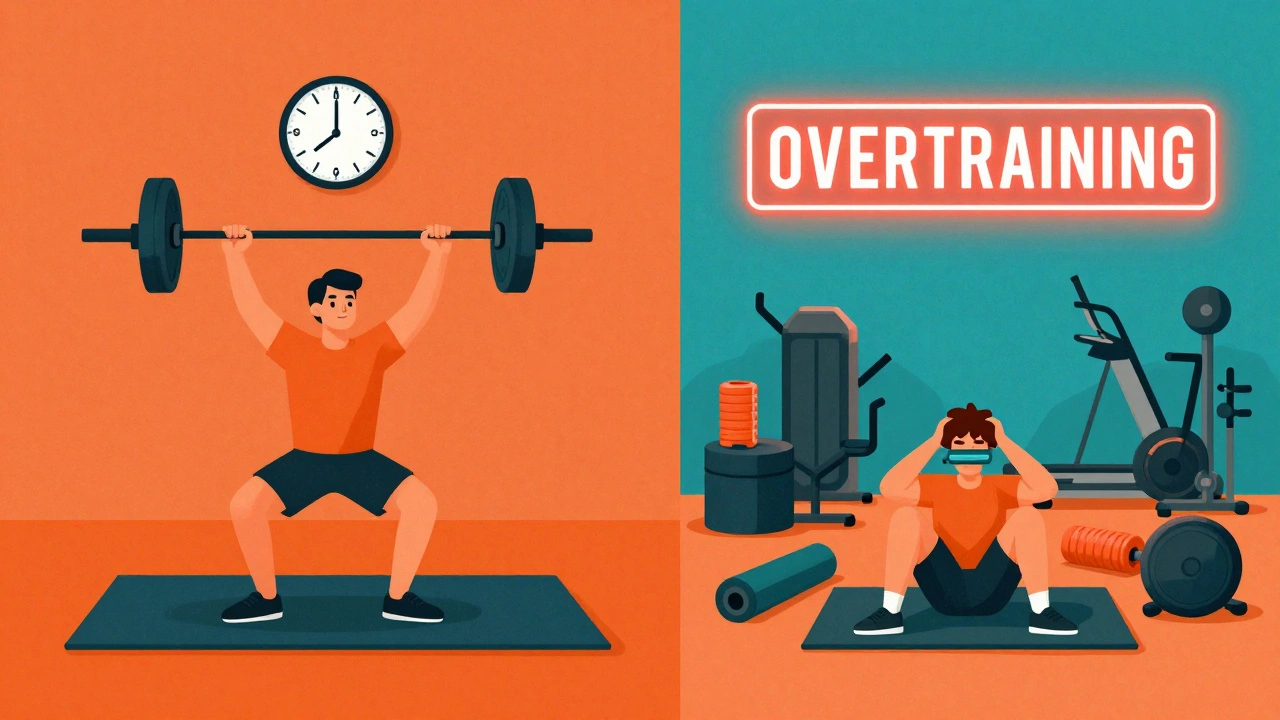
For 90% of people-whether you want to lose fat, build muscle, or just feel stronger-the ideal gym time is 45 to 75 minutes, 4 to 5 days a week.
Here’s how to make those 60 minutes count:
That’s it. You don’t need to do 10 sets of biceps curls. You don’t need to run on the treadmill after leg day. You don’t need to foam roll for 20 minutes. Your body responds to stimulus, not volume.
Real people see results with this approach. Sarah, a 38-year-old teacher from Perth, lost 18kg in 6 months training 50 minutes, 4 days a week. She didn’t add more time-she cut the fluff. She started sleeping better. Her energy improved. Her joints stopped aching. She didn’t need to spend two hours at the gym. She just needed to train smarter.
Ask yourself these five questions:
If you answered yes to two or more, you’re likely overtraining. It’s not about discipline. It’s about sustainability.
Try this: take 3-5 days off. No lifting, no cardio, no stretching. Just walk, breathe, and sleep. Then come back and train 60 minutes max. You’ll be surprised how much stronger you feel.

If you feel like you need more gym time, you probably need better structure-not more minutes.
The gym is a tool. Not a religion. You don’t earn points for how long you stay. You earn results from how well you recover.
Two hours at the gym isn’t evil. But for most people, it’s unnecessary, unsustainable, and counterproductive. The goal isn’t to outwork your body-it’s to outsmart it.
Train hard. Recover harder. And if you’re spending two hours in the gym every day, ask yourself: are you building muscle-or just burning out?
For weight loss, two hours at the gym is usually too much. Fat loss happens when you create a calorie deficit, not from how long you sweat. Most people burn 400-600 calories in a 60-minute workout. Adding another hour doesn’t double your results-it just increases hunger, fatigue, and risk of injury. Focus on strength training, protein intake, and sleep instead. You’ll lose fat faster and keep it off.
Yes, but not because of the time. You build muscle from progressive overload, not duration. A 60-minute session with heavy compound lifts and proper rest is far more effective than two hours of scattered exercises. Longer sessions often mean lower intensity, more rest between sets, and mental fatigue-all of which reduce muscle growth. Elite bodybuilders train hard, but they also rest 48-72 hours between muscle groups. You need the same balance.
Splitting two hours into two 60-minute sessions doesn’t fix the problem-it doubles it. Your body still sees 120 minutes of stress. Unless you’re an athlete with a recovery team, you’re still overloading your system. Most people benefit more from one focused session per day. If you want to train twice, keep each session under 45 minutes and make sure they’re very different (e.g., strength in the morning, light mobility in the evening).
Signs include: stalled progress, constant fatigue, poor sleep, increased resting heart rate, irritability, frequent illness, and loss of appetite. If you’ve been training 2 hours daily for more than 3 weeks and feel worse, not better-you’re overtrained. Take 3-5 days off. Track how you feel. Then restart with shorter, smarter sessions.
If you enjoy the routine, that’s fine-but make sure it’s serving you, not draining you. Cut the filler: stop doing 10 sets of isolation exercises, skip the extra cardio after lifting, and reduce stretching to 10 minutes max. Focus on lifting heavier or moving faster. Use the extra time to rest, hydrate, or eat a post-workout meal. Your body will thank you more than your Instagram followers ever will.