Are you getting your money's worth? Compare your app subscription against the cost of a personal trainer session to see if you are overpaying for data or underutilizing a tool.
This is how much training time your monthly fee buys you at standard rates.
You downloaded the app three months ago. You bought the premium subscription. You even set up your Apple Watch to sync with it. But here’s the uncomfortable truth: most people quit fitness apps within six weeks. It’s not because the workouts are bad. It’s because the novelty wears off faster than your muscles recover. So, do fitness apps actually help, or are they just expensive digital distractions?
The answer isn’t a simple yes or no. It depends entirely on how you use them and what you expect from them. Fitness apps are tools, not magic pills. They can bridge the gap between knowing what to do and actually doing it, but only if you understand their real value proposition. Let’s break down where they shine, where they fail, and how to make one work for you in 2026.
Before we talk about features, we need to talk about brains. Human beings are wired to seek immediate rewards. Exercise often delivers delayed gratification. You sweat today, but you look better in two months. This mismatch is why gym memberships gather dust. Fitness apps try to hack this system using gamification-badges, streaks, and leaderboards. Does it work? Sometimes.
A study published in the Journal of Medical Internet Research found that users who engaged with social features in fitness apps were 30% more likely to stick with their routine after three months. The key word there is "engaged." If you’re just blindly following a timer without caring about the data or the community, the dopamine hit fades fast. The app becomes another chore on your phone screen, right next to your email notifications.
Let’s be honest: planning a workout is half the battle. When you walk into a gym, decision fatigue hits hard. Which machine? How many sets? What weight? Strava or Nike Training Club removes this friction. They provide structure when your brain is too tired to think.
This structural support is the primary reason beginners succeed with apps. You don’t have to design a program; you just execute it. For intermediate lifters, apps like Strong or Hevy offer superior tracking capabilities compared to paper logs. Being able to see your volume increase over ten weeks provides concrete evidence of progress. That visual proof is powerful. It turns abstract effort into tangible data points.
| App Type | Best For | Key Feature | Potential Pitfall |
|---|---|---|---|
| Guided Workout Apps | Beginners needing structure | Video demonstrations & auto-progressions | Can feel rigid; ignores individual pain limits |
| Tracking Apps | Data-driven athletes | Detailed history & PR alerts | No guidance on form or programming logic |
| Wearable Ecosystems | Cardio & step goals | Real-time biometric feedback | Can lead to obsession with numbers vs. effort |
Here is the biggest criticism of digital coaching: nobody is watching your back. In a physical gym, a trainer corrects your squat depth or warns you when your knees cave in. An app gives you a video of perfect form, but it doesn’t know if your hips are shifting five degrees to the left. This leads to the "silent injury" problem.
Many users develop chronic issues because they follow high-intensity programs without the foundational mobility to handle them. Apps often prioritize intensity over safety. They push you to beat yesterday’s time, regardless of whether your joints are ready. If you have pre-existing injuries or poor movement patterns, an app alone is risky. It lacks the tactile feedback and observational nuance of a human coach.
However, technology is catching up. Newer apps integrate computer vision via smartphone cameras to analyze joint angles. While not perfect, these AI-driven form checks are getting better at flagging obvious errors. Still, relying solely on a camera feed won’t catch subtle imbalances that a trained eye would spot instantly.

Let’s talk money. Premium subscriptions range from $10 to $30 a month. Over a year, that’s hundreds of dollars. Is it worth it? Compare this to a personal trainer session, which might cost $80-$150 per hour in Perth. The math favors the app initially. But value isn’t just about price; it’s about outcome.
If the app gets you moving three times a week consistently, it’s paying for itself in health savings alone. If you pay for a premium plan but only open it once a month, you’re wasting money. Many users fall into the "subscription trap," paying for features they never use. Audit your usage before renewing. Do you actually check the analytics? Do you engage with the community forums? If not, downgrade to the free tier or cancel.
So, how do you avoid becoming another statistic? You need to shift your mindset from passive consumer to active user. Here is a practical framework to maximize the utility of any fitness app:
Also, beware of notification fatigue. Constant pings to "move now" can create anxiety rather than motivation. Turn off non-essential alerts. Keep the app as a tool you choose to pick up, not a nagging parent on your shoulder.
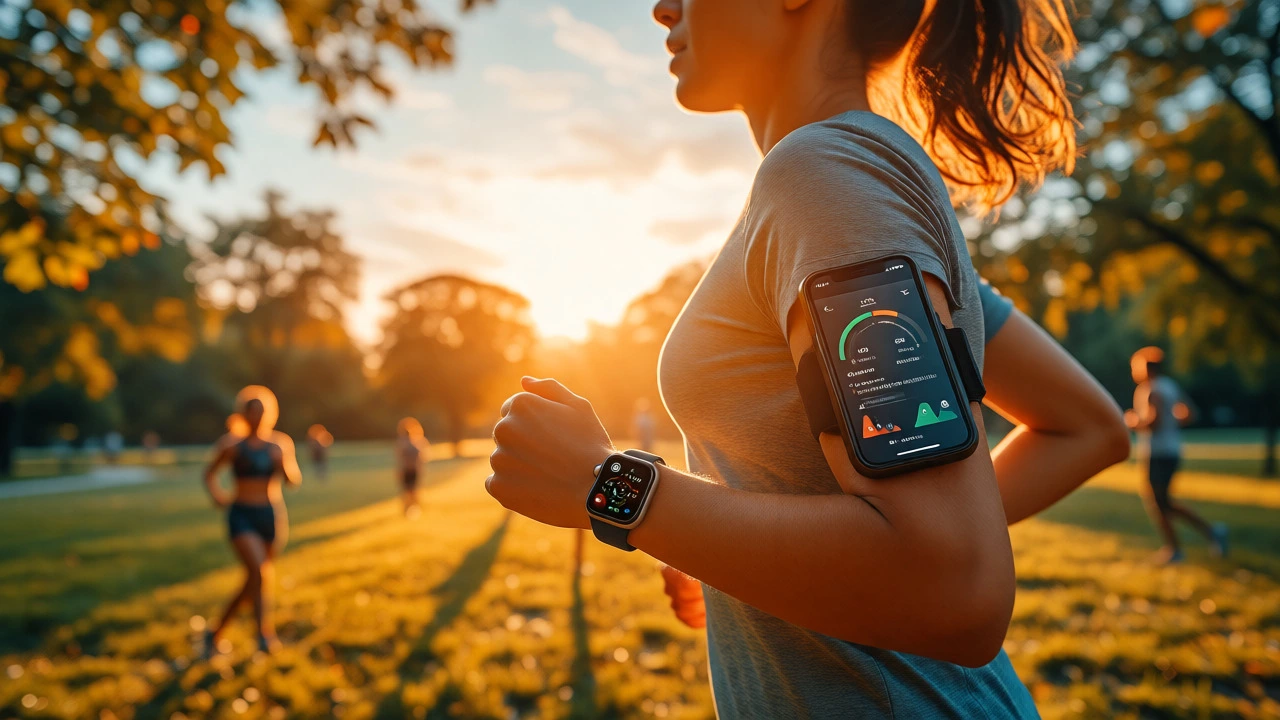
We are currently seeing a surge in AI-driven coaching. Apps like Freeletics or Fitbod claim to adapt workouts in real-time based on your recovery status and sleep data. This is promising. Traditional apps give everyone the same Tuesday workout. AI apps recognize that you slept poorly and might swap heavy squats for mobility work.
While still maturing, this adaptive capability addresses the rigidity issue. It respects your daily context. However, trust your body over the algorithm. If the AI suggests a heavy deadlift day but your lower back feels tight, listen to your body. The algorithm optimizes for data trends; you optimize for feeling good and staying uninjured.
Do fitness apps help? Yes, but conditionally. They are exceptional at providing structure, tracking progress, and lowering the barrier to entry for exercise. They are terrible at correcting form nuances and understanding complex physical limitations.
If you are disciplined, motivated by data, and generally healthy, an app is a fantastic investment. It puts a coach in your pocket for a fraction of the cost. If you struggle with self-discipline, have significant injuries, or hate looking at screens while working out, an app might just add clutter to your life. The best fitness strategy is the one you can sustain. For some, that’s a piece of paper and a pen. For others, it’s a sleek interface with glowing graphs. Choose what keeps you moving.
Yes, free versions of major apps like Nike Training Club or YouTube channels often provide sufficient guidance for beginners. Paid tiers usually unlock advanced analytics, personalized plans, or offline access. Start free to test your consistency before paying.
For general fitness and maintenance, yes. For specific athletic performance, injury rehabilitation, or complex technique refinement, no. Apps lack the ability to physically assess your movement quality and adjust cues in real-time based on visual and tactile feedback.
Motivation often drops due to monotony or lack of perceived progress. Try switching app types (e.g., from guided workouts to outdoor tracking), joining a community challenge, or setting new, smaller goals to reset the reward loop.
Wearables enhance apps by providing objective data like heart rate variability and sleep stages. This allows for smarter training recommendations, such as suggesting rest days when recovery metrics are low, potentially preventing burnout.
Apps like Strong, Hevy, or JEFIT are highly rated for strength training because they focus on logging weights, reps, and sets with minimal distraction. They excel at showing long-term progression charts, which is crucial for lifters.