
You know that feeling when you look at the clock and realize you only have twenty minutes to work out? You’re tempted to skip it entirely. But what if I told you those twenty minutes could burn more calories than an hour of jogging? That’s the magic of High-Intensity Interval Training, or HIIT. It’s not just a buzzword; it’s a physiological hack that keeps your metabolism firing long after you’ve stopped sweating.
If you are looking to shed weight without spending hours on a treadmill, you need to understand how HIIT works and which specific moves actually deliver results. We aren’t talking about vague advice here. We are breaking down the exact exercises, the timing protocols, and the science behind why this method is so effective for fat loss in 2026.
Most people think weight loss is simply about moving more. If you walk for two hours, you burn calories. True. But HIIT changes the game through something called Excess Post-exercise Oxygen Consumption, or EPOC. When you push your heart rate near its maximum during short bursts of activity, your body enters debt. To repay that oxygen debt, your metabolism stays elevated for up to 48 hours post-workout. You are literally burning calories while you sleep.
Steady-state cardio, like running at a moderate pace, adapts quickly. Your body becomes efficient, meaning it burns fewer calories for the same effort over time. HIIT prevents this adaptation because the intensity varies wildly. One study published in the Journal of Obesity found that participants doing HIIT lost 28.5% more fat than those doing steady-state cardio, despite exercising less frequently. The key isn't just movement; it's intensity.
Before we hit the floor with burpees, you need to get the structure right. HIIT isn't just "working out hard." It requires strict intervals. The most common ratio is 1:2 or 1:3. For example, 30 seconds of all-out effort followed by 60 to 90 seconds of rest. This rest period is crucial. If you don't rest enough, you can't produce the power output needed in the next round. If you rest too long, your heart rate drops too much, and you lose the metabolic spike.
| Protocol Name | Work Duration | Rest Duration | Best For |
|---|---|---|---|
| Tabata | 20 seconds | 10 seconds | Advanced athletes, extreme time efficiency |
| Standard 1:2 | 30 seconds | 60 seconds | Beginners, general fitness, fat loss |
| EMOM (Every Minute) | Variable | Remaining time | Strength endurance, pacing control |
| Gibala | 20 seconds | 10 seconds | Mental toughness, anaerobic capacity |
You don't need a gym membership to torch fat. In fact, some of the best HIIT movements require nothing but gravity and your own body weight. Here are the heavy hitters.
Love them or hate them, Burpees are the king of full-body conditioning. They combine a squat, a plank, a push-up, and a jump into one fluid motion. Because they engage almost every major muscle group, your heart has to pump blood furiously to keep up. A standard set might be 10 burpees followed by 30 seconds of rest. Don't rush the form. A sloppy burpee is a back injury waiting to happen.
This move looks simple but packs a punch. Start in a plank position and drive your knees toward your chest alternately, as if you're sprinting horizontally. It targets your core, shoulders, and legs simultaneously. Keep your hips low and your back flat. Speed matters here, but stability matters more. Aim for 30 seconds of rapid movement followed by a brief pause.
Squatting builds leg strength, but adding a jump turns it into a plyometric exercise. This explosive power demand spikes your heart rate instantly. Land softly with bent knees to absorb the impact. If you have knee issues, swap these for fast-paced air squats. The goal is to generate force against the ground. Do 15 reps, then rest.
This is essentially running in place, but with intent. Drive your knees up to hip height while pumping your arms. It’s a fantastic cardio burner that also engages your hip flexors and abs. Many people underestimate how tiring this is until they try to maintain it for 45 seconds straight. Pair it with a lower-intensity move like walking lunges for contrast.
Start in a forearm or high plank. Jump your feet out wide and then back together, keeping your upper body stable. This adds a cardio element to the static hold of a plank. It challenges your core stability while elevating your pulse. It’s low impact compared to jumping jacks, making it a great option if you live in an apartment where noise is a concern.
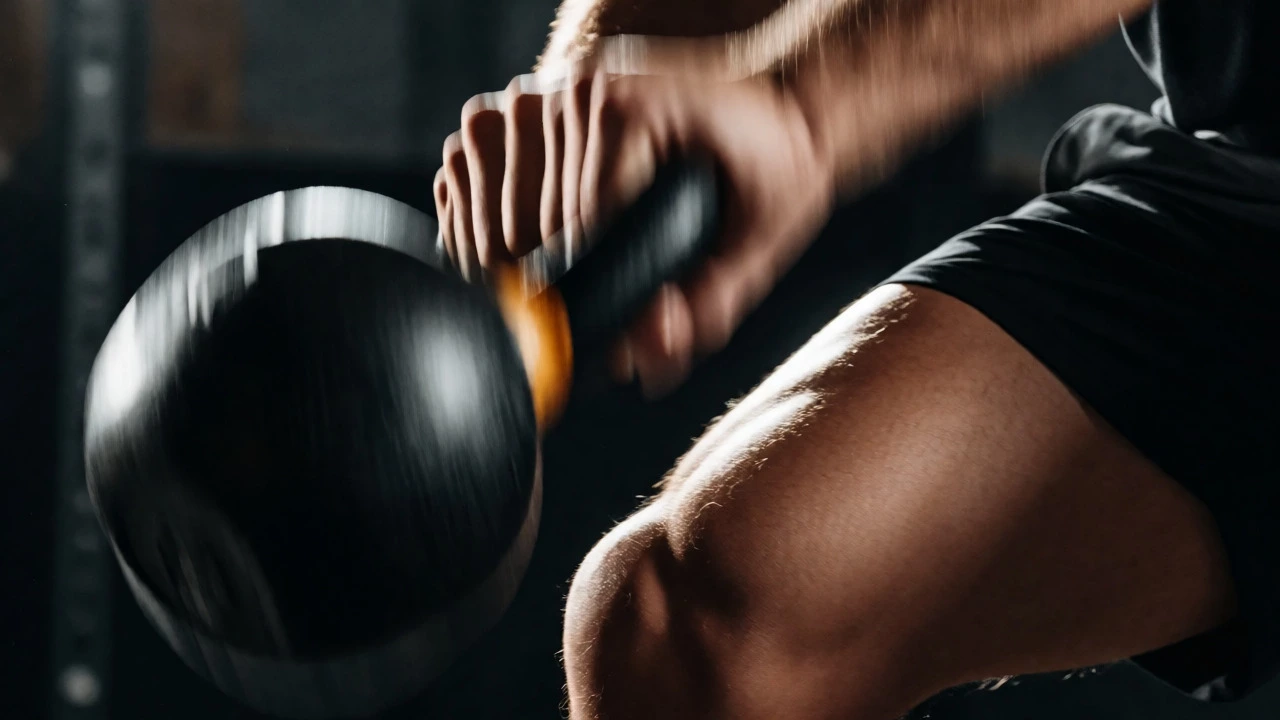
Once you master bodyweight moves, adding tools can increase the difficulty without increasing the time. Kettlebells are particularly effective for HIIT because they allow for dynamic, swinging motions that recruit posterior chain muscles-your glutes, hamstrings, and lower back.
The swing is a hinge movement, not a squat. You snap your hips forward to propel the bell upward. This generates massive power and burns significant calories per minute. A common protocol is 20 swings, 10 seconds rest, repeat. Focus on the hip drive. Your arms are just hooks; your hips do the work.
If you have access to ropes, use them. Alternating waves, slams, and circles create constant tension. Because there is no eccentric phase (the lowering part) to slow you down, you can sustain high intensity longer. Battle ropes are brutal on the shoulders but excellent for conditioning. Try 30 seconds of alternating waves, rest 30 seconds, repeat five times.
A thruster combines a front squat with an overhead press. It links the lower and upper body, forcing your cardiovascular system to work overtime to supply oxygen to both large muscle groups. Use lighter weights than you would for a standard lift. Form breaks down quickly under fatigue, so drop the weight before your form does.
Ready to try it? Here is a structured routine you can do at home today. No equipment required.
Total time: Approximately 20 minutes. Notice the rest periods. They are non-negotiable. If you feel dizzy, extend the rest. If you feel fine, shorten the rest slightly in future sessions.
Many people fail with HIIT because they treat it like regular cardio. Here are the pitfalls to avoid.
Not warming up properly. Going from zero to 100% intensity cold increases injury risk significantly. Spend at least three to five minutes getting your joints lubricated and heart rate up gradually.
Ignoring recovery. HIIT is stressful on the central nervous system. Doing it seven days a week will lead to burnout or injury. Limit HIIT to two or three sessions per week. On other days, opt for strength training, yoga, or low-intensity walking.
Compensating with food. A 20-minute HIIT session might burn 200-300 calories. It’s easy to eat back those calories with a single snack. Track your intake honestly. Weight loss happens in the kitchen; HIIT just accelerates the process.
Chasing volume over intensity. If you can talk during your work intervals, you aren't working hard enough. HIIT should leave you gasping for air. If you finish a set feeling fresh, you didn't go all out.
While effective, HIIT isn't for everyone. If you have uncontrolled high blood pressure, heart conditions, or severe joint issues, consult a doctor first. Pregnant women should modify high-impact jumps to step-outs. Beginners should start with lower-intensity intervals, such as brisk walking interspersed with jogging, before attempting burpees or jump squats.
Two to three times per week is ideal. HIIT places high stress on your body, requiring adequate recovery time. Doing it daily can lead to overtraining and injury. Combine HIIT with strength training and low-intensity cardio for balanced results.
Yes, but modify the impact. Replace jumps with step-backs or low-impact alternatives like marching in place or using a stationary bike. Protect your joints by avoiding high-impact landing forces until you build baseline strength and lose some initial weight.
Studies suggest HIIT is more effective at reducing visceral fat (belly fat) than steady-state running due to the hormonal response and increased metabolic rate. However, consistency matters most. Choose the method you enjoy enough to stick with long-term.
No. Bodyweight exercises like burpees, mountain climbers, and jump squats are highly effective. Equipment like kettlebells or battle ropes can add variety and intensity but are not necessary for beginners starting their weight loss journey.
A typical HIIT session lasts between 15 and 30 minutes, including warm-up and cool-down. The actual high-intensity portion may only be 10-15 minutes. This makes it perfect for busy schedules.