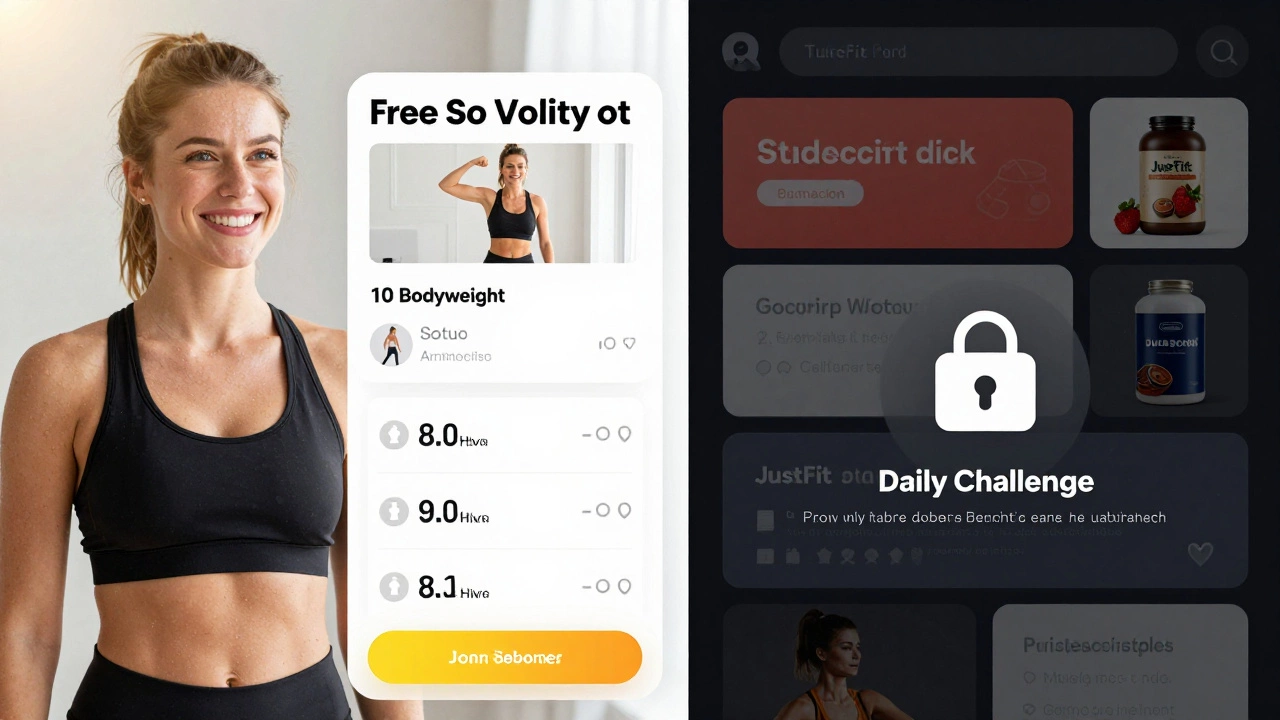
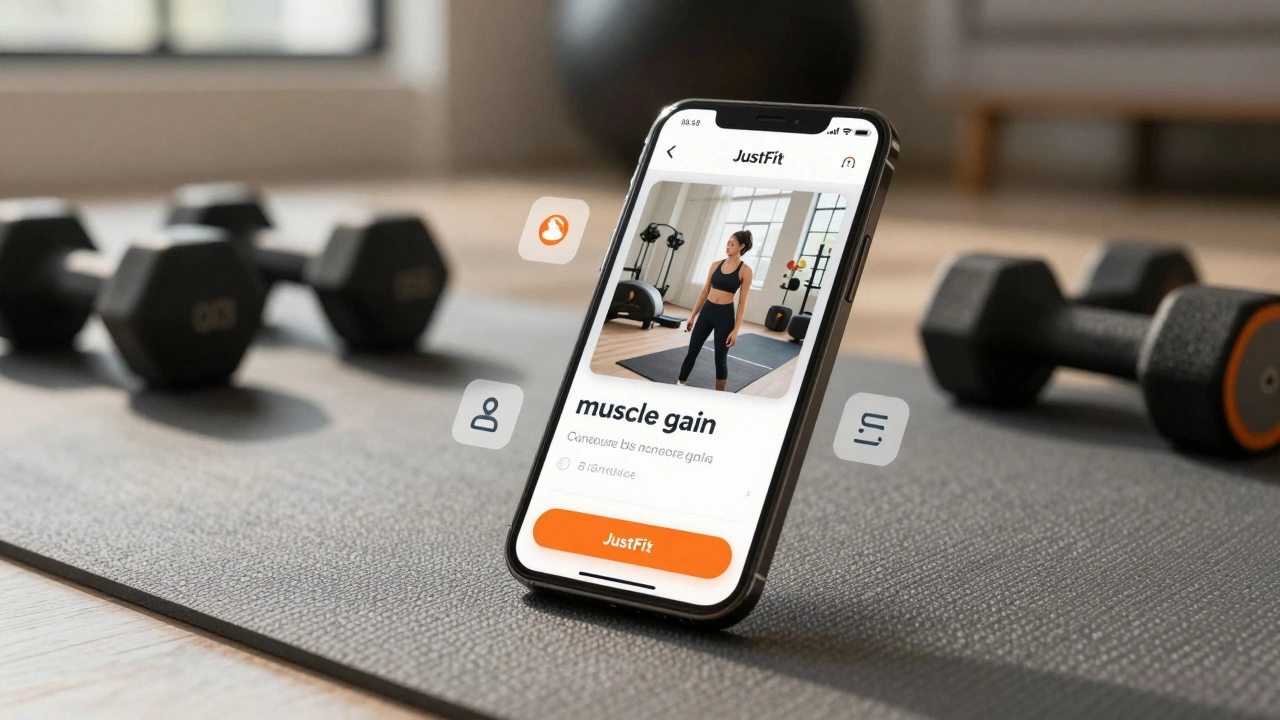
JustFit claims to be a completely free fitness app. You download it, sign up, and suddenly you’ve got workout plans, meal trackers, and video tutorials-all without paying a cent. But is it really free? Or is there a catch hiding behind the cheerful green icons and motivational pop-ups?
If you’ve ever downloaded a "free" app only to get bombarded with upgrade prompts, locked features, or subscription banners after your first workout, you know how tricky this game can be. JustFit is no different. It’s not a scam, but it’s not entirely free either. Let’s break down exactly what you get without paying, what gets locked behind a paywall, and whether the free version is worth your time.
The free version of JustFit gives you access to a solid foundation. You get over 150 on-demand workouts, ranging from 10-minute bodyweight routines to 45-minute strength sessions. These aren’t just generic videos-you’ll find workouts designed by certified trainers, with clear voice cues and on-screen form tips. There’s also a basic calorie tracker that lets you log meals manually, and a step counter that syncs with your phone’s health app.
One standout feature? The daily workout generator. Every morning, the app picks a random routine based on your goals-weight loss, endurance, or muscle gain-and sends you a push notification. It’s simple, but surprisingly effective. People who stick with it for 30 days report better consistency than with other free apps.
You can also join public challenges. Right now, there’s a 7-day plank challenge with over 200,000 participants. You don’t need to pay to enter, track your progress, or see leaderboards. Community features like this make JustFit feel less like an app and more like a real fitness group.
Here’s where things change. The free version locks away three major things: personalized plans, advanced analytics, and ad-free use.
Without paying, you can’t create a custom workout plan. The app picks your routine, not you. If you want to focus on shoulder rehab, postpartum recovery, or Olympic lifting, you’re out of luck. The premium version lets you set goals, pick equipment (dumbbells, resistance bands, no gear), and even sync with wearable devices like Fitbit or Apple Watch for real-time heart rate feedback.
Then there’s the analytics. The free version only shows you total workouts completed and calories burned. Premium unlocks body composition trends, recovery scores, sleep correlation, and even hydration reminders. One user in Perth tracked her sleep quality for six weeks and realized she was doing more cardio on days she slept under 6 hours. That kind of insight? Only in the paid tier.
And yes-ads. You’ll see a 15-second video ad before every workout. Sometimes it’s a protein shake. Sometimes it’s a competing fitness app. Occasionally, it’s a local gym in Melbourne. They’re not aggressive, but they’re constant. If you’re trying to zone in during a 20-minute HIIT session, that interruption adds up.
JustFit’s free model isn’t about giving you everything-it’s about showing you what you’re missing. The app makes money by selling premium subscriptions, but also by collecting data. Your workout patterns, meal logs, and even the time of day you train get fed into their algorithm. That’s how they target ads so precisely.
Some users don’t mind this trade-off. For them, free access to 150+ workouts is enough. Others feel manipulated. One Reddit thread from February 2026 had over 1,200 comments from people who upgraded after being nudged by a "7-day trial" that auto-renewed without clear warning.
Here’s the thing: JustFit doesn’t hide its pricing. It’s $7.99/month or $59.99/year. That’s cheaper than a single personal training session in Perth. But if you’re only working out twice a week, does it make sense to pay?
If you’re a beginner, short on time, or just testing the waters, JustFit’s free version is more than enough. You can build real habits with the daily generator, track basic progress, and stay motivated by community challenges. No need to spend money until you know what you want.
It’s also great if you’re already using other tools. If you log meals in MyFitnessPal or track steps with Garmin, JustFit’s free features complement them without overlap. You don’t need a full suite-you just need consistency.
Pay if you’re serious about results. If you’ve tried free apps before and quit after a month, JustFit Premium might be the upgrade you need. The personalized plans adapt as you progress. The recovery scores help you avoid overtraining. And the ad-free experience? Worth it if you’re doing back-to-back workouts.
It’s also ideal if you train at home with limited equipment. Premium unlocks over 80 advanced routines that require only a bench, a resistance band, and a door anchor-tools most people already own. You won’t find those in the free version.

JustFit isn’t the only free fitness app out there. Here’s how it stacks up:
| App | Workouts Available | Personalization | Ad-Free | Wearable Sync |
|---|---|---|---|---|
| JustFit | 150+ | No | No | Basic (steps only) |
| Nike Training Club | 200+ | Yes | Yes | Yes (Apple, Fitbit, Garmin) |
| FitOn | 300+ | Yes | No | Yes |
| Freeletics | 100+ | Yes | No | Yes |
Nike Training Club is the closest free alternative. It has no ads, full personalization, and syncs with wearables. But it lacks JustFit’s community challenges and daily surprise workouts. FitOn has more variety but feels cluttered. Freeletics is intense-great for hardcore users, overwhelming for beginners.
Yes-if you use it right. The free version isn’t a gimmick. It’s a real tool that can help you build consistency. But if you’re serious about long-term results, the premium upgrade isn’t a luxury-it’s a necessity.
Try the free version for 30 days. Use the daily generator. Join a challenge. See if you’re motivated by the community. Then ask yourself: Do I want to know how my sleep affects my lifts? Do I want to skip ads? Do I want a plan that changes as I get stronger?
If the answer is yes, upgrade. If not, stick with free. JustFit doesn’t trick you. It just gives you the choice to go deeper.
No, JustFit isn’t completely free. While the core app and over 150 workouts are free, you’ll see ads before every session, and key features like personalized plans, wearable sync, and detailed analytics are locked behind a $7.99/month subscription. There are no hidden fees, but the free version is intentionally limited to encourage upgrades.
No, you need to create an account to use JustFit. Even the free version requires an email or Google sign-in. This lets the app track your progress, send daily workouts, and sync with your health apps. You can’t just open it and start working out anonymously.
Yes, but only for downloaded workouts. You can download up to 10 routines in the free version to use without Wi-Fi or cellular data. Premium users can download unlimited workouts. The tracker and challenges require an internet connection to sync data and update progress.
Nike Training Club offers more personalization and zero ads in its free version, but lacks JustFit’s daily surprise workouts and community challenges. JustFit’s free version feels more social, while Nike’s feels more structured. If you want a clean, ad-free experience without paying, Nike is better. If you want motivation from others, JustFit wins.
Yes. You can cancel anytime through your Apple App Store or Google Play account settings. JustFit doesn’t lock you into contracts. Your access continues until the end of your billing cycle, then reverts to the free version. No refunds for partial months, but no automatic renewals after cancellation.
The free version lets you manually log meals, but it doesn’t scan barcodes or auto-populate food databases. For accurate nutrition tracking, you’ll need to enter everything yourself. Premium adds barcode scanning and AI suggestions, but even then, accuracy depends on what you input. It’s not as detailed as MyFitnessPal, but it’s enough for general goals.