
Describe the interaction you experienced. Select the option that best matches each category.
Choose the scenario details on the left to see if the behavior falls within professional standards.
You’re mid-rep on the squat rack. Your form is slipping slightly, and suddenly, a pair of hands lands on your hips or lower back to guide you into position. Your brain freezes. Is this helpful coaching, or is it crossing a line? This moment happens more often than you might think in gyms around Perth and beyond. The short answer is: yes, physical contact can be normal in personal training, but only under very specific conditions.
However, "normal" doesn’t mean automatic consent. Just because a trainer touches you to correct a deadlift doesn’t give them a free pass to ignore your comfort level. Understanding where the line is drawn between professional tactile cueing and inappropriate behavior is crucial for your safety and your workout progress. If you’ve ever felt uneasy about a hand on your shoulder during a stretch, you aren’t alone. Let’s break down what constitutes appropriate touch, how to set boundaries, and when to walk away.
In the world of Personal Training is a professional service where certified instructors guide clients through exercise programs to improve health, strength, or performance., communication is key. Trainers use three main methods to teach movement: visual (demonstrating), verbal (explaining), and tactile (touching). While talking and showing are standard, tactile cues-often called "hands-on adjustments"-are sometimes necessary to help a client feel the correct muscle engagement or alignment.
Think about learning to drive. A driving instructor might place a hand on the wheel to show you how much pressure to apply. Similarly, if you’re doing a bench press and your shoulders are rounding forward dangerously, a trainer might lightly tap your scapulae to remind you to keep them retracted. Or, during a yoga-inspired mobility session, they might adjust your foot placement to prevent ankle strain. These touches are brief, clinical, and focused entirely on biomechanics.
The goal is never intimacy; it’s efficiency and safety. Research in motor learning suggests that for some people, a light touch helps the brain connect faster with the target muscle group than words alone. But here is the catch: this technique should only be used if you are comfortable with it. There is no rule that says you must accept physical correction.
| Context | Appropriate (Professional) | Inappropriate (Red Flag) |
|---|---|---|
| Location | Bones, joints, large muscle groups (shoulders, hips, knees) | Sensitive areas, chest, buttocks, inner thighs |
| Duration | Brief taps or holds only as long as needed for the rep | Prolonged holding, lingering strokes, or unnecessary contact |
| Consent | Asked before touching or discussed in initial consultation | Touching without warning or ignoring a "no" |
| Intent | Correcting form, preventing injury, guiding range of motion | Flirting, hugging, patting, or any non-training related contact |
This brings us to the most important part of the equation: consent. Professional ethics codes from major organizations like ACE (American Council on Exercise) and NSCA (National Strength and Conditioning Association) emphasize that trainers must respect client boundaries. Before laying a finger on you to adjust your posture, a reputable trainer should ask, "Do you mind if I adjust your form?" or simply state, "I’m going to tap your hip to check alignment."
If they don’t ask, you have every right to say, "Please don’t touch me; just tell me what to do." A good trainer will immediately switch to verbal cues. They won’t take it personally. Their job is to get you results within your comfort zone. If a trainer gets defensive, sighs heavily, or continues to touch you after you’ve asked them to stop, that is a massive red flag. Trust your gut. If it feels wrong, it probably is.
It’s also worth noting that cultural backgrounds play a role here. Some cultures are more touch-friendly, while others maintain stricter personal space. A professional trainer should be aware of these differences and adapt their style accordingly. You don’t owe anyone an explanation for your boundary. "I prefer verbal cues only" is a complete sentence.
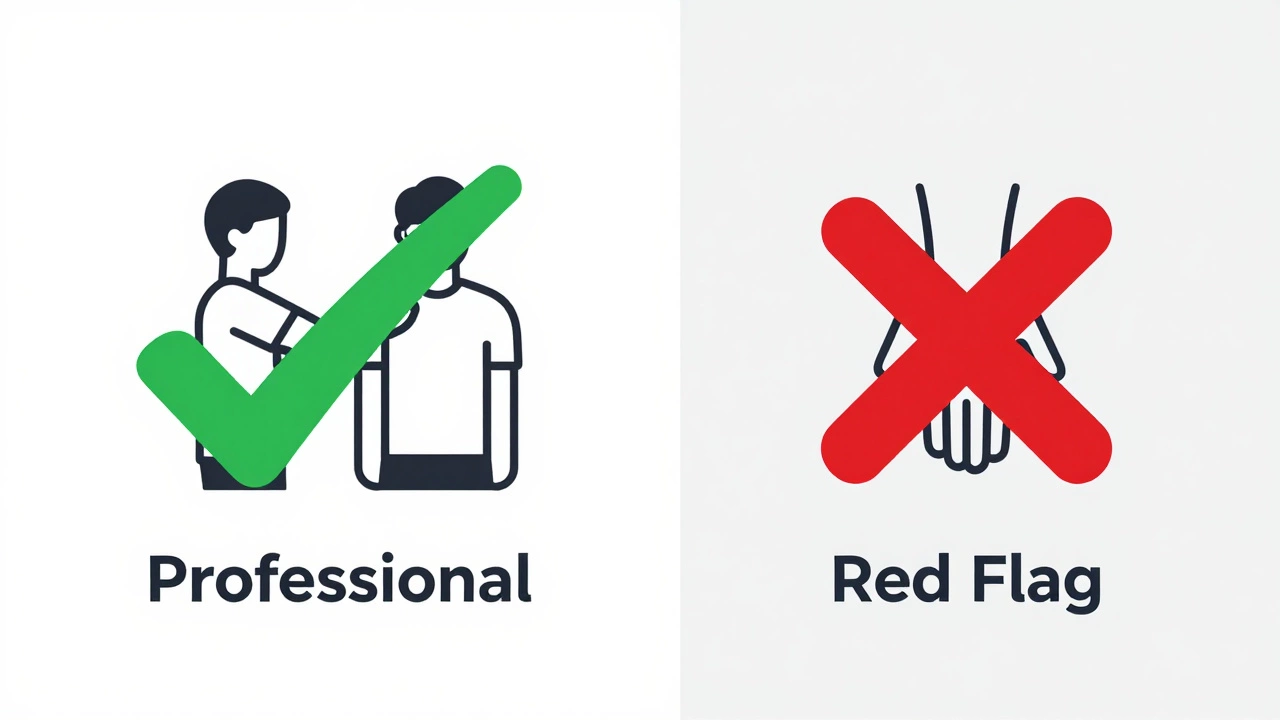
How do you distinguish between a clumsy but well-meaning coach and someone who is genuinely overstepping? Look for patterns. One accidental brush against your arm while spotting a heavy lift isn’t necessarily malicious. But repeated "accidents," lingering hugs after sessions, or comments on your body shape that go beyond fitness metrics are not okay.
Consider the context of the environment. Is the gym crowded? Are there other people watching? Professional adjustments usually happen openly. If a trainer tries to isolate you in a dark corner of the gym for a "private adjustment," leave immediately. That is not how professional training works. Transparency is a hallmark of ethical practice.
Another sign to watch for is emotional manipulation. If a trainer makes you feel guilty for setting boundaries-"I’m just trying to help you look better" or "You’re being too sensitive"-they are violating professional conduct. Fitness is supposed to empower you, not make you feel vulnerable or ashamed. Remember, you are paying for their expertise, not their opinion on your personal space.
For those who travel frequently for work or leisure, maintaining these boundaries can sometimes feel harder in unfamiliar environments. Whether you are working out in a local Perth studio or staying in a hotel gym abroad, your standards for safety shouldn't change. Interestingly, some travelers find value in reviewing local directories for various services to understand the landscape of discretion and professionalism in different cities, such as browsing resources like this directory to see how independent professionals structure their profiles and verify identities, which parallels the need for transparency and clear expectations in any service-based interaction. However, in the context of fitness, the rules are strictly regulated by professional bodies, making the line even clearer.
The best time to discuss touch is during your first consultation or intake session. Don’t wait until you’re sweaty and tired. Bring it up early. You can say something like, "I’m new to personal training, and I’d prefer we stick to verbal cues for now. Let me know if my form is off, but please don’t touch me unless it’s an emergency safety issue."
This sets a precedent. It shows the trainer that you are assertive and aware of your rights. Most trainers will appreciate the clarity because it removes guesswork. They’ll know exactly how to communicate with you.
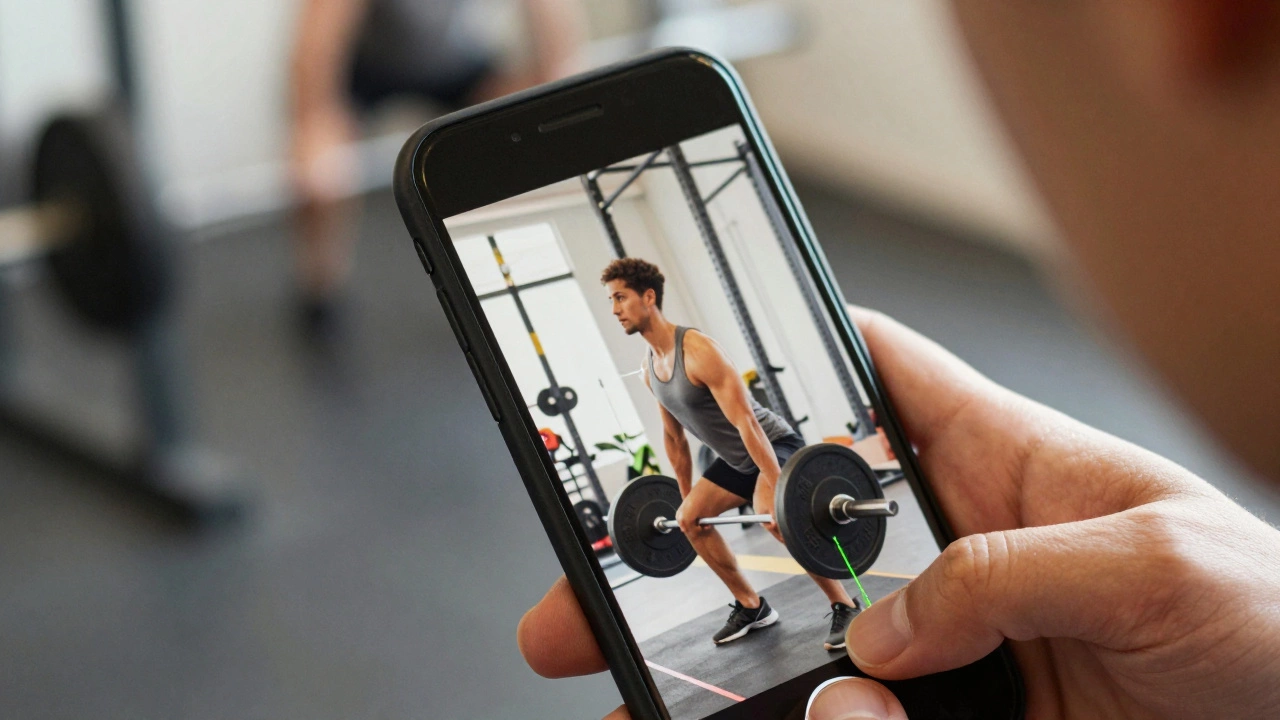
If you’re uncomfortable with touch, you’re not missing out on essential training elements. Modern fitness technology offers robust alternatives. Video analysis is a game-changer. Apps like Hudl Technique or even your phone’s slow-motion camera allow you to record your lifts and review them frame-by-frame with your trainer. You can see exactly where your knee caves in or your back rounds without anyone needing to lay a hand on you.
Mirrors are another simple tool. Position yourself so you can see your side profile during exercises. Visual feedback is powerful. Additionally, many trainers use props like resistance bands, foam rollers, or stability balls to provide proprioceptive feedback. For example, placing a band around your knees during squats reminds you to push outward, correcting knee valgus without physical contact.
These methods are often more effective in the long run because they build your own body awareness. You learn to feel the movement internally rather than relying on external guidance. This autonomy is a key benefit of consistent training.
If you experience inappropriate touch, document everything. Write down dates, times, locations, and exactly what happened. Save any text messages or emails. Then, report the trainer to the gym management. Reputable facilities take these complaints seriously because one bad actor can ruin their entire reputation.
If the gym dismisses your concerns, consider reporting the trainer to their certifying organization. Bodies like ACSM (Australian College of Sport Medicine) or international equivalents have strict codes of conduct. Violations can lead to suspension or revocation of certification.
Your safety and comfort are paramount. Never feel pressured to stay with a trainer who makes you uneasy. The fitness industry thrives on trust. When that trust is broken, it’s time to move on. There are countless qualified professionals who respect boundaries and prioritize your well-being above all else.
Not necessarily. Light, consensual touch for form correction is legal and common. However, non-consensual sexual touching or harassment is illegal and constitutes assault. Always seek legal advice if you believe you have been assaulted.
Yes, absolutely. You have the right to refuse any physical contact at any time. A professional trainer will respect this and use verbal or visual cues instead.
Be polite but firm. Say, "I prefer verbal cues only, please." You can explain that you’re more comfortable that way. Do not apologize for setting a boundary.
Address it immediately. Say, "Please ask before touching me next time." If they continue without consent, report them to gym management and consider switching trainers.
No certification explicitly prohibits touch, as it can be a valid teaching tool. However, all major certifications require informed consent and adherence to professional boundaries. Violating these can result in losing certification.