
Description of the split goes here.
Ever walked into a gym with zero idea of what you’re supposed to do, only to wander aimlessly between machines while people who look like they know exactly what they’re doing lift heavy things? You are not alone. Most beginners-and even some intermediate lifters-struggle with one fundamental question: how should I actually organize my training week?
The answer isn’t as simple as “go five days a week.” It depends entirely on your goals, your schedule, and how your body recovers. Structuring your workout days correctly is the difference between making steady progress and burning out in three weeks. Let’s break down exactly how to build a routine that works for you, whether you have two hours a day or just twenty minutes.
Before you pick a single exercise, you need to decide what you want to achieve. This decision dictates everything else about your schedule. Are you trying to lose weight, build serious muscle mass, improve athletic performance, or just feel healthier? Each goal requires a different approach to volume (how much you train) and intensity (how hard you train).
If your main goal is building muscle, you generally need to hit each major muscle group two times per week. If your goal is general health and fat loss, full-body workouts performed three times a week might be sufficient. Knowing this upfront prevents you from choosing a complex six-day split when your body would respond better to a simpler three-day routine.
Most effective workout structures fall into one of four categories. Understanding these will help you match your lifestyle with your physiology.
This is often the best starting point for beginners. In a full-body session, you perform exercises that target every major muscle group in a single visit. For example, you might do squats, bench presses, and rows in one hour. Because you work everything every time, you can afford to rest longer between sessions. A typical schedule looks like Monday, Wednesday, Friday. This allows 48 hours of recovery for each muscle group, which is crucial for growth.
As you get stronger, full-body workouts might become too long or exhausting. An upper/lower split divides your training into two categories: upper body (chest, back, shoulders, arms) and lower body (legs, glutes). You can rotate these four days across the week. For instance, Monday is Upper, Tuesday is Lower, Thursday is Upper, Friday is Lower. This gives you higher volume per session while still hitting each muscle twice a week.
This is a favorite among those who enjoy lifting frequently. It groups muscles by function:
You can run PPL as a three-day cycle (Mon/Tue/Wed, then repeat Sat/Sun) or a six-day cycle (Mon-Sat). The six-day version is intense and requires excellent nutrition and sleep. It’s great for experienced lifters but risky for beginners due to overtraining potential.
Here, you dedicate one day to one muscle group, like "Chest Day" or "Leg Day." While popular in bodybuilding culture, research suggests this is less efficient for natural athletes because most muscles recover within 48-72 hours. Hitting a muscle once a week means it sits idle for six days. Unless you are an advanced lifter with a very high volume tolerance, this split often yields slower results than full-body or upper/lower approaches.
A common mistake is confusing frequency (how often you train) with volume (total sets and reps). You can train six days a week with low volume per session, or three days a week with high volume. Both can work, but they serve different purposes.
For most people, the sweet spot is training each muscle group twice a week. Studies published in journals like the *Journal of Strength and Conditioning Research* consistently show that higher frequency leads to greater muscle protein synthesis spikes throughout the week. However, if you only have time for two days, make them count. Perform compound movements-exercises like deadlifts, squats, and pull-ups-that recruit multiple muscle groups at once. This maximizes efficiency.
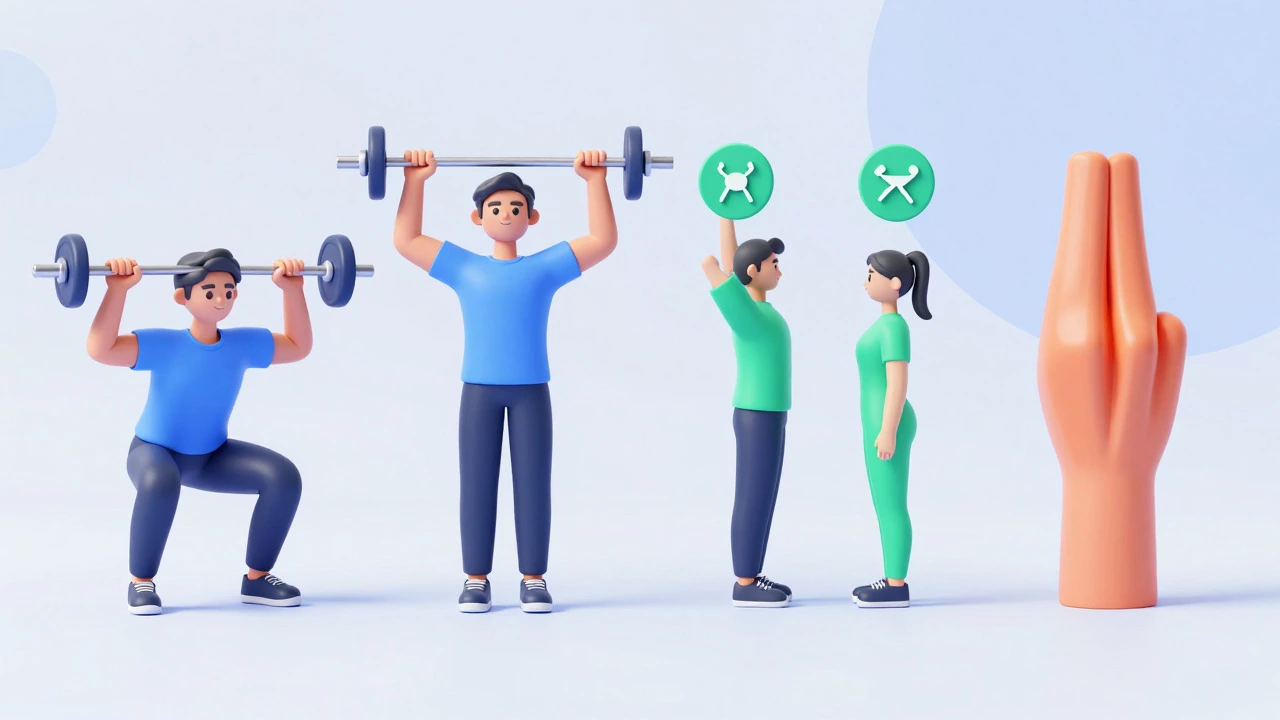
Your muscles don’t grow in the gym; they grow while you sleep. Rest days are non-negotiable parts of your structure. Without them, cortisol levels rise, injury risk increases, and performance plateaus. How many rest days do you need? At least one full day off per week, preferably two if you’re doing high-intensity training.
Active recovery is also valuable. This doesn’t mean sitting on the couch all day. Go for a walk, do some light yoga, or swim gently. This promotes blood flow without stressing the central nervous system. If you feel constantly sore, tired, or unmotivated, you likely need more rest, not less training.
Let’s translate theory into practice. Here are three realistic schedules based on how many days you can commit.
| Days Available | Recommended Split | Focus | Best For |
|---|---|---|---|
| 2 Days | Full Body A / Full Body B | Compound Movements | Busy professionals, beginners |
| 3 Days | Full Body (Mon/Wed/Fri) | Balanced Hypertrophy & Strength | General fitness, fat loss |
| 4 Days | Upper/Lower Split | Muscle Growth | Intermediate lifters |
| 5-6 Days | Push/Pull/Legs | High Volume Muscle Gain | Advanced athletes, bodybuilders |
If you choose the 3-day full-body route, ensure you vary the exercises slightly each session. For example, Session A could include barbell squats and bench press, while Session B includes lunges and dumbbell presses. This keeps joints healthy and prevents boredom.

Strength training shouldn’t exist in a vacuum. Cardiovascular health supports your lifting capacity and longevity. You don’t need to run marathons, but adding 150 minutes of moderate cardio per week is recommended by health organizations worldwide.
Where does this fit? You can add 10-15 minutes of low-intensity steady-state (LISS) cardio after your weights, or do separate sessions on rest days. High-intensity interval training (HIIT) is effective but taxing; limit it to one or two sessions a week if you’re also lifting heavily. Don’t let cardio interfere with your primary goal. If muscle gain is priority #1, keep cardio light and brief.
Mobility work is equally important. Spend five minutes before and after your workout stretching tight areas like hips and shoulders. This improves range of motion, allowing you to lift heavier safely over time. Ignoring mobility leads to injuries that derail months of progress.
No matter how perfectly you structure your days, nothing happens without progressive overload. This principle means gradually increasing the demand on your musculoskeletal system. You must do more over time. This doesn’t always mean adding weight. You can increase reps, improve form, reduce rest times, or increase training density.
Track your workouts. Use a notebook or app to log sets, reps, and weights. If you squatted 100kg for 5 reps last week, aim for 100kg for 6 reps or 102.5kg for 5 reps this week. Small, consistent gains compound into massive results over months and years. Without tracking, you’re guessing, and guessing rarely leads to optimal growth.
Even with a solid plan, life gets in the way. Here’s how to handle common disruptions:
Remember, the best workout structure is the one you can stick to for months, not just weeks. Start simple, master the basics, and adjust as your body adapts. Your future self will thank you for building habits that last.
Taking rest days is essential for recovery and growth. Working out every day increases the risk of overtraining and injury. Most people benefit from 1-2 full rest days per week, depending on their training intensity and experience level.
Yes, you can combine them. It’s generally recommended to prioritize your main goal first. If building muscle is your priority, do strength training before cardio. Keep cardio sessions moderate in intensity to avoid interfering with muscle recovery.
Most effective workouts last between 45 to 90 minutes. Going beyond 90 minutes often leads to diminishing returns and increased fatigue. Focus on intensity and quality rather than duration. Shorter, focused sessions are often more sustainable long-term.
A full-body workout performed 2-3 times per week is ideal for beginners. It allows you to learn proper form on compound movements and provides adequate recovery time between sessions. As you gain experience, you can transition to more specialized splits like Upper/Lower or Push/Pull/Legs.
While consistency is key, flexibility is important too. Life happens, and missing a day won’t ruin your progress. Aim for a consistent pattern, but don’t stress if you need to swap days occasionally. The goal is long-term adherence, not rigid perfection.