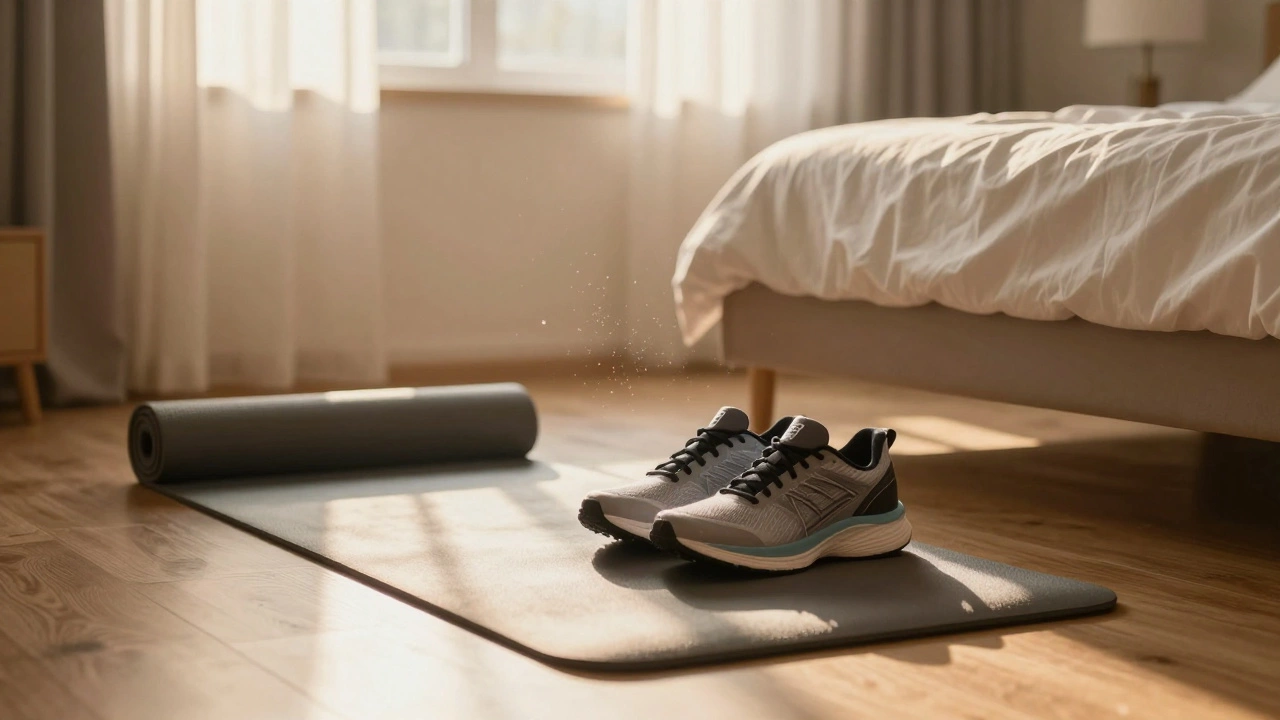
Stop relying on motivation and start building momentum. Select your current energy level and available time to receive a scientifically-backed micro-habit that requires zero equipment and takes less than two minutes.
You know you should move your body. You’ve probably bought the yoga mat, downloaded three different fitness apps that promise personalized workout plans and tracking features, or even cleared a corner of your bedroom for a squat rack. But when the alarm goes off, you hit snooze. When evening comes, you collapse on the couch instead of doing those push-ups. It’s not just "laziness"-it’s a breakdown in the system between intention and action. The good news? You don’t need more willpower. You need a better strategy.
We’re sold this idea that we need to feel motivated to work out. We wait for that spark of inspiration to strike before we lace up our sneakers. Here’s the truth: motivation is unreliable. It fluctuates with sleep, stress, and weather. What actually keeps people consistent is momentum. And momentum doesn’t come from feeling ready; it comes from starting small enough that resistance disappears.
Think about it. If I told you to run five miles right now, your brain might panic. But if I asked you to put on your running shoes and step outside for sixty seconds, would you say no? Probably not. That’s the core principle behind breaking the inertia barrier. Your goal isn’t to crush a high-intensity session today. Your goal is to show up. Even if “showing up” means doing one bodyweight squat while brushing your teeth.
| Mindset | Focus | Outcome |
|---|---|---|
| Motivation-Driven | Feeling inspired | Inconsistent effort |
| Momentum-Driven | Action first | Sustainable habit |
Your environment shapes your behavior more than your intentions do. If your workout clothes are buried in the back of a closet, you won’t wear them. If your phone is within arm’s reach during TV time, you’ll scroll instead of stretch. To stop being lazy, you have to remove friction from the desired behavior and add friction to the undesired one.
Start by creating a dedicated space for movement. It doesn’t need to be a gym. A clear patch of floor near a mirror works fine. Keep your water bottle filled and visible. Leave your resistance bands on the chair where you sit to watch Netflix. These visual cues act as triggers. When you see the band, you remember the intention. Over time, the cue becomes automatic.
Also, consider the timing. Most people fail because they try to exercise when their energy is lowest. If you’re exhausted after work, don’t schedule a hard session then. Try morning routines-even ten minutes of stretching can wake up your nervous system and set a positive tone for the day. Or break your activity into micro-sessions: five minutes in the morning, five at lunch, five in the evening. Consistency beats intensity every single time.
James Clear, author of *Atomic Habits*, popularized the idea of two-minute rules. Make your new habit so easy that you can’t say no. Instead of committing to a thirty-minute cardio blast, commit to putting on your workout gear. Once you’re dressed, you’re likely to stay active. If not, you still succeeded in building the identity of someone who exercises.
Here are some realistic micro-habits to begin with:
These actions take less than two minutes. They require zero equipment. And they build neural pathways that make larger efforts feel natural later. Don’t underestimate the power of showing up consistently, even in tiny doses. After two weeks, you’ll notice your body craving movement-not because you forced it, but because you made it part of your daily rhythm.
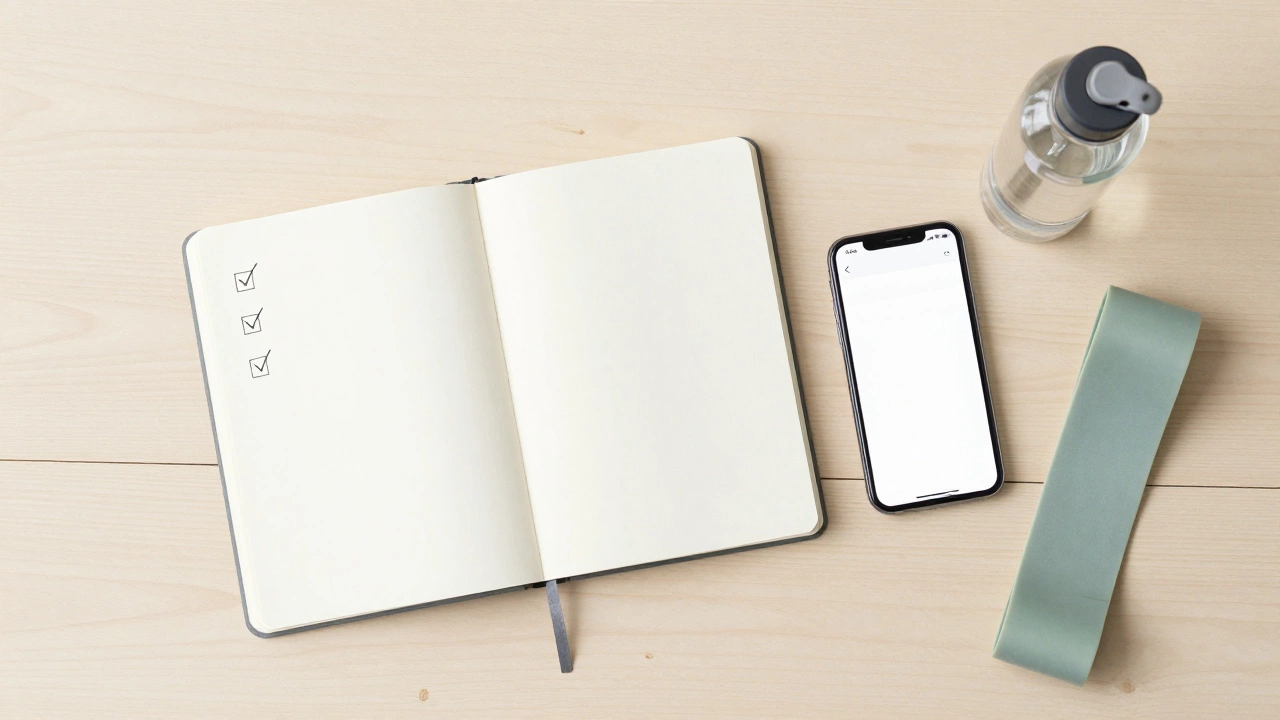
One reason people quit is lack of visible results. Scales don’t move overnight. Mirrors lie under bad lighting. So how do you measure progress? Track non-scale victories (NSVs). Did you sleep better? Feel less stiff? Have more energy at 3 PM? Those are real wins.
Use a simple journal or app to log what you did each day-not calories burned, but behaviors completed. Check off boxes. See streaks grow. Visual proof builds confidence. Apps like MyFitnessPal or Strava offer basic tracking, but sometimes a pen and paper works best. The key is consistency, not complexity.
If numbers bother you, switch to qualitative markers. Rate your mood on a scale of 1-10 after each session. Note whether you felt proud, frustrated, or neutral. Patterns emerge over time. You’ll discover which activities boost your spirits and which drain them. Adjust accordingly. This self-awareness turns exercise from punishment into personal care.
Accountability helps, but only if it feels supportive, not punitive. Tell a friend your plan. Join an online community focused on home workouts. Share short videos of your form improvements. Celebrate others’ milestones too. Social connection increases adherence rates significantly according to studies published in the *Journal of Behavioral Medicine*.
You don’t need a trainer yelling at you. You need someone who says, “Hey, how’d it go?” without judgment. Text-based check-ins work well. Voice notes are even better-they carry emotion and encouragement. If solitude suits you, record voice memos summarizing your weekly effort. Hearing your own voice reflect growth reinforces commitment.
Another option: pair exercise with something enjoyable. Listen to audiobooks only while walking. Watch favorite shows only while cycling indoors. Linkage creates association. Soon, your brain connects movement with pleasure rather than obligation.

Even with great intentions, many stumble due to avoidable mistakes. Let’s address them head-on.
All-or-nothing thinking: Missed Monday? Don’t scrap the whole week. Restart Tuesday. Perfection kills progress. Flexibility sustains it.
Overcomplicating routines: You don’t need twelve exercises per session. Three compound movements-squats, push-ups, rows-hit major muscle groups efficiently. Simplicity reduces decision fatigue.
Ignoring recovery: Rest days aren’t laziness. They’re essential for adaptation. Muscle grows during rest, not exertion. Schedule light mobility work or gentle yoga on off-days to maintain circulation without strain.
Comparing yourself to influencers: Their highlight reels aren’t reality. Focus on your baseline. Compare today’s you to last month’s you. Growth happens in increments, not leaps.
Once micro-habits stick, expand gradually. Add five minutes weekly. Introduce new variations. Explore different formats-bodyweight circuits, dance videos, outdoor hikes. Variety prevents boredom and engages diverse muscle fibers.
Consider structuring your week around themes:
This framework balances challenge and recovery. It allows flexibility while maintaining structure. Adjust based on life demands. Some weeks will be lighter. Others heavier. That’s okay. Sustainability means adapting, not abandoning.
You probably don’t hate moving-you hate how exercise has been framed. Try reframing it as play. Dance freely. Jump rope like a kid. Hike trails with friends. Movement shouldn’t feel like punishment. Find forms that bring joy, not dread. Joy fuels consistency far better than guilt ever could.
Research suggests anywhere from 18 to 254 days, averaging around 66 days. But here’s the catch: it depends on difficulty and individual factors. Start ridiculously small. Ten seconds counts. Build slowly. Habit formation isn’t linear-it’s cumulative. Each repetition strengthens the pathway.
Absolutely. Bodyweight training builds functional strength. Resistance bands provide progressive overload. Jumping jacks elevate heart rate effectively. Home workouts eliminate commute time and cost barriers. With proper programming and nutrition, home-based fitness yields impressive results comparable to gym memberships.
Because you started too big. Big changes trigger resistance. Small ones sneak past defenses. Reduce scope until failure seems impossible. Then increase incrementally. Also, examine underlying beliefs. Do you associate exercise with suffering? Reframe it as self-care. Shift narrative, shift outcome.
Yes, delayed onset muscle soreness (DOMS) peaks 24-72 hours post-exercise. It signals adaptation, not damage. Gentle movement eases discomfort. Hydration and protein support repair. Avoid complete inactivity-light walking promotes blood flow and accelerates healing. Soreness fades as tissues adapt.