Not sure how long to book? Answer a few questions below to get a recommended session duration and tips to maximize your time.
Fill in the details and click calculate to see your ideal session plan.
You book your first personal training session and the gym app asks for a time slot. Do you pick 30 minutes? An hour? Maybe 90? It’s a common confusion. Walk into any commercial gym in Perth or Sydney, and you’ll see trainers working with clients for wildly different amounts of time. Some sessions fly by in 45 minutes; others drag on past the hour mark. The truth is, there is no single "standard" length that fits every body or every goal. But understanding what drives these durations helps you get value for money and avoid burnout.
| Session Type | Duration | Best For | Intensity Level |
|---|---|---|---|
| Introductory Assessment | 60-90 mins | New clients, health screening | Low/Moderate |
| Standard Workout | 45-60 mins | Maintenance, general fitness | Moderate/High |
| Extended Coaching | 75-90 mins | Athletes, complex programming | High |
| Express Session | 30 mins | Busy schedules, specific drills | Variable |
If you ask most certified trainers, they will tell you that one hour is the industry sweet spot. Why? Because it balances quality work with realistic scheduling. A 60-minute session allows enough time for a proper warm-up, skill development, main workout, and cool-down without feeling rushed. In Australia, where labor costs are high, this duration also makes financial sense for both parties. You pay for an hour, and you get roughly 45 to 50 minutes of actual exercise if the coach is efficient. But here is the catch: not all hours are created equal. If your trainer spends 15 minutes chatting about your weekend before touching a weight, you’ve lost a quarter of your session. Good coaches structure their time tightly. They might use a stopwatch for rest periods. They pre-set equipment so you aren’t waiting around. When I look at session logs from experienced professionals, the best ones treat that hour like a surgical operation-precise, focused, and effective.
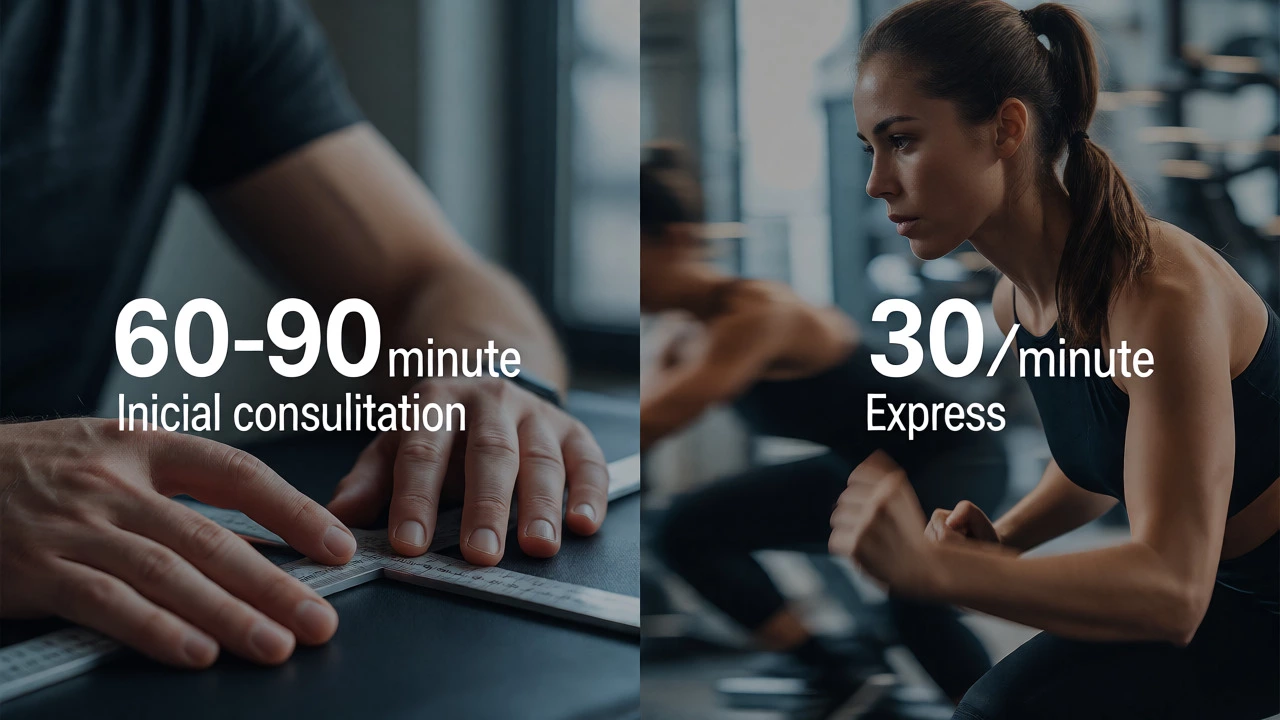
Let’s be real. Life gets busy. Sometimes you only have half an hour between meetings or before picking up the kids. Can you actually train effectively in 30 minutes? Absolutely, but the rules change. You can’t do a full-body strength circuit, a cardio finisher, and mobility work in 30 minutes unless you cut corners. Short sessions require intense focus. There is no time for long rests between sets. These are often designed as High-Intensity Interval Training (HIIT) blocks or targeted strength clusters. For example, a 30-minute session might consist entirely of compound lifts like squats and deadlifts with minimal rest, followed by a quick stretch. This works well for maintaining muscle mass or burning calories, but it isn’t ideal for learning complex new movements. If you’re a beginner trying to master a clean and jerk, 30 minutes will feel frustratingly short.
Never judge your ongoing schedule by your first appointment. The initial meeting is rarely just a workout. It is a diagnostic tool. Most reputable trainers block out 60 to 90 minutes for this. During this time, you won’t necessarily break a sweat. Instead, you’ll discuss medical history, lifestyle habits, and injury history. Expect physical assessments too. Your trainer might measure your body composition, test your range of motion, and evaluate your posture. They need this data to build a safe program. Rushing this step leads to injuries later. So, if your first session runs long, don’t panic. It means your coach is thorough. Once you move into regular weekly appointments, the clock usually resets to the standard 45-60 minute window.

Your goals dictate the clock. Someone training for a marathon needs different time allocations than someone wanting to lose five kilos. Endurance athletes often need longer sessions to practice pacing and nutrition strategies during exercise. Strength athletes might spend more time under tension but less time moving continuously. Then there is the travel factor. If your trainer comes to your home, add 15-20 minutes for setup and pack-down. Packing away kettlebells and resistance bands takes time. In a commercial gym, this overhead disappears because the equipment stays put. Conversely, if you are doing outdoor boot camp-style personal training, transitions between stations eat up time. Always account for these logistical realities when booking.
Here is a controversial idea: a great 45-minute session beats a mediocre 90-minute one every time. We tend to equate time spent with effort expended. But if you’re checking your phone every two minutes, or if the rest periods are unstructured, you’re wasting time. Look for density. How much work did you actually complete? Did you hit your target heart rate zones? Did you lift heavier than last week? These metrics matter more than the timestamp. Some elite coaches specialize in 40-minute "high-density" sessions where you barely sit down. Others prefer 75-minute sessions that include extensive mobility work and education. Neither is wrong, but you need to know which style matches your personality. Do you want to crush a workout and leave? Or do you want to learn and linger?
Group sessions, often called small group training, typically run for 45 minutes. This is shorter than solo PT because the coach has to manage multiple people simultaneously. Instruction time per person drops, but the energy is higher. You’re pushing each other. If you’re considering switching from solo to group to save money, check the ratio. One coach to four clients is manageable. One coach to eight clients? You’re essentially buying a fitness class, not personalized coaching. The duration remains similar, but the attention you receive shrinks dramatically. Ensure the price reflects this difference.
You control part of this equation. Arrive on time. Not ten minutes late. Ten minutes early. Use those first few minutes to change, hydrate, and mentally prep. Don’t waste your paid time changing clothes while the trainer watches. Communicate clearly. If you had a bad night’s sleep, say so. Your trainer can adjust intensity on the fly rather than guessing. Bring water and a towel. Having these ready prevents interruptions. And finally, do your homework. If your trainer gave you mobility drills to do at home, do them. Showing up tight and mobile saves ten minutes of warm-up in the gym.
Yes, if structured correctly. Short sessions are excellent for maintenance, HIIT, or specific skill drills. However, they are less effective for beginners learning complex movements or those needing comprehensive assessment and correction.
The first session usually includes a detailed consultation, health screening, and physical assessments (posture, mobility, strength baselines). This foundational work ensures future sessions are safe and tailored to your needs.
Generally, yes. You are paying for the trainer's reserved time and expertise, not just the minutes you are sweating. However, ethical trainers aim to fill the booked time with valuable activity, such as stretching or educational discussion.
Sometimes, but it depends on the trainer's schedule. Back-to-back bookings make extensions difficult. Always ask beforehand. Extending by 15 minutes often incurs a pro-rata fee.
Costs are usually linear. A 30-minute session costs roughly half of a 60-minute session. Some gyms offer package deals where longer sessions provide better value per minute. Compare rates carefully.