
This calculator helps you determine your weekly cardio needs based on your calorie deficit goal and current activity.
Total weekly calories needed to burn: 0
Cardio calories burned per week: 0
Remaining deficit to hit target: 0
The article explains that fat becomes primary fuel source after 20-30 minutes of moderate cardio.
High-intensity cardio creates EPOC (afterburn) but burns more carbs during exercise.
Based on your input, here's your optimal cardio strategy:
Total weekly cardio needed: 0 minutes
Breakdown:
This mix optimizes fat burning: steady cardio trains your body to burn fat efficiently, while HIIT triggers the afterburn effect that keeps your metabolism elevated for hours.
Combined with your strength training sessions, you'll build muscle that burns extra calories at rest (6-10 calories/pound daily).
Let’s cut through the noise: yes, high cardio can burn fat-but it’s not the magic bullet most people think it is. You’ve probably seen ads promising six-pack abs from 30 minutes on the treadmill, or influencers claiming you can ‘sweat off’ pounds without changing your diet. The truth? Cardio helps, but it’s far more complicated than just running longer or faster.
When you do cardio-whether it’s jogging, cycling, swimming, or brisk walking-your body uses energy. That energy comes from stored fuel: mostly glycogen (carbs) at first, then fat as you keep going. The longer you move, the more fat your body taps into. Studies show that after about 20-30 minutes of continuous moderate-intensity exercise, fat becomes the primary fuel source. So if you’re doing 10 minutes of light cardio, you’re mostly burning sugar. But if you hit 45 minutes? Fat starts to lead the charge.
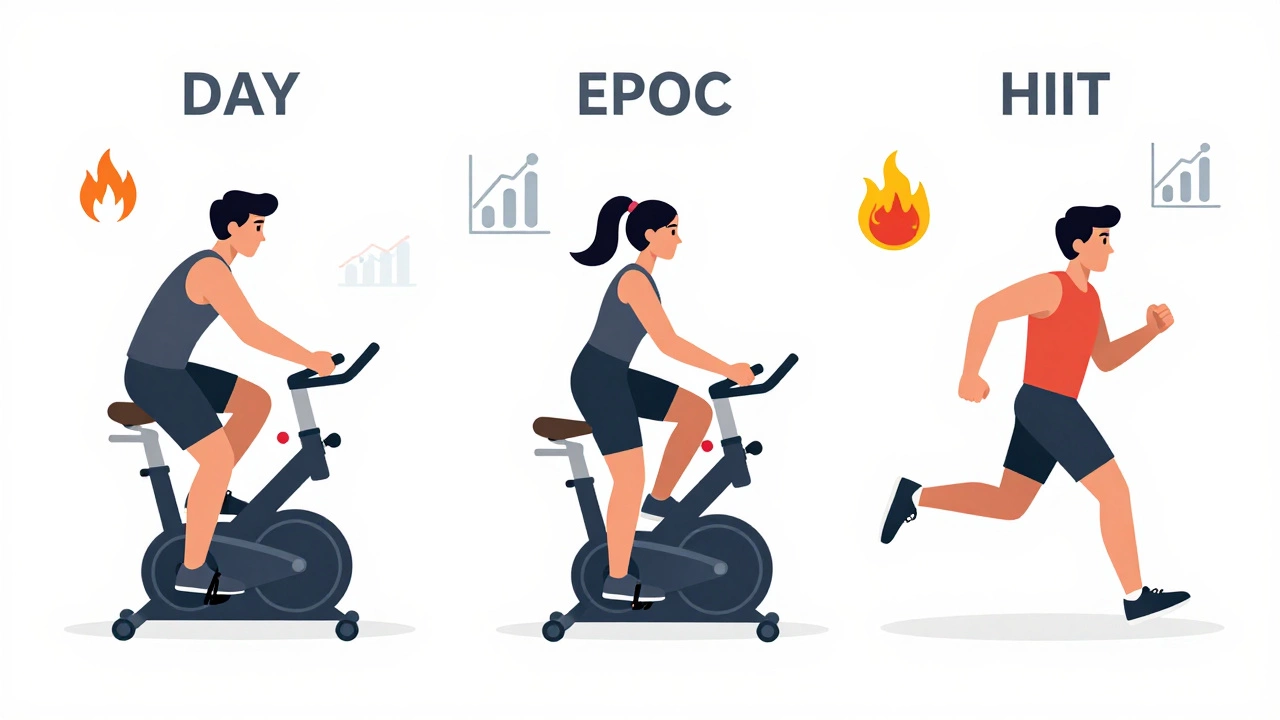
High-intensity cardio, like sprint intervals or HIIT, burns more total calories in less time. But here’s the twist: during the actual workout, it burns more carbs than fat. However, the afterburn effect-called EPOC (excess post-exercise oxygen consumption)-means your body keeps burning calories for hours afterward. That’s where fat loss really adds up.
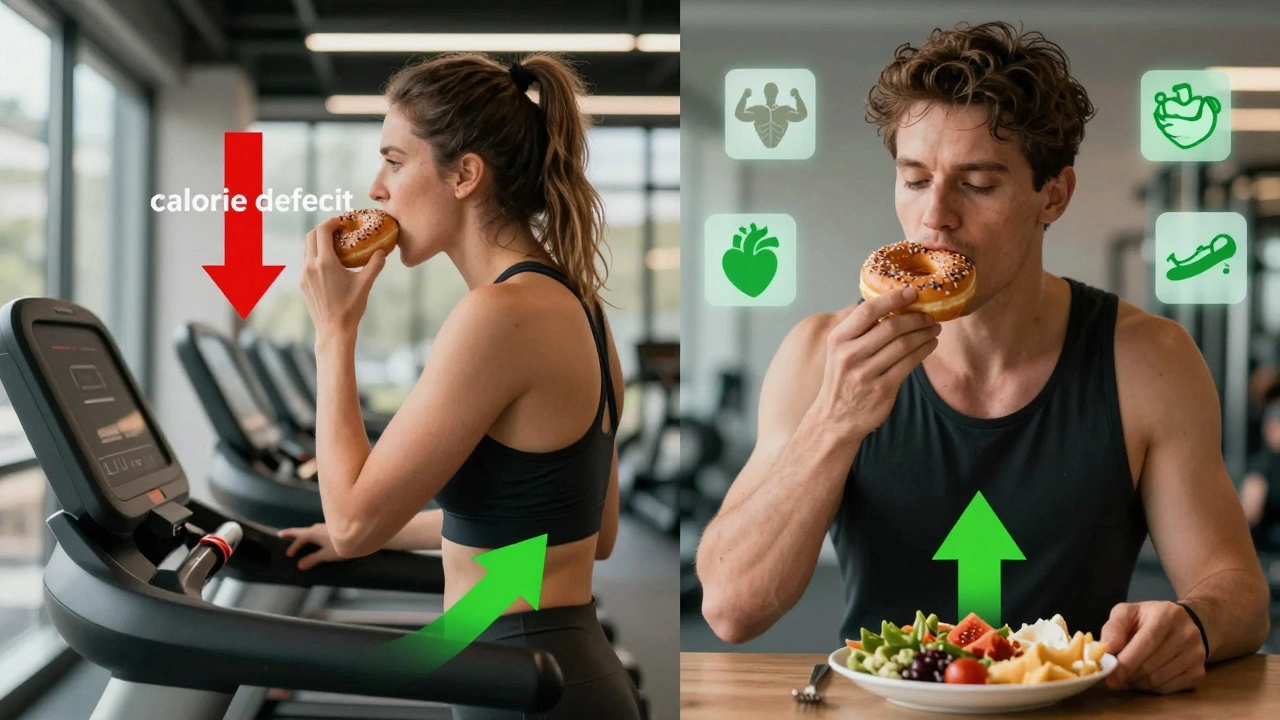
Here’s the hard truth: you can’t out-exercise a bad diet. A 2023 study from the University of Sydney tracked 120 people doing 60 minutes of cardio five days a week for 12 weeks. Half ate normally; half cut 300 calories daily. The group that cut calories lost 8.2% body fat. The cardio-only group? Just 2.1%. Why? Because fat loss happens when you’re in a calorie deficit. Cardio helps create that deficit, but if you’re eating a doughnut after every run, you’re undoing the work.
Think of it like a bank account. Cardio is a deposit. Food is a withdrawal. You can deposit $500 a week, but if you’re withdrawing $600, you’re still losing money. No amount of cardio fixes that.
People often pit cardio against lifting weights. But they’re not enemies-they’re teammates.
Cardio burns more calories during the activity. A 160-pound person burns about 300 calories in 30 minutes of jogging. Strength training? Maybe 150 in the same time. But here’s the catch: muscle burns more calories at rest. Every pound of muscle adds about 6-10 extra calories burned per day. So if you build 5 pounds of muscle, you’re burning 30-50 more calories daily, even when you’re on the couch.
Combine both, and you get the best of both worlds: immediate calorie burn from cardio, and long-term metabolic boost from muscle. One 2024 meta-analysis in the Journal of Sports Science found that people who combined cardio and strength training lost 27% more fat than those who did only one type of exercise.
The American College of Sports Medicine recommends at least 150 minutes of moderate-intensity cardio per week for weight maintenance. For fat loss? Aim for 250-420 minutes. That’s 50-70 minutes five days a week.
But don’t just chase minutes. Intensity matters. Try this simple split:
Why this mix? Steady cardio trains your body to burn fat efficiently. HIIT keeps your metabolism revved up for hours. Together, they’re more effective than doing only one.
So why do so many people do cardio for months and see no change? Here are the top three mistakes:
Take Sarah, a 38-year-old from Perth. She ran 5K every morning for six months. She lost 3 pounds. Frustrated, she started tracking her food and added two 20-minute strength sessions a week. She didn’t change her running routine. Within four weeks, she lost 5 more pounds and noticed her waist shrinking. Why? She stopped overeating after runs, and the extra muscle raised her daily calorie burn. She didn’t need more cardio-she needed better balance.
Some people swear by ‘fat-burning zones’-low-intensity workouts where you keep your heart rate at 60-70% max. The theory? You burn more fat at lower intensities. And yes, that’s true… but only as a percentage of total calories. At low intensity, you might burn 70% fat, but only 200 calories total. At high intensity, you might burn 40% fat, but 500 calories. Which one gives you more fat burned? The high-intensity one. 40% of 500 is 200 calories of fat. Same as the low-intensity session, but you did it in half the time.
So if you’re short on time, go hard. If you love slow walks and they keep you moving? Keep doing them. Consistency beats intensity every time.
Cardio helps you burn fat. But if you want to lose fat and keep it off, you need three things:
Forget the myth that cardio alone will transform your body. It’s a tool. A powerful one. But like a hammer, it works best when used with the right materials-and the right plan.
High cardio burns more total calories, and while it burns a lower percentage of fat during the workout, it often results in more fat burned overall because of the higher total energy expenditure. Plus, high-intensity sessions trigger afterburn, keeping your metabolism elevated for hours. Low-intensity cardio burns a higher percentage of fat during exercise, but fewer total calories. For most people, combining both is the most effective strategy.
Technically, yes-but it’s inefficient and hard to sustain. You’d need to do 60-90 minutes of cardio daily without adjusting your diet. Most people end up compensating by eating more, which cancels out the calorie deficit. Fat loss is 70% nutrition and 30% exercise. Cardio supports the process, but without controlling what you eat, results will be slow or nonexistent.
With consistent cardio and a slight calorie deficit, most people start seeing changes in 3-4 weeks. Visible fat loss usually takes 6-8 weeks. The key is consistency-not intensity. Two 40-minute sessions a week won’t do much. Five 50-minute sessions with good nutrition? That’s where results happen.
Running is effective, but not necessarily the best. It’s high-impact, which can lead to injury over time. Cycling, swimming, rowing, and brisk walking are just as effective for fat loss and easier on the joints. Choose what you enjoy and can stick with long-term. The best cardio is the one you’ll actually do.
Fasted cardio doesn’t lead to more fat loss in the long run. Some studies show a small increase in fat burned during the workout, but total daily fat loss is the same as eating before exercise. If you feel weak or dizzy when working out fasted, eat a small snack first. Performance matters more than a theoretical fat-burning advantage.