Not sure which app fits your needs? Answer these three questions to get a personalized recommendation based on the top contenders of 2026.
Walking into a gym for the first time can feel like trying to decode a foreign language. You see people moving heavy iron with ease, machines you don’t recognize, and routines that seem impossibly complex. The fear of looking foolish is real. This is exactly why strength training apps have exploded in popularity. They take the guesswork out of lifting weights by putting a structured plan right in your pocket.
But here is the catch: not all apps are created equal. Some are bloated with features you’ll never use, while others lack the guidance necessary to keep you safe. As a beginner, you need an app that teaches form, manages progression, and fits your budget. Let’s look at the top contenders available in 2026 to help you pick the right one for your goals.
You might think you can just go to the gym and lift whatever looks interesting. That approach usually leads to two outcomes: boredom or injury. Strength training requires progressive overload-gradually increasing the weight or reps over time-to build muscle and strength. Without a logbook or a system, it is incredibly easy to lose track of your progress.
A good app acts as your personal trainer. It tells you what exercises to do, how many sets and reps to perform, and when to rest. More importantly, it tracks your history so you know if you’re actually getting stronger. For a novice, this structure removes the mental load of planning workouts, allowing you to focus entirely on execution and form.
Not strictly, but highly recommended. Gyms provide equipment, not programming. An app provides the program. Without a plan, most beginners repeat the same routine indefinitely, leading to plateaus within weeks. An app ensures you progress systematically.
The "best" app depends heavily on your specific situation. Are you working out at home with dumbbells? Are you joining a commercial gym? Do you want human coaching or algorithmic guidance? Here are the top three recommendations based on common user scenarios.
| App Name | Best For | Pricing Model (2026) | Key Feature |
|---|---|---|---|
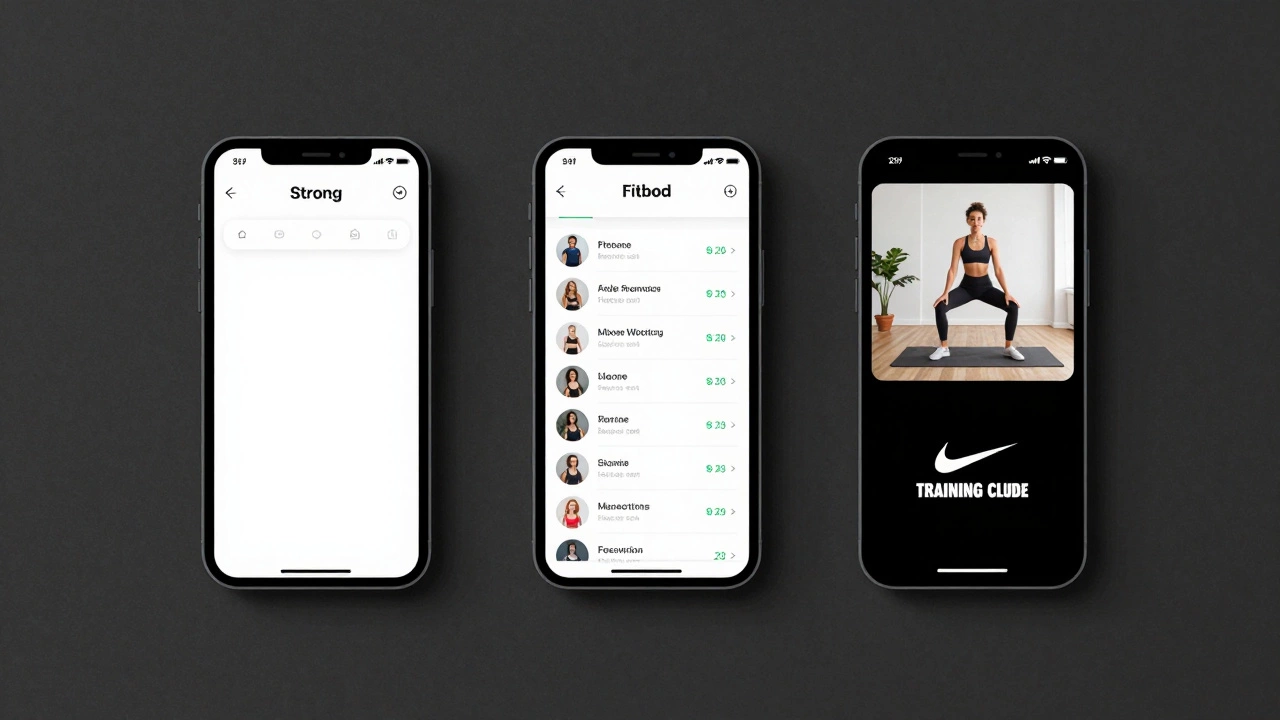
| Strong | Gym-goers who want simplicity | Free core; Pro subscription ~$9/month | Clean interface, excellent logging |
| Fitbod | Personalized AI-driven plans | Subscription only (~$11/month) | Adapts workouts based on recovery and equipment |
| Nike Training Club | Home workouts & video guidance | Completely Free | High-quality video library, no paywall |
If you already have a basic understanding of exercises or follow a pre-made program from a coach, Strong is arguably the best tool on the market. It does not try to be a social network or a meal tracker. It focuses solely on logging your lifts. The interface is clean, intuitive, and fast. You tap to increase reps, swipe to add sets, and the app automatically calculates your rest time.
For beginners, Strong offers a library of predefined programs like "Starting Strength" or "Push/Pull/Legs." These are proven methodologies that work. The downside is that Strong doesn’t teach you *how* to do the movements. You will need to watch YouTube videos separately to learn proper form before logging them here.
Fitbod takes a different approach. Instead of asking you to input every detail, it asks about your available equipment and your current fatigue levels. Then, its algorithm generates a workout tailored to your goals. If you tell Fitbod you only have dumbbells and a bench, it builds a full-body routine using those items. If you say your legs are sore, it might skip squats and focus on upper body.
This is ideal for beginners who suffer from "decision paralysis." You don’t need to know what a superset is or how to periodize your training. Fitbod handles the math. However, because it is subscription-only and lacks deep customization, powerlifters or advanced users often find it too rigid after six months.
Budget-conscious beginners should start with Nike Training Club. Unlike most competitors that lock premium content behind a paywall, NTC offers a vast library of guided workouts for free. These workouts include high-definition video demonstrations, audio cues, and timer functions.
NTC shines in home workouts. Many sessions require no equipment, relying instead on bodyweight exercises like push-ups, lunges, and planks. If you are intimidated by heavy barbells, NTC provides a gentle entry point into strength training through resistance bands and kettlebells. The production quality is top-tier, making it feel like you’re following along with a professional trainer.
When evaluating any app beyond these top picks, keep these four criteria in mind:
Even the best app cannot save you from bad habits. Here is what beginners typically get wrong:
Choosing an app is just the first step. The real work happens when you show up and lift. If you prefer autonomy and already have a plan, download Strong. If you want a digital coach to make decisions for you, try Fitbod. If you are working out at home with zero budget, Nike Training Club is unbeatable. Download one, commit to eight weeks, and focus on mastering the basics. Your future self will thank you.
A personal trainer provides real-time feedback on form, which apps cannot do. If you have mobility issues or a significant budget, a trainer is superior. However, for general health and building foundational strength, a well-designed app is 80% as effective at 5% of the cost.
Yes. Fitbod and Nike Training Club allow you to specify "home" or "dumbbells only" as your equipment. Strong also supports home workouts, though you must manually select exercises suitable for limited gear.
Most beginners notice increased strength and confidence within 4-6 weeks. Visible muscle changes typically appear after 8-12 weeks of consistent training and adequate protein intake.
Nike Training Club is genuinely free. Others like Strong offer robust free versions but charge for advanced analytics or unlimited programs. Always check the "In-App Purchases" section in the app store description.
Strong has excellent native support for both Apple Watch and Wear OS, allowing you to log reps directly from your wrist. Fitbod also has strong smartwatch integration for tracking heart rate and rest timers.